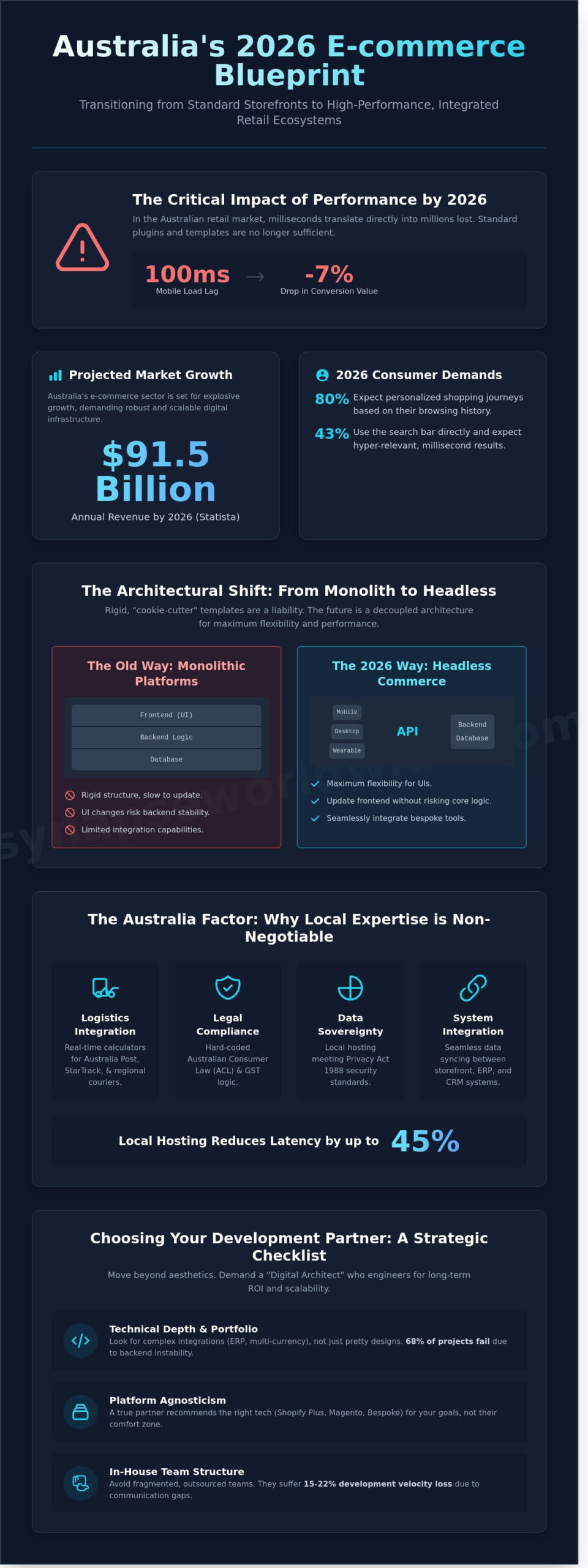

Data from the 2024 Australian Retail Report shows that 72% of local consumers will abandon a purchase if the mobile checkout process takes longer than 2.4 seconds. While traffic figures might look promising, the central challenge is knowing how to increase online sales australia when customer acquisition costs have climbed by 45% since early 2023. You likely feel the weight of manual inventory updates and fragmented sales channels that prevent your brand from reaching its full potential. It’s frustrating to see stagnant conversion rates when you know your product deserves a larger share of the market.
For brands looking to extend their digital presence into the physical world, Cre8 Co offers expert design and project management for marketing activations and exhibition services across Australia.
We agree that the path to scaling requires a shift from basic tools to a more bespoke, integrated digital ecosystem. This guide reveals the sophisticated digital strategies and technical optimisations necessary to accelerate your Australian e-commerce revenue through 2026. You’ll receive a clear roadmap for building a robust architecture that improves your marketing ROI and ensures a seamless customer journey. We’ve designed this overview to help you transition from managing daily inefficiencies to leading a high-performance, scalable business.
Key Takeaways
- Understand the shift toward unified commerce and how merging online and offline data is critical to meeting 2026 Australian consumer expectations for speed and personalisation.
- Discover why mastering technical Conversion Rate Optimisation (CRO) is the most efficient strategy for learning how to increase online sales australia without escalating your advertising budget.
- Assess the strategic trade-offs between third-party marketplaces and bespoke e-commerce platforms to mitigate the risks of “rented land” and ensure long-term scalability.
- Learn how integrating back-end CRM and ERP systems directly impacts front-end customer satisfaction by creating seamless, data-driven marketing experiences.
- Transition from fragmented marketing tactics to a holistic, architected digital strategy designed to build a robust and integrated framework for sustainable business growth.
Understanding the Australian E-commerce Landscape in 2026
The digital marketplace has undergone a fundamental shift. In 2026, Australian consumers demand hyper-personalization and rapid fulfillment as standard features. Success requires moving beyond fragmented multi-channel strategies into unified commerce, where offline and online data streams merge into a single source of truth. This evolution is deeply influenced by the broader Australian economic landscape, where high digital literacy and rising cost-of-living pressures force brands to prove their value through seamless utility. Trust is the primary currency. With the recent updates to the Privacy Act now fully in effect, Australian businesses must prioritize data sovereignty and transparent security protocols to maintain customer loyalty. Learning how to increase online sales australia starts with respecting these heightened standards for privacy and speed.
The Rise of the Sophisticated Australian Shopper
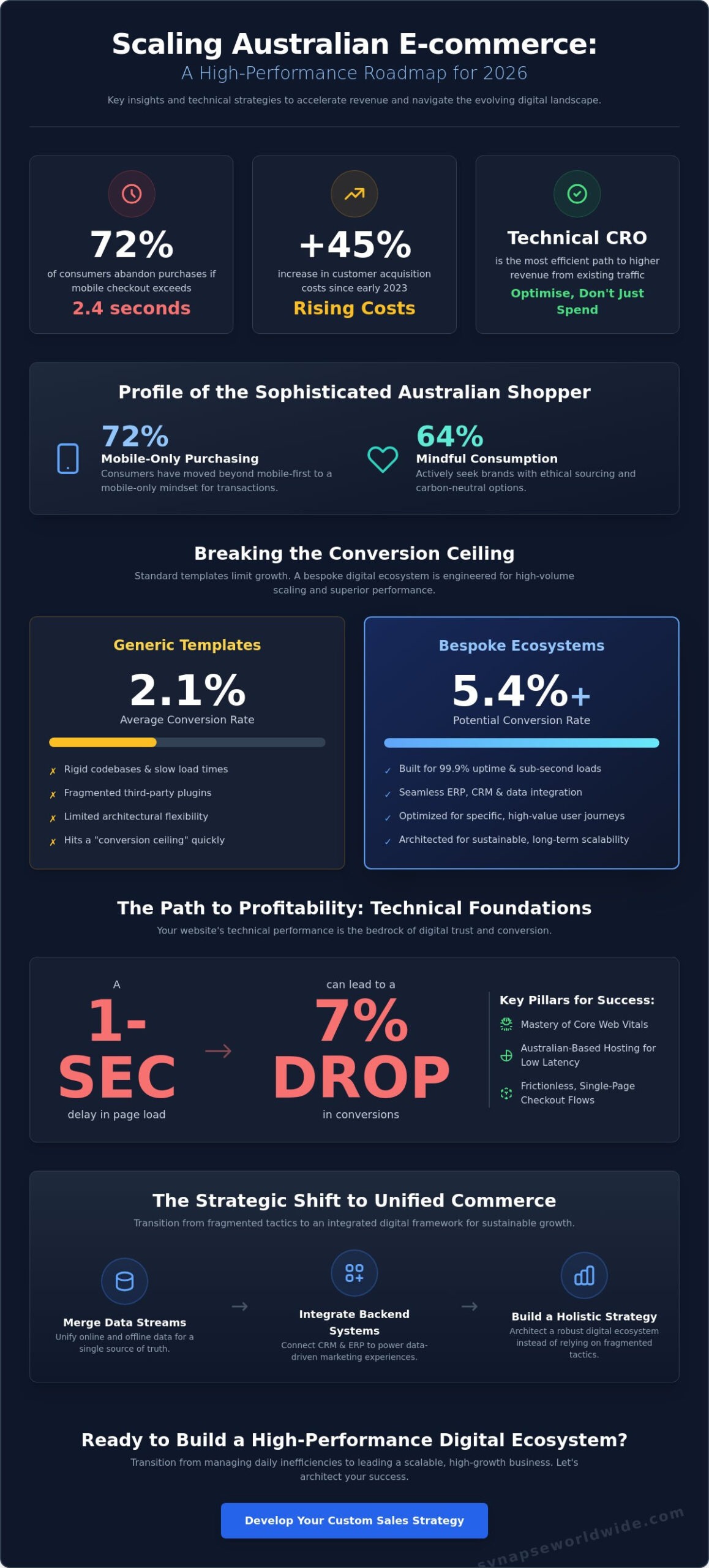
Australian shopping habits have reached a critical tipping point. Mobile-first browsing has matured into mobile-only purchasing for 72% of the population. Consumers don’t tolerate friction. They expect one-tap checkout via digital wallets or flexible credit options like Afterpay and Zip. Beyond convenience, 64% of Australian shoppers now prioritize mindful consumption, actively seeking brands that demonstrate ethical sourcing and carbon-neutral shipping. If your messaging lacks authentic sustainability data, you’re losing a significant market segment. A strategic approach to how to increase online sales australia must account for these values-based purchasing decisions.
Why “Good Enough” Websites Fail to Scale
Basic SaaS themes often lead to a conversion ceiling. While a standard template might support initial growth, it lacks the architectural flexibility needed for high-volume scaling. Bespoke, high-performance builds outpace generic themes because they’re optimized for specific user journeys rather than broad categories. Consider these differences:
- Generic Templates: Limited by rigid codebases, slow load times, and fragmented third-party plugins.
- Bespoke Ecosystems: Built for 99.9% uptime, sub-second page loads, and seamless ERP integration.
A generic site might achieve a 2.1% conversion rate, but a tailored ecosystem leveraging real-time inventory and personalized pricing can push that figure toward 5.4% or higher. High-growth brands don’t just exist online. They build robust, scalable infrastructures that respond to data in real time, ensuring the digital presence evolves as fast as the market does. Transitioning from a standalone website to a comprehensive digital ecosystem is the only way to bypass the limitations of template-based commerce.
Mastering Conversion Rate Optimisation (CRO) for Local Success
Conversion Rate Optimisation represents the most direct path to profitability because it focuses on extracting higher value from your existing traffic. It’s the strategic process of refining your website to ensure a higher percentage of visitors complete a purchase without requiring an increase in your advertising budget. For brands investigating how to increase online sales australia, CRO is the engine that transforms passive browsing into measurable revenue growth.
Technical Performance: Speed and Core Web Vitals
Technical performance is the foundation of digital trust. Data from industry leaders indicates that a 1-second delay in page load time can lead to a 7% drop in conversions; a margin that often dictates the difference between market leadership and obsolescence. In the Australian market, latency is a critical factor. Utilizing Australian-based hosting reduces the physical distance data travels, which directly improves response times and strengthens local search signals. Core Web Vitals serve as the technical benchmark for 2026 search visibility, measuring real-world user experience through loading performance, interactivity, and visual stability.
UX Design That Drives Action
Establishing a comprehensive e-commerce strategy requires a transition from generic templates to high-performance, functional design. Frictionless checkout is a non-negotiable standard in 2026. This involves implementing guest checkout options to reduce entry barriers and single-page flows that eliminate unnecessary navigation steps. Professional UI/UX design does more than just look polished; it establishes immediate authority and reduces the skepticism that often plagues smaller online retailers. Bespoke navigation structures help users find products faster than generic search bars by categorizing inventory according to specific Australian consumer intent.
Australians value transparency and local reliability. Psychological triggers that resonate with this demographic include the prominent display of Australian contact details, clear GST-inclusive pricing, and realistic delivery timelines. When consumers feel a brand understands their local context, the perceived risk of the transaction decreases significantly.
- Quick Wins: Deploy trust badges near the “Add to Cart” button; enable address auto-fill via Google Maps API; compress all product imagery to under 100KB without quality loss.
- Long-term Structural Improvements: Migrate to a headless commerce architecture for sub-second speeds; develop custom product filtering systems based on user behavior data; integrate biometric payment gateways like Apple Pay and Google Pay for mobile users.
Refining these elements is essential for any business serious about how to increase online sales australia. If your current platform doesn’t support these advanced configurations, a bespoke digital audit can identify the specific technical bottlenecks preventing your brand from reaching its full potential.
Strategic Channel Selection: Marketplaces vs. Bespoke E-commerce
Choosing where to sell is the most critical decision for Australian retailers in 2026. While Amazon Australia and eBay provide immediate access to millions of active shoppers, they operate on “rented land.” Success requires a balance between third-party reach and owned-platform profitability. This is a foundational step in learning how to increase online sales australia businesses can sustain over the long term.
The Marketplace Trap and How to Avoid It
Marketplaces demand a heavy toll for their convenience. Amazon Australia referral fees typically range from 7% to 15% per transaction, while eBay’s final value fees often exceed 13% in competitive categories. These costs erode margins before you’ve even considered logistics or advertising. More importantly, these platforms guard customer data. You don’t own the relationship; you’re simply fulfilling a transaction for the marketplace’s benefit.
Smart retailers use marketplaces as a high-volume lead generator. Treat them as the top of your sales funnel. Focus on high-visibility products to acquire customers, then use strategic packaging inserts or warranty registrations to transition those buyers to your bespoke site. This shifts the relationship from a third-party platform to your owned ecosystem where you control the narrative.
Building Your Own High-Performance Platform
A bespoke website is your digital headquarters. Whether you choose a custom WooCommerce build or a fully bespoke architecture, owning your infrastructure ensures your brand equity remains within your control. This is where you maximize ROI. You keep 100% of the customer data, allowing for sophisticated remarketing and personalized email flows that drive repeat business without additional acquisition costs.
Custom features are the primary drivers of conversion on owned platforms. Bespoke builds allow for unique functionality that generic templates can’t match:
- Interactive product builders: These tools can increase average order value by 20% by allowing customers to customize their purchases.
- Integrated subscription models: These create predictable, recurring revenue streams and increase customer lifetime value.
- Local logistics integration: Seamless connections with Australia Post or StarTrack ensure fast, reliable fulfillment that meets local expectations.
Strategic channel selection determines your growth ceiling. A hybrid model leverages the massive traffic of eBay and Amazon for discovery, while your bespoke platform serves as the engine for high-margin sales and brand loyalty. Implementing this integrated approach is the most effective way to understand how to increase online sales australia brands need to thrive in a competitive digital landscape.
Leveraging Data Integration: CRM and ERP for Scalable Sales
Back-end efficiency serves as the invisible engine of growth for any digital enterprise. When your internal systems fail to communicate, the friction is felt immediately by the customer. A 2024 report by Inside Australian Retail found that 62% of shoppers will abandon a brand after a single poor experience caused by stock inaccuracies or delayed processing. Mastering back-end synergy is a fundamental requirement for those looking at how to increase online sales australia in an increasingly unforgiving market. Scalability depends on your ability to process a thousand orders with the same precision as a single transaction.
Data silos act as a ceiling for growth. When your marketing team lacks visibility into warehouse stock levels or customer service history, you waste resources on misaligned strategies. Seamless integration transforms your business from a collection of disconnected departments into a unified sales machine. This strategic alignment ensures that every digital touchpoint is backed by operational reality, building the confidence and reliability that Australian consumers demand.
Personalisation Through CRM Integration
CRM data is the foundation of modern hyper-segmentation. By 2026, generic blast emails will no longer yield acceptable conversion rates. You should use detailed purchase history to trigger automated, high-converting email sequences that provide genuine value. For instance, a customer who purchases a high-end espresso machine should receive a curated sequence for specific coffee bean blends or maintenance kits exactly 14 days later. CRM data allows for bespoke customer journeys at scale, ensuring every interaction feels like a personal consultation rather than a mass-market broadcast. This targeted approach directly addresses the specific needs of your audience, turning one-time buyers into lifelong advocates.
Operational Excellence with ERP Solutions
ERP systems eliminate the “out of stock” frustration that kills conversion rates. Real-time synchronisation between your physical warehouse and your digital storefront is non-negotiable. Automated order processing can reduce manual handling errors by up to 45%, which significantly accelerates the dispatch cycle. Better data leads to smarter forecasting and more agile stock management. You can predict demand based on seasonal trends from 2024 and 2025, preventing capital from being tied up in stagnant inventory. This level of robust, strategic integration is exactly how to increase online sales australia while maintaining healthy profit margins. When your operations are lean, your growth potential becomes limitless.
This is particularly relevant for specialized trades like patio and outdoor blind installers, where project management and sales must be perfectly synced. Insights from patiolink.au demonstrate how industry-specific software can bridge these gaps, allowing trade businesses to scale effectively in the 2026 market.
Ready to bridge the gap between your data and your revenue? Discover how our bespoke digital solutions can integrate your systems for maximum growth.
Partnering for Growth: Developing a Custom Sales Strategy
Fragmented marketing tactics often lead to a 15% to 20% waste in digital ad spend because they lack a unified foundation. To truly understand how to increase online sales australia, businesses must pivot from reactive “fixes” to a proactive, architected strategy. Synapse Worldwide builds integrated digital solutions that align your technical infrastructure with your commercial goals. This isn’t about a one-off project; it’s about a long-term partnership that evolves as the Australian e-commerce market expands. We don’t just deliver a website; we engineer a revenue-generating ecosystem designed for longevity.
The Synapse Approach: From Discovery to Deployment
We begin every engagement with a comprehensive strategic audit to identify hidden friction points in your current funnel. Data from 2024 indicates that 68% of enterprise-level site performance issues stem from poorly integrated third-party plugins that bloat code and slow down conversions. Custom software development eliminates these bottlenecks by creating bespoke tools designed specifically for your unique business logic. We provide Fixed-Price models for clear project milestones and Monthly Retainer options to ensure your growth remains predictable and supported. This structural stability allows you to scale without the technical debt that often plagues off-the-shelf solutions. Our team manages the intricate technical details so you can focus on high-level business transformation.
Taking the Next Step Toward Digital Dominance
Your website shouldn’t be a static cost on your balance sheet. It’s a scalable asset capable of driving 24/7 revenue. When you treat your digital presence as a core business engine, you stop chasing fleeting trends and start setting the standard for your industry. Expert execution means your platform is ready for the 2026 consumer who demands instant, personalized experiences and seamless mobile interactions.
The Australian digital landscape is becoming increasingly competitive; e-commerce revenue is projected to maintain a steady upward trajectory through 2026. Success requires more than just being online; it requires a sophisticated, data-driven framework that converts visitors into loyal advocates. If you’re ready to move to the next level of business success, it’s time to stop guessing and start building with a partner who understands the global digital landscape. Book a strategic consultation with Synapse Worldwide to refine your approach to how to increase online sales australia and secure your market position today.
Future-Proof Your Australian E-commerce Strategy
Success in the 2026 digital marketplace requires a sophisticated blend of high-performance conversion rate optimisation and robust data integration. By prioritising bespoke CRM and ERP systems, your business can turn fragmented data into a scalable engine for growth. Understanding how to increase online sales australia involves moving beyond cookie-cutter templates and embracing a tailored architecture that supports long-term expansion. These strategic pillars ensure your brand remains resilient as consumer expectations continue to evolve.
Navigating this complexity requires a partner with a proven track record of delivery. Synapse Worldwide has operated as an authoritative Digital Architect since 2005, bringing over 20 years of technical expertise to national and global brands. We specialise in custom integrations that streamline operations and enhance the customer journey. Our team provides the strategic discipline needed to manage intricate technical details while focusing on your return on investment. It’s time to transform your digital presence into a high-performance asset.
Partner with Synapse Worldwide to Scale Your Online Sales
Your business is ready for the next level of success, and the right strategic foundation will ensure you lead the market for years to come.
Frequently Asked Questions
What is the most effective way to increase online sales in Australia quickly?
Performance marketing through Google Shopping and Meta Ads remains the fastest lever for rapid growth. By targeting high-intent search queries, brands often see immediate traffic shifts and revenue gains. Data from 2025 retail reports indicates that integrated paid campaigns can boost revenue by 22% within the first quarter of implementation when paired with a high-converting landing page.
How much should an Australian business spend on digital marketing to see growth?
Australian businesses typically allocate 8% to 12% of their total revenue toward digital marketing to maintain a competitive edge. For those pursuing aggressive growth, this figure often rises to 20% according to the 2024 Gartner CMO Spend Survey. This investment ensures your brand remains visible across a crowded digital landscape while funding the data-driven optimization required for scaling.
Is it better to use Shopify or a custom-developed e-commerce site?
Choosing between Shopify and a custom-developed site depends on your specific operational complexity. Shopify offers a robust, scalable framework for standard retail, but bespoke custom builds are essential for businesses requiring unique integrations or complex logic. A 2025 industry audit found that 64% of high-volume Australian enterprises prefer custom solutions to maintain full control over their proprietary data and user experience.
How does SEO impact online sales for Australian businesses in 2026?
SEO is the foundation of a sustainable strategy to learn how to increase online sales australia by 2026. Search engines now prioritize AI-driven intent and deep topical authority over simple keywords. Statistics from 2025 show that sites optimized for “Search Generative Experience” capture 45% more organic traffic than those relying on legacy SEO tactics, making it a critical long-term investment.
Can CRM integration really improve my conversion rates?
CRM integration directly improves conversion rates by enabling sophisticated personalization and automated follow-ups. McKinsey research indicates that companies using integrated CRM data to personalize the customer journey see a 15% increase in total revenue. It transforms a cold transaction into a long-term relationship, ensuring every touchpoint is strategic and data-informed rather than a generic sales pitch.
What are the biggest mistakes Australian retailers make when selling online?
The most significant error is failing to optimize for the 72% of Australian consumers who shop exclusively via mobile devices. Many retailers also hide shipping costs until the final step, which causes immediate friction. A 2024 study by Australia Post highlighted that 60% of shoppers will abandon a purchase if delivery timelines or costs aren’t transparent from the start of the session.
How do I reduce cart abandonment for my Australian customers?
Reducing cart abandonment requires a seamless checkout process and multiple payment options like Afterpay or Zip. Baymard Institute data shows that removing mandatory account creation can lower abandonment rates by 35%. You should also implement automated recovery emails; these messages currently recover 10% of lost sales for Australian e-commerce brands by addressing customer concerns within the first hour.
Why is local Australian hosting important for my e-commerce site?
Local Australian hosting is vital because physical proximity to your customers reduces server latency and improves page load speeds. Akamai research demonstrates that a 100ms delay in load time can drop conversion rates by 7%. Beyond performance, local servers provide a slight SEO advantage for geo-targeted searches within the Australian market, ensuring your site remains responsive and reliable.