
Your business strategy is a liability if it isn’t engineered as a high-performance, integrated digital architecture. In 2026, the cost of fragmented systems has reached a breaking point, especially as new Privacy Act mandates and AI-driven market shifts demand absolute technical precision. Choosing the right digital strategy consulting australia partner means moving beyond abstract slide decks to build a roadmap where your web presence, CRM, and marketing channels function as a single, unstoppable growth engine.
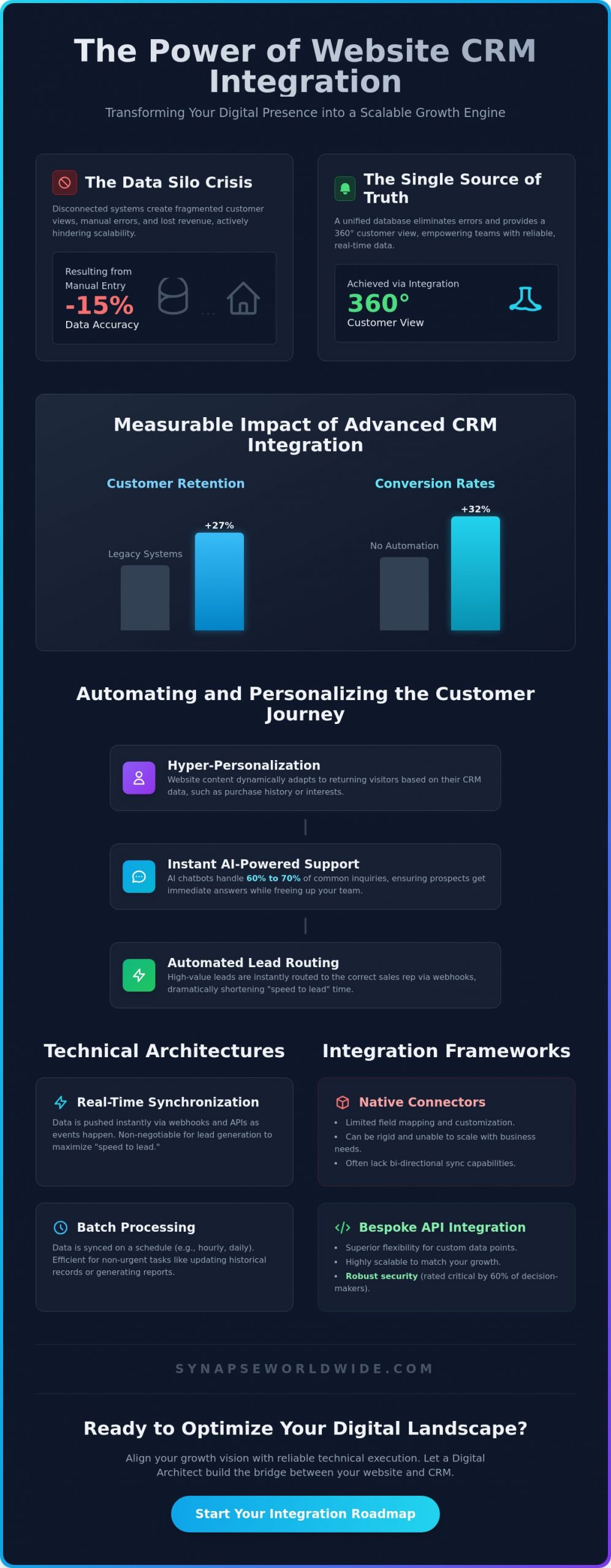
It’s common to feel a disconnect between your high-level vision and the technical reality of your legacy systems. You want a scalable infrastructure that supports national expansion without the fear of falling behind in the rapid race for AI adoption. This article provides the 2026 framework for bridging that gap, ensuring every technology investment delivers measurable ROI. We’ll examine how to unify your digital architecture through custom web design and ERP solutions while staying ahead of Australia’s evolving regulatory landscape and the ACCC’s heightened focus on digital platforms.
Key Takeaways
- Master the transition from a passive online presence to digital-first operations to maintain a competitive advantage in the 2026 Australian economy.
- Learn to build a resilient, high-performance architecture by aligning custom web design with sophisticated CRM and ERP integrations.
- Identify why many digital strategy consulting australia frameworks fail during technical execution and how to ensure your strategic vision translates into measurable ROI.
- Follow a structured roadmap for national expansion that prioritizes a deep digital audit of your current SEO performance and technical infrastructure.
- Discover the “Visionary Architect” model for scaling through intelligent e-commerce development and high-performance digital systems.
The 2026 Digital Landscape: Navigating Market Volatility in Australia
Australia’s digital economy has reached a critical maturity point where a simple online presence no longer guarantees market share. In 2026, the distinction between your business operations and your digital interface has vanished. High-performance enterprises have moved beyond treating technology as a marketing expense, instead viewing it as the core engine of their commercial viability. Effective digital strategy consulting australia now focuses on deep operational integration, ensuring that every customer touchpoint is backed by a robust, automated backend.
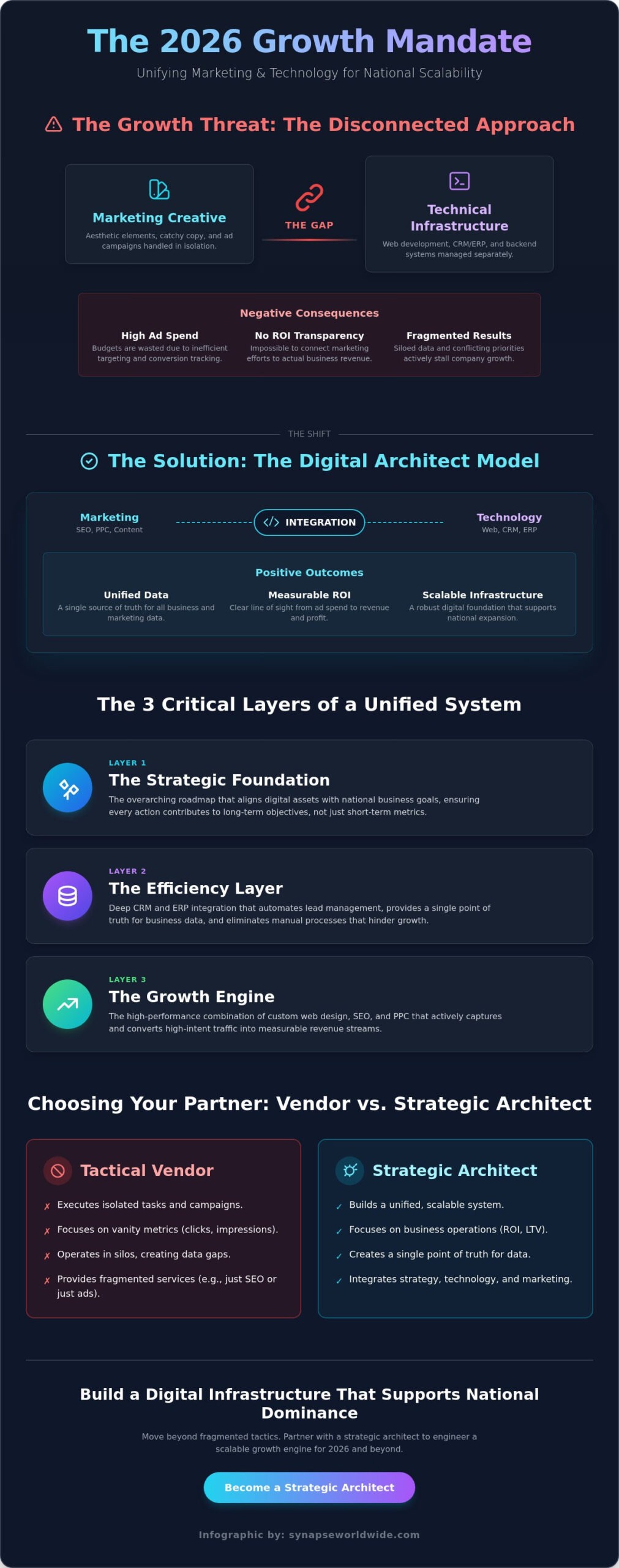
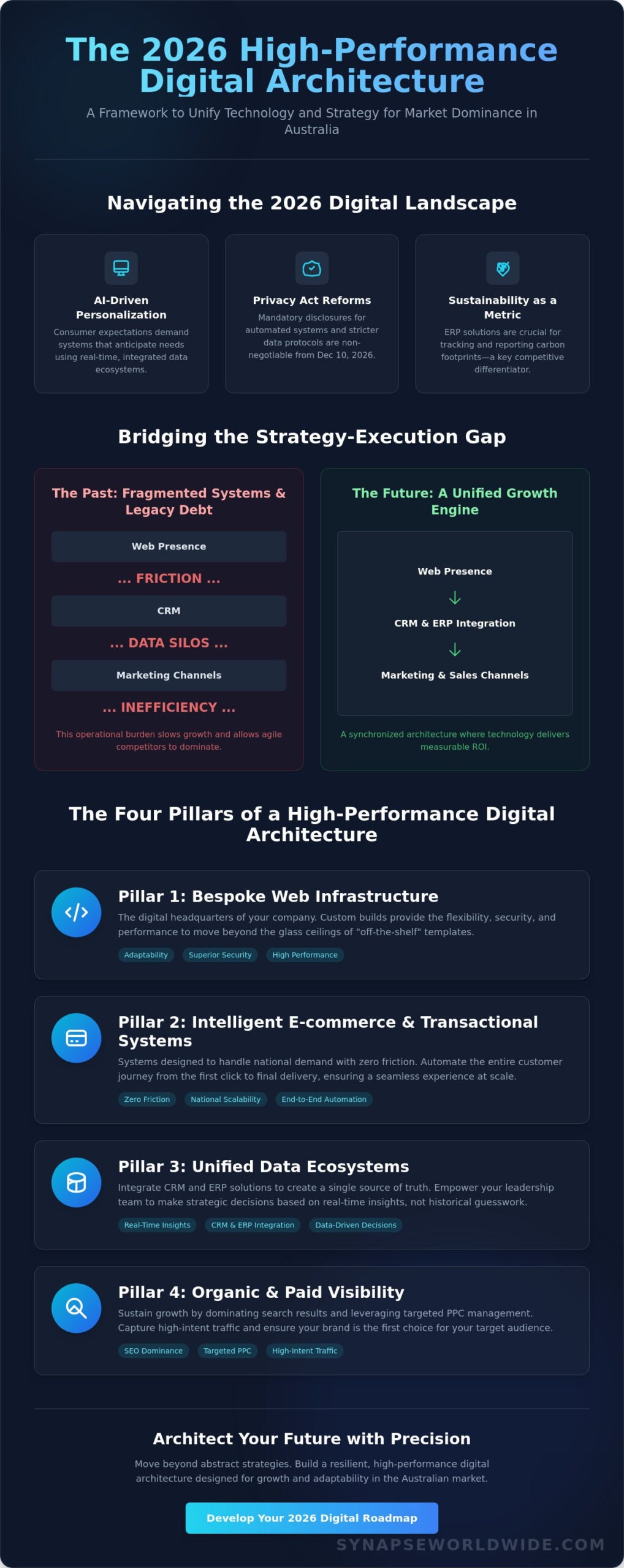
Static plans are a liability in a market defined by rapid technological pivots. The shift toward digital-first operations means your website, CRM, and ERP must function as a unified organism. When these systems are siloed, the resulting friction creates a “strategy-execution gap” that competitors will exploit. Modern Digital Strategy is no longer a fixed document; it’s a living architectural framework that synchronizes technical infrastructure with commercial objectives to ensure continuous growth.
Key Drivers of Transformation in the Australian Market
Consumer expectations in Australia are now dictated by AI-driven hyper-personalisation. Customers expect your systems to anticipate their needs based on real-time data from integrated ecosystems. If your e-commerce development doesn’t offer this level of intelligence, brand loyalty evaporates instantly. Furthermore, local strategic oversight is non-negotiable due to the significant Privacy Act reforms taking effect on December 10, 2026. These mandates require mandatory disclosures for automated decision-making systems and stricter email marketing protocols, making data sovereignty a cornerstone of any viable strategy.
Sustainability has also emerged as a vital digital metric. Australian enterprises are increasingly using ERP solutions to track and report their carbon footprints across the supply chain. This transparency isn’t just for compliance; it’s a competitive differentiator for a more conscious national consumer base.
The Cost of Strategic Stagnation
Stagnation carries a heavy price tag known as legacy debt. This is the financial and operational burden of disconnected software and manual processes that slow down your ability to scale. While you manage these inefficiencies, agile competitors use advanced automation and SEO to undercut traditional service models. They aren’t just working harder; they’re operating on a more efficient architecture. Quantifying this debt is the first step in reclaiming your market position. Without a proactive approach to digital strategy consulting australia, businesses risk becoming obsolete as the gap between their vision and their technical reality widens.
The Four Pillars of a High-Performance Digital Architecture
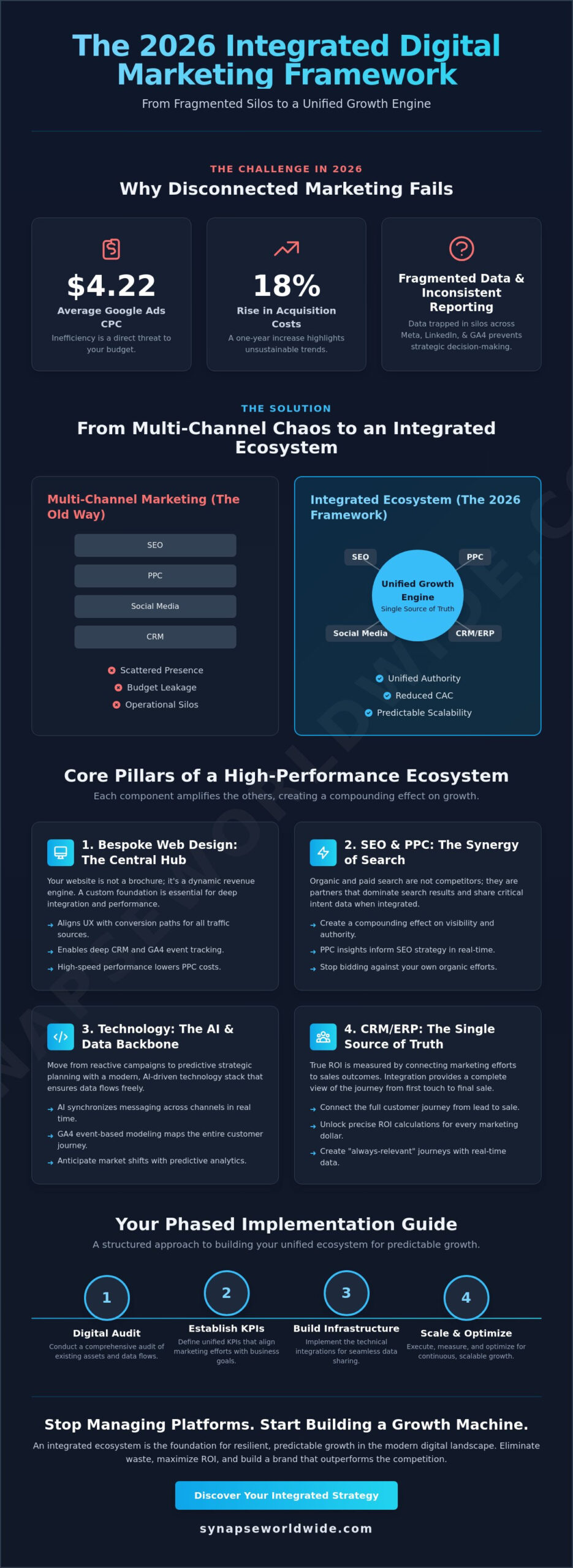
High-level strategy is meaningless without a technical foundation capable of supporting your commercial ambitions. We view digital architecture as a four-legged stool; if one pillar is weak, the entire structure collapses under the weight of market pressure. This integrated approach is what differentiates sophisticated digital strategy consulting australia from standard agency services. To thrive in the 2026 landscape, your business must master four specific areas of digital infrastructure.
- Pillar 1: Bespoke Web Infrastructure. Templates and “off-the-shelf” solutions create glass ceilings. Custom builds provide the flexibility to adapt to Australia’s National Digital Framework while maintaining superior security and performance standards.
- Pillar 2: Intelligent E-commerce & Transactional Systems. These systems must handle national demand with zero friction, automating the journey from click to delivery.
- Pillar 3: Unified Data Ecosystems. Integrating CRM and ERP solutions ensures your leadership team makes decisions based on real-time insights rather than historical guesses.
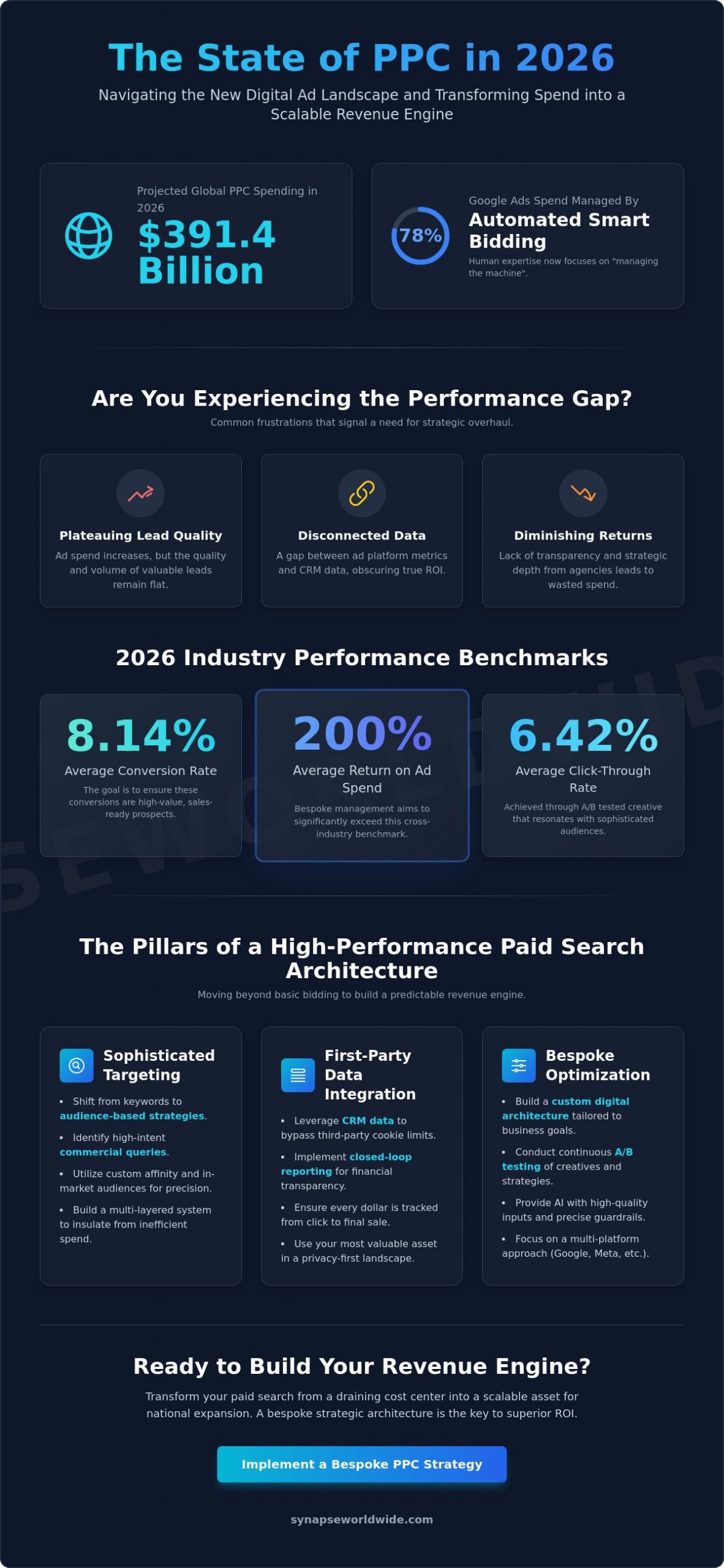
- Pillar 4: Organic & Paid Visibility. Sustaining growth requires dominance in search results and targeted PPC management to capture high-intent traffic.
Custom Web Design as a Growth Engine
Your website is the digital headquarters of your company. Investing in custom web design for small business isn’t about aesthetics alone. It’s about building a strategic growth engine that aligns your brand identity with user intent. High-performance sites use precision UX/UI design to guide visitors through a logical conversion funnel. Speed is a critical factor here. When scaling nationally, a delay of even one second can decimate your conversion rates. We focus on engineering sites that remain lightning-fast even as your traffic and complexity grow.
E-commerce and Automation Synergy
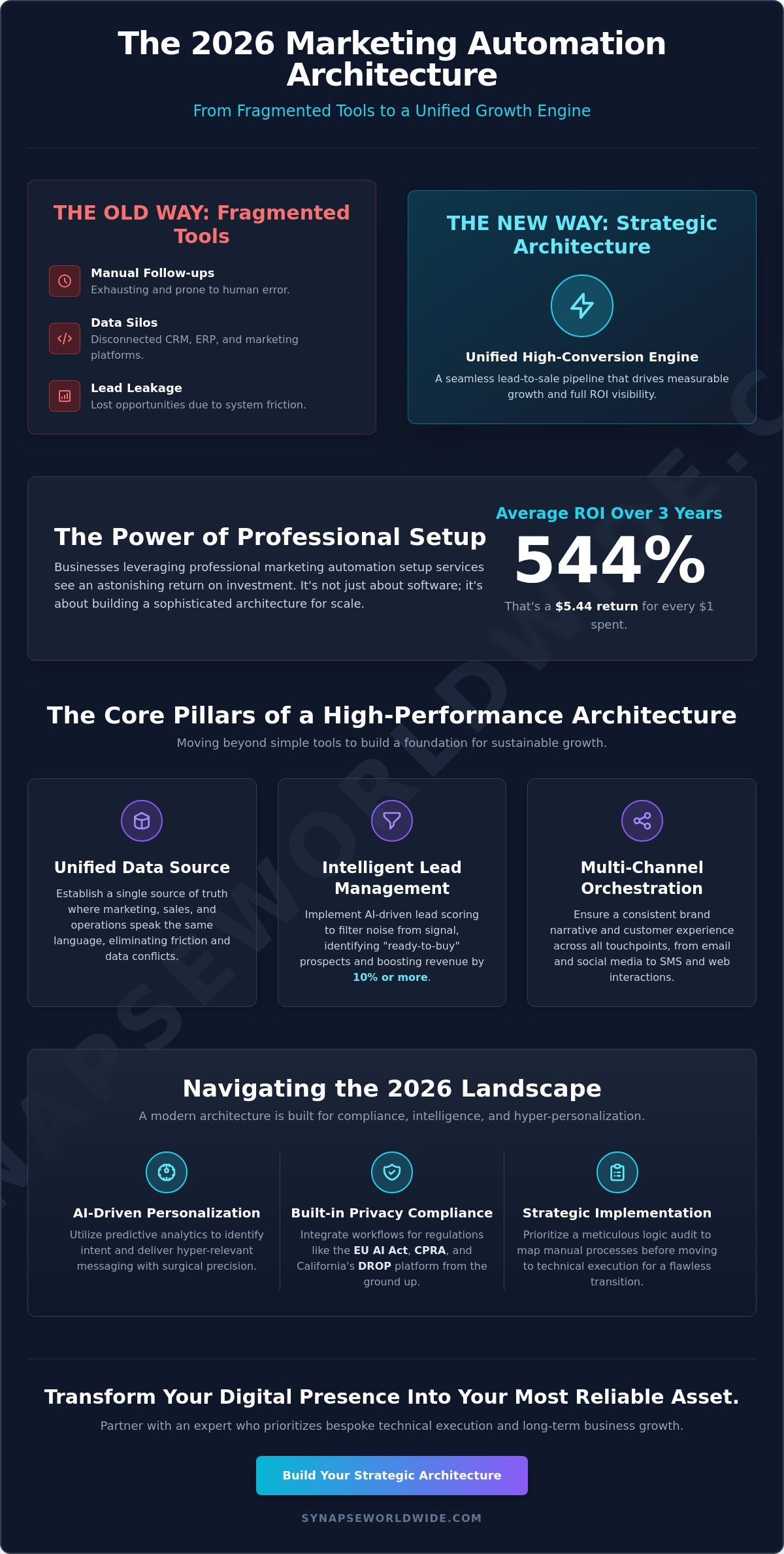
Scalability in 2026 requires more than just a functional storefront. Successful ecommerce website development strategies focus on systems that process 1,000 orders or more without manual intervention. By integrating marketing automation, you can significantly reduce customer acquisition costs and increase lifetime value. When your e-commerce platform communicates directly with your ERP data, inventory levels and sales figures stay accurate across all channels. This synergy prevents overselling and allows for dynamic pricing strategies that respond to market demand. If your current architecture feels fragmented, it may be time to explore how CRM integration can unify your data flow and drive efficiency.
Bridging the Strategy-Execution Gap: Why Theory Often Fails
The “Consultant’s Paradox” is a common frustration for Australian executives. You receive a sophisticated strategy document filled with ambitious goals, but your technical team identifies it as impossible to implement within your current framework. This gap exists because most firms separate high-level thinking from the practical realities of code and systems integration. True digital strategy consulting australia must be rooted in technical feasibility from the very first meeting. Without this grounding, you are left with expensive conceptual reports that never actually reach the market.
To move from a conceptual plan to a high-performance engine, your infrastructure must be bespoke. This is why custom software development serves as the vital bridge between a visionary roadmap and actual profit. It allows for the precision required to solve unique business bottlenecks that off-the-shelf software simply ignores. We adopt a “Visionary Architect” model, seeing the big picture of your national expansion while remaining disciplined enough to manage the intricate technical details of your CRM and ERP integrations.
The Danger of Siloed Strategic Planning
Disconnected departments are the silent killers of digital transformation. When marketing sets growth targets that IT cannot support, or IT implements systems that marketing cannot use, the business stagnates. A designated “Digital Lead” is essential to synchronize national business goals with technical capability. We’ve found that technical audits must precede any strategic roadmap. If you don’t know where the infrastructure is failing, you cannot increase the pressure for growth. This alignment mirrors the standards set by Australia’s Data and Digital Government Strategy, which emphasizes a unified approach to national digital maturity and data security.
Transforming Theory into Technical Reality
The discovery phase is where the real work begins. This isn’t just a meeting; it’s a deep dive into identifying hidden infrastructure bottlenecks that could derail your growth. Prototyping and agile methodology are no longer just for startups; they are essential strategic tools for established Australian businesses. These methods allow you to test theories in the real world before committing to a full-scale build. The most effective digital strategy consulting australia providers don’t just hand over a PDF. They provide a blueprint for a functioning ecosystem because a strategy without a build-plan is merely a wish list.
Developing Your 2026 Digital Roadmap: A National Framework
A roadmap is only as strong as the data that informs it. For Australian enterprises, the path to high-performance growth requires a transition from abstract goals to a five-step technical execution plan. Effective digital strategy consulting australia provides the structure needed to navigate this transition without losing momentum. This framework ensures that every technological shift serves your broader commercial objectives, moving beyond the “black box” solutions often offered by global firms.
- Step 1: The Digital Audit. We begin by assessing legacy systems, technical SEO health, and UX performance to identify where your current infrastructure fails to meet 2026 standards.
- Step 2: Architecture Design. This phase involves mapping the critical data flow between your web presence, CRM, and ERP solutions to eliminate silos and ensure data integrity.
- Step 3: Growth Engineering. Here, we implement targeted seo for small business and PPC frameworks to capture high-intent market share in your specific sector.
- Step 4: Automation and Integration. We focus on removing manual friction from your sales cycle, allowing your team to focus on high-value tasks while reducing your overall customer acquisition cost.
- Step 5: Continuous Optimization. Using 2026 analytics and advanced attribution models, we pivot and scale your operations based on real-time performance data.
Phase 1: Discovery and Infrastructure Audit
Identifying revenue leaks in your customer journey is the priority during the discovery phase. A leak might be a slow-loading checkout page or a CRM that doesn’t capture lead source data correctly, leading to wasted marketing spend. Technical SEO benchmarks have shifted significantly in 2026, with a greater emphasis on data privacy and security following recent legislative reforms. We evaluate your current CRM and ERP efficiency against national standards to ensure your backend can handle the increased load of a scaling business. If you’re ready to identify your growth bottlenecks, consult with our technical architects to begin your comprehensive infrastructure audit.
Phase 2: Scaling Through Strategic Visibility
Visibility isn’t just about being seen; it’s about being found by the right people at the right time. Integrating ppc management services with a long-term organic strategy creates a dual-threat approach to market dominance. We develop content pillars that establish your authority in the Australian B2B or B2C space, ensuring your brand is synonymous with expertise. Our focus remains on lead quality over quantity. By using advanced attribution models, we track exactly which channels drive the highest ROI, allowing for disciplined budget allocation across all digital touchpoints. This level of precision ensures that your marketing spend is an investment in growth rather than an uncontrollable expense.
Synapse Worldwide: Architectural Precision in Digital Strategy
For two decades, Synapse Worldwide has engineered the digital infrastructure that powers Australian market leaders. We don’t just provide advice; we deliver the technical architecture required for sustainable growth. Our approach to digital strategy consulting australia is built on the principle that a strategy is only as good as its execution. By combining high-level strategic planning with disciplined technical implementation, we ensure your digital presence is a precise reflection of your commercial ambitions.
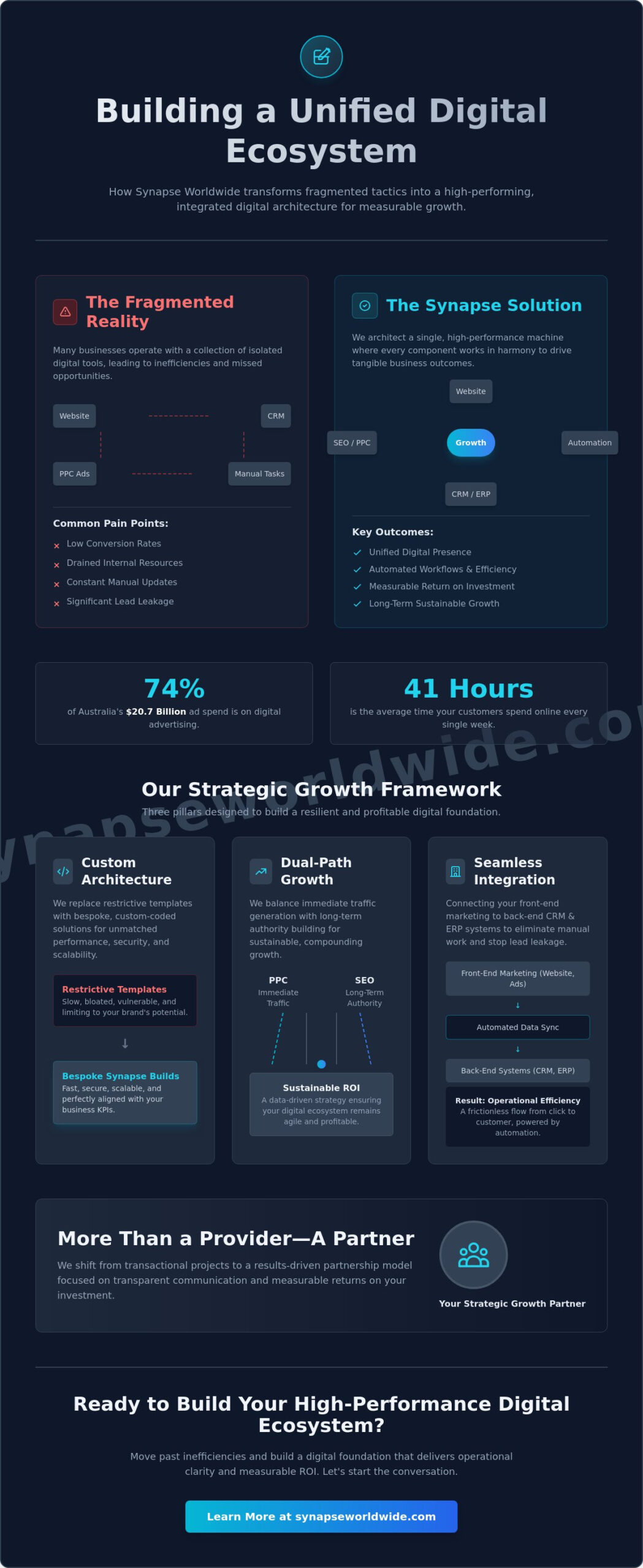
The Synapse Method represents a shift from standard agency models to a partnership focused on measurable revenue growth. We specialise in custom-built solutions, from bespoke web design to complex ERP solutions, designed to eliminate operational friction. Our fixed-price project model provides the strategic accountability that modern business leaders demand. You receive a clear scope and a defined outcome, ensuring that your investment translates directly into a high-performance digital asset.
From Vision to Implementation
We bridge the gap between abstract corporate goals and the technical deployment of your systems. Our commitment extends beyond the initial build through ongoing SEO, hosting, and maintenance to ensure your infrastructure remains resilient. As a national partner with a globally-minded perspective, we bring international digital trends to the local market. This provides you with a distinct competitive advantage while maintaining the stability and reliability of local expertise. We position our clients as proactive participants in their industry, rather than passive observers of technological change.
Secure Your Digital Future Today
The 2026 digital landscape moves too quickly for a “wait and see” approach. Legislative shifts and AI advancements mean that the window for securing a dominant market position is narrowing. Starting your digital transformation now is the only way to ensure your systems are ready for the demands of the next decade. You can schedule a strategic technical audit with our lead consultants to identify the exact path toward your business’s next level of success. Request a Strategic Consultation to begin your transformation today.
Architecting Your Growth Engine for 2026 and Beyond
Navigating the complexities of the 2026 digital economy requires more than just high-level theory. It demands a technical roadmap that unifies your web infrastructure, e-commerce systems, and data ecosystems into a singular, high-performance architecture. By bridging the gap between strategic vision and practical execution, your business can turn technological volatility into a measurable competitive advantage. Success in this landscape belongs to those who view their digital presence as a living framework rather than a static asset.
Synapse Worldwide provides the precision needed to master this transformation. Founded in 2005, we bring over 20 years of digital expertise to every partnership. We specialise in the seamless integration of custom CRM, ERP, and e-commerce solutions for corporate and government clients across the country. When you choose our digital strategy consulting australia services, you’re investing in a legacy of architectural excellence and nationwide service delivery. It’s time to move beyond fragmented systems and build a foundation that supports your highest ambitions. Scale your business with an authoritative digital strategy from Synapse Worldwide. Your next level of growth is within reach.
Frequently Asked Questions
What exactly does a digital strategy consultant do for an Australian business?
A digital strategy consultant bridges the gap between high-level business objectives and technical implementation. They perform deep infrastructure audits to identify revenue leaks and design a unified architecture that integrates custom web design with backend systems like CRM and ERP. This ensures every technology investment supports national scaling and measurable ROI within the Australian market.
How do I know if my company needs a new digital strategy for 2026?
Your company likely needs a new framework if you’re managing disconnected software, experiencing high customer acquisition costs, or struggling with manual data entry between systems. The significant Privacy Act reforms taking effect in late 2026 also mean that any strategy older than two years may no longer be compliant. If your technical reality isn’t supporting your growth vision, it’s time for a strategic pivot.
What is the difference between a digital strategy and a marketing plan?
A digital strategy is the architectural blueprint for your entire business ecosystem, whereas a marketing plan focuses specifically on visibility and lead generation. While a marketing plan might cover SEO and PPC management, a comprehensive digital strategy consulting australia approach ensures those channels are integrated with your CRM and ERP. It builds the foundation that allows marketing efforts to scale efficiently.
How long does it take to see ROI from a new digital strategy?
Measurable ROI typically appears in stages as the infrastructure is deployed. Immediate gains often come from optimizing PPC management and fixing critical UX bottlenecks during the initial build. Long-term profitability, driven by custom web design and organic SEO, usually solidifies over six to twelve months as the integrated systems reduce manual friction and improve customer lifetime value.
Can you integrate our existing CRM and ERP into a new web strategy?
Yes, integrating existing CRM and ERP solutions into a unified web strategy is a core component of high-performance growth. We focus on creating a seamless data flow between your front-end customer experience and your back-end operations. This integration eliminates data silos, providing your leadership team with real-time insights into inventory, sales, and customer behavior across the national market.
What are the biggest digital strategy mistakes Australian companies make?
The most common mistake is treating digital transformation as a series of isolated marketing tactics rather than a unified business architecture. Many companies invest in e-commerce development without considering how it integrates with their legacy ERP or CRM systems. This creates legacy debt where manual workarounds slow down growth and prevent the business from responding to rapid technological pivots.
How much should we budget for digital strategy consulting in 2026?
Budgeting for digital strategy depends on the complexity of your infrastructure and the scale of your national ambitions. Market data from 2026 shows that senior consultants in Australia often command rates between $250 and $400 per hour. While specific project costs vary, most mid-market enterprises allocate funds based on the need for custom software development and full-system integration to ensure long-term ROI.
Do you provide ongoing support after the strategy is implemented?
Sustained growth requires continuous optimization long after the initial implementation phase. We provide ongoing support through technical maintenance, hosting, and performance-based services like SEO and digital strategy consulting australia frameworks that include PPC management. This ensures your digital architecture remains resilient against algorithmic changes and market volatility, allowing your business to pivot quickly as new opportunities emerge.