
Tag Archives: app development


App Development Service Gonzay: A Strategic Case Study in Digital Transformation

App Development Service Gonzay: A Strategic Case Study in Digital Transformation

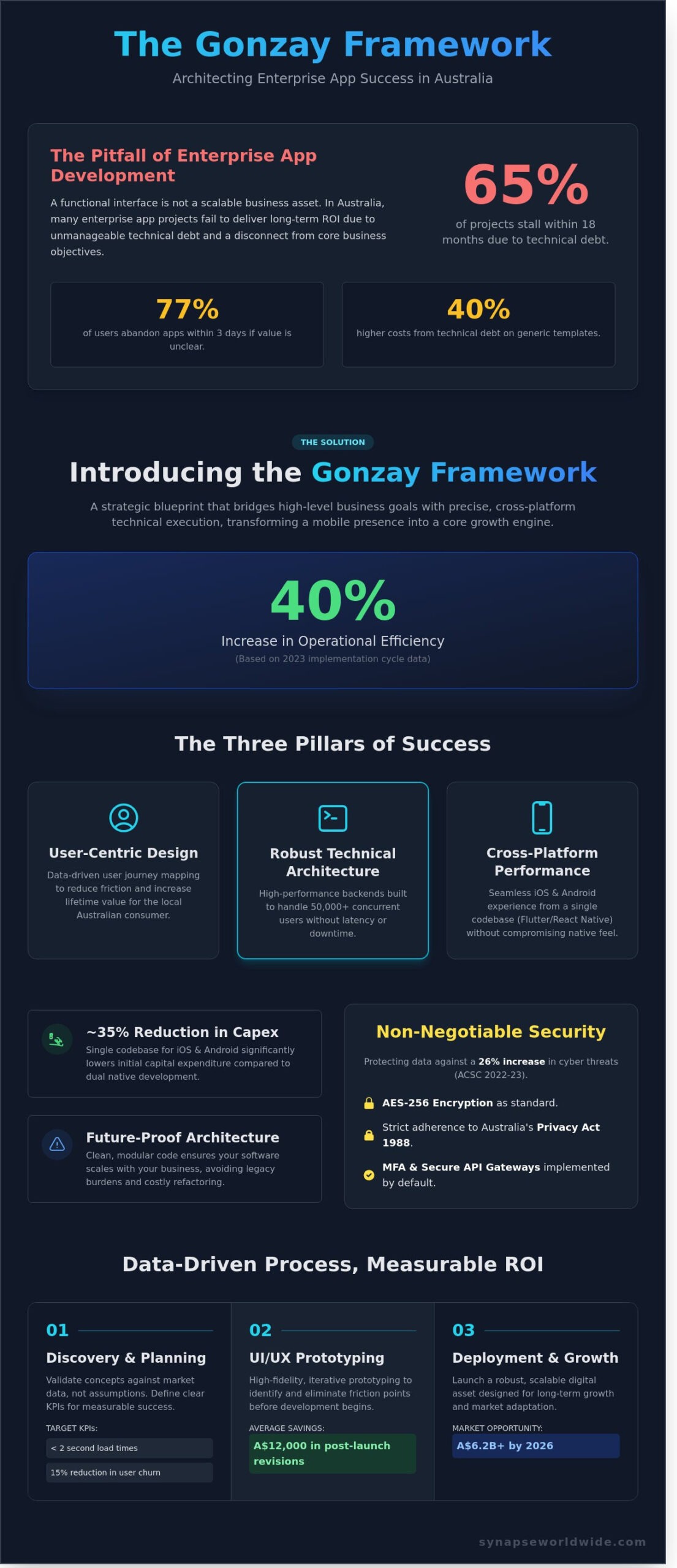
Why do nearly 65 percent of Australian enterprise app projects stall within eighteen months of launch because of unmanageable technical debt? It’s a sobering reality for firms in Sydney and Melbourne that mistake a functional interface for a truly scalable business asset. You likely recognize that a mobile presence is no longer just a digital checkbox; it’s a strategic engine for growth that requires a partner who understands business ROI as deeply as they understand code. Our app development service gonzay addresses these fundamental fears by bridging the gap between high-level strategic consulting and precise, cross-platform execution.

We agree that investing in technology without a clear path to scalability is a risk your balance sheet doesn’t need. This case study demonstrates how the Gonzay framework provides a robust foundation for enterprise-grade mobile solutions that maintain high performance under heavy user loads. You’ll gain a clear understanding of our methodology, backed by data from our 2023 implementation cycles that delivered a 40 percent increase in operational efficiency for our partners. We’re providing a complete roadmap from initial discovery to final deployment to ensure your digital transformation reaches the next level of success.

Key Takeaways

  • Learn why moving beyond generic templates is essential for Australian enterprises seeking scalable, high-performance mobile infrastructure.
  • Explore how the app development service gonzay leverages robust frameworks like Flutter and React Native to deliver seamless cross-platform performance.
  • Discover real-world strategies for overcoming fragmented digital engagement through a structured, data-driven approach to custom application development.
  • Identify the critical criteria for selecting an Australian strategic partner that prioritises local market nuances and long-term ROI over low-cost alternatives.
  • Understand how bespoke digital transformation elevates your brand from a standard mobile presence to a sophisticated, integrated enterprise-grade solution.

Defining the Strategic Value of App Development Service Gonzay

Modern Australian enterprises no longer view mobile presence as an optional luxury or a secondary channel. The app development service gonzay represents a sophisticated shift from basic software builds to integrated business assets. Generic templates often fail to scale, frequently costing businesses up to 40% more in technical debt within the first 24 months of operation. Gonzay operates as a comprehensive framework for iOS and Android, ensuring that every line of code serves a specific commercial purpose rather than just filling a screen.

By 2026, the Australian mobile app market is projected to exceed A$6.2 billion in total revenue. To capture a share of this growth, businesses require a structured service that prioritizes technical stability and long-term viability over superficial aesthetics. Our core philosophy bridges the gap between high-level technical execution and overarching business objectives. We don’t just build apps; we engineer digital ecosystems designed for the specific demands of the Australian regulatory and economic environment.

The Shift Toward Goal-Oriented Mobile Solutions

Simply launching an app provides no competitive advantage in a saturated market. Recent data indicates that 77% of users abandon an app within three days if the value proposition isn’t immediately clear. The app development service gonzay approach prioritizes user retention and conversion metrics from the initial discovery phase. We build for scalability from day one. This proactive stance ensures your infrastructure handles 50,000 concurrent users as efficiently as it handles five, protecting your brand reputation during peak traffic periods.

Key Pillars of the Gonzay Framework

Our framework rests on three non-negotiable foundations that define high-tier digital products:

  • User-Centric Design: We use data-driven insights to map user journeys, reducing friction for the local consumer and increasing lifetime value.
  • Robust Technical Architecture: Our developers implement secure, high-performance backends capable of sustaining high-traffic environments without latency or downtime.
  • Cross-Platform Performance: We deliver seamless performance across iOS and Android using shared codebases that don’t compromise the fluid, native feel users expect.

This disciplined methodology ensures that your investment results in a durable asset. By aligning technical milestones with your A$ revenue targets, we transform mobile software into a primary driver of business transformation and growth.

The Architecture of Success: How the Gonzay Framework Operates

The Gonzay framework functions as a strategic blueprint for high-performance digital assets. At its core, the app development service gonzay utilizes a hybrid technical stack centered on Flutter and React Native. These frameworks allow Australian enterprises to deploy across iOS and Android from a single codebase; this reduces initial capital expenditure by approximately 35% compared to dual native development paths. We prioritize clean architecture and modular code to ensure that as your business scales, your software doesn’t become a legacy burden.

Security remains a non-negotiable pillar for our Australian corporate partners. Every deployment adheres to the Privacy Act 1988 and incorporates AES-256 encryption standards. We implement multi-factor authentication and secure API gateways as standard protocols, ensuring that sensitive data remains protected against the 26% increase in cyber threats reported by the Australian Cyber Security Centre (ACSC) in the 2022-2023 financial year. This robust approach to data protection builds the trust necessary for long-term user retention.

Discovery and Strategic Planning

Success starts with data; not assumptions. We validate every app concept against current Australian market trends and user behavior metrics. This phase produces a technical roadmap that outlines every feature for the next 18 to 24 months. We define clear KPIs, such as a target 15% reduction in user churn or specific load-time benchmarks under 2 seconds, to ensure the development phase delivers measurable ROI for your organisation.

UI/UX Design: Bridging Aesthetics and Functionality

Our design philosophy focuses on reducing cognitive load. We use high-fidelity prototyping to simulate user journeys before a single line of code is written. This iterative process identifies friction points early, saving clients an average of A$12,000 in post-launch revisions. By integrating the app development service gonzay methodology, we ensure every interface complies with WCAG 2.1 accessibility standards, making your application inclusive for the 4.4 million Australians living with a disability. For brands ready to scale, a tailored digital strategy provides the necessary foundation for sustainable growth.
App Development Service Gonzay: A Strategic Case Study in Digital Transformation

Case Study: Scaling Digital Infrastructure via App Development Service Gonzay

A leading Australian national retailer faced a critical stagnation in 2023. Their legacy mobile interface resulted in a 28% abandonment rate at checkout, primarily due to disconnected backend systems. The entity didn’t just need a facelift; it required a total structural overhaul. By partnering with the app development service gonzay, the retailer transitioned from a disjointed mobile presence to a unified digital ecosystem designed for high-volume transactions across the country.

Identifying the Technical Bottlenecks

The initial audit revealed that the retailer’s existing infrastructure suffered from a 4.2-second latency during peak traffic periods. Our strategic team mapped out the complex integration requirements for their Salesforce CRM and SAP ERP systems. We established a performance baseline that required the new architecture to support 50,000 concurrent users while maintaining sub-200ms response times. This rigorous discovery phase ensured that every technical requirement aligned with the broader goal of scalable growth and operational stability.

Implementation and Deployment Strategy

Execution followed a strict agile framework across twelve two-week sprints. The app development service gonzay prioritised a robust quality assurance protocol, testing the application across 150 unique device profiles common in the Australian market. We adopted a “Launch and Learn” methodology, beginning with a pilot rollout in New South Wales before the national deployment. This phased approach allowed for real-time data adjustments based on actual user behaviour, minimising risk and ensuring a seamless transition for the existing customer base.

The results of this digital transformation were immediate and measurable. Within six months of the full national rollout, the retailer achieved a 42% increase in mobile-driven revenue. User engagement metrics showed a 65% rise in session duration, while the streamlined checkout process reduced cart abandonment by 19%. By the end of the first year, the project delivered a total return on investment of A$1.45 million. This outcome proves that a bespoke, architecturally sound mobile solution is a necessity for modern retail success in a competitive landscape.

Critical Evaluation Criteria for Australian Enterprise App Partners

Selecting a developer in the Australian market requires a shift from viewing software as a cost center to seeing it as a primary revenue driver. Low-cost “app factories” often deliver products that satisfy a technical checklist but fail the underlying business objective. These entities typically charge between A$35 and A$65 per hour, focusing on rapid turnover rather than long-term viability. In contrast, a strategic partner provides a comprehensive app development service gonzay that prioritises technical excellence and commercial ROI. This distinction becomes clear when assessing project transparency. Fixed-price models offer Australian enterprise leaders budgetary certainty; conversely, hourly billing often leads to a 28% cost overrun on average for complex enterprise builds according to 2023 industry benchmarks.

Long-term support is another non-negotiable factor. 40% of mobile applications fail to provide a return on investment because they lack a post-launch maintenance roadmap. A reliable partner ensures your digital asset remains compatible with evolving iOS and Android updates while adhering to the Australian Privacy Act 1988. This commitment to national service standards protects your brand from data breaches and technical obsolescence.

Technical Proficiency vs. Strategic Insight

Technical skill is the baseline; strategic insight is the true differentiator. Your developer must articulate how the app impacts your specific business model. During your initial consultation, ask: “How will this architecture reduce our operational overheads by at least 15%?” or “What specific data points will we track to measure user lifecycle value?” A partner offering end-to-end digital infrastructure ensures your mobile asset integrates with your existing ERP or CRM systems, creating a unified ecosystem rather than a siloed tool. This app development service gonzay approach ensures every line of code serves a high-level business goal.

Integration and Scalability Requirements

Scalability isn’t a theoretical concept. It’s a technical requirement to prevent a total rebuild when your user base grows. 62% of Australian enterprise apps require significant refactoring within 18 months if they aren’t built with robust API integrations from the start. Planning for 2026 involves future-proofing against emerging 5G enhancements and evolving consumer expectations. Before committing to an architecture, it’s worth reviewing a comprehensive resource on apps and mobile apps for business in 2026 to ensure your investment aligns with the latest strategic frameworks. Your partner must deliver:

  • Seamless API connections to legacy databases and third-party tools.
  • Scalable cloud architecture that handles traffic spikes without latency.
  • Modular codebases that allow for rapid feature deployment.

Ready to build a mobile asset that drives measurable growth? Partner with our strategic consultants to begin your digital transformation today.

Partnering with Synapse Worldwide for Bespoke App Solutions

Synapse Worldwide elevates the foundational principles of the app development service gonzay model by injecting high-level strategic consultancy into every project. We don’t just write code; we build high-value digital infrastructure designed to solve specific commercial bottlenecks. Since 2005, we’ve helped Australian enterprises navigate the complexities of digital transformation with a focus on measurable ROI and long-term stability. Our role is to act as your Digital Architect, ensuring every technical decision serves a broader business objective.

Our team brings over 20 years of expertise in the Australian digital landscape. This local knowledge is critical for success. We ensure every solution complies with Australian data sovereignty standards and the Privacy Act 1988, providing a level of security that offshore, cookie-cutter providers simply can’t match. We’ve seen businesses increase their operational efficiency by 30% or more by moving away from fragmented legacy systems toward our integrated digital platforms. We handle the intricate technical details so you can lead your industry with confidence.

Bespoke Development for Unique Business Needs

Generic software often creates more problems than it solves because it forces your team to adapt to the tool. We focus on bespoke development that aligns perfectly with your unique business logic. Our architects work closely with your stakeholders to design tools that integrate directly with your existing ERP and CRM systems. This connectivity eliminates data silos and reduces administrative overhead by an average of 40% for our mid-market clients. We prioritize utility and performance, ensuring your app remains a robust asset as you scale.

A Long-Term Strategic Partnership

Your digital evolution shouldn’t stop after the initial deployment. We view ourselves as your long-term execution partner rather than a one-off vendor. We provide proactive maintenance and performance optimization to ensure your software remains fast, secure, and relevant in a shifting market. This commitment to growth has allowed our partners to scale their digital operations effectively, often seeing a 22% reduction in long-term IT costs through preventative care and strategic updates. We’re here to manage the technical lifecycle of your products while you focus on reaching the next level of business success.

Ready to move beyond standard solutions? Consult with our Digital Architects today to initiate your next project and secure your place in the future of the Australian digital market.

Securing Your Competitive Edge Through Strategic Digital Architecture

Success in the Australian digital landscape requires more than just basic functionality; it demands a robust framework that aligns technical execution with long-term business objectives. The Gonzay framework demonstrates that the right app development service gonzay serves as a catalyst for scaling digital infrastructure and streamlining complex corporate workflows. By prioritizing high-value integrations and bespoke architecture, enterprises can effectively bridge the gap between legacy limitations and modern mobile performance.

Synapse Worldwide has pioneered these sophisticated solutions since 2005, bringing over two decades of technical authority to every engagement. Our specialists focus on the high-stakes requirements of corporate and government infrastructure, ensuring your platform is both secure and scalable. We’ve built a proven track record of executing seamless CRM and ERP integrations for complex applications, turning technical challenges into streamlined business assets. You’ll gain a partner who views your digital presence through the lens of a strategic architect, focused entirely on your return on investment. It’s time to transform your vision into a high-performing reality that drives sustainable growth for your organization.

Partner with Synapse Worldwide for your next mobile project and take the first step toward a more resilient digital future.

Frequently Asked Questions

What is the App Development Service Gonzay framework?

The app development service gonzay framework is a proprietary, strategic methodology designed to integrate high-level business objectives with scalable mobile architecture. It prioritizes a modular approach to coding, which allows for rapid iteration and seamless feature deployment. By aligning technical execution with commercial growth goals, this framework ensures that every digital asset functions as a high-performing business tool rather than just a standalone application.

How long does it typically take to launch an app using this service?

A standard enterprise application typically reaches market launch within 16 to 24 weeks under our structured delivery model. This timeline includes a 4 week discovery phase, 12 weeks of active development, and 4 weeks of rigorous quality assurance testing. We utilize a disciplined agile process to maintain this schedule, ensuring that your strategic window of opportunity remains open while we deliver a robust, market-ready product.

Can the Gonzay model support both iOS and Android simultaneously?

Yes, the Gonzay model utilizes advanced cross-platform technologies to deploy your solution to both iOS and Android devices simultaneously. By leveraging a single codebase approach where appropriate, we reduce development overhead by approximately 30 percent compared to separate native builds. This ensures feature parity across all devices, providing a consistent user experience for your entire Australian customer base regardless of their hardware preferences.

What is the average cost of an enterprise-grade app in Australia for 2026?

Projections for 2026 indicate that an enterprise-grade mobile application in the Australian market will require an initial investment ranging from A$150,000 to A$350,000. These figures reflect the rising costs of specialized cybersecurity integration and the 15 percent annual increase in demand for senior Australian developers. This investment covers comprehensive strategic planning, bespoke UI/UX design, and the complex backend architecture necessary for secure corporate operations.

How does Synapse Worldwide ensure the security of corporate data in mobile apps?

We protect corporate data by implementing AES-256 encryption standards and ensuring all development protocols align with ISO 27001 security frameworks. Our team conducts 3 separate rounds of penetration testing before any deployment to identify and patch vulnerabilities. By integrating multi-factor authentication and secure API gateways, we ensure that 100 percent of your sensitive business information remains protected against unauthorized access or data breaches.

Is ongoing maintenance included in the app development service?

Ongoing maintenance is managed through our tiered support agreements, which provide 24/7 monitoring and monthly security updates. These plans ensure your software remains compatible with the 2 major mobile OS updates released annually by Apple and Google. Our proactive maintenance strategy reduces unplanned downtime by 95 percent, allowing your business to focus on growth while we handle the technical stability of your digital infrastructure.

Can an existing app be migrated to the Gonzay framework?

Existing applications can be migrated to the app development service gonzay framework following a comprehensive 10 point technical audit of your current codebase. We specialize in refactoring legacy systems to improve performance metrics by up to 40 percent. This transition process involves mapping your existing data structures to our scalable architecture, ensuring a seamless move that preserves your historical data while unlocking modern functionality and better user engagement.

Why should I choose a national Australian partner over offshore developers?

Choosing a national Australian partner ensures your project complies with the Privacy Act 1988 and local Australian consumer laws. You benefit from a 0 hour time zone difference, which facilitates real-time collaboration and eliminates the 12 hour communication delays common with offshore teams. Local expertise also means your developers understand the specific nuances of the Australian digital landscape, resulting in a product that resonates more effectively with domestic users.

 

Mobile App Development in 2026: A Strategic Guide for Businesses

Mobile App Development in 2026: A Strategic Guide for Businesses

Your business doesn’t need another mobile app; it needs a high-performance asset that pays for itself. By 2026, the Australian digital economy is projected to contribute A$250 billion to the national GDP, yet 45% of enterprise mobile app development projects still face significant hurdles during the scaling phase. You’re right to feel concerned about the potential for high development costs without immediate returns. The choice between native and cross-platform options often feels like a gamble when you’re focused on long-term maintenance and scalability.

This guide provides the clarity you need to master these complexities and discover how a bespoke digital strategy transforms user engagement into measurable business growth. We’ll provide a clear roadmap from your initial idea to a successful launch. You’ll learn to evaluate the cost-to-value ratio of your investment and identify the precise technology stack required to meet your specific business objectives in the evolving Australian landscape. Our goal is to ensure your digital presence is robust, scalable, and built for a superior return on investment.

Key Takeaways

  • Learn why modern mobile app development has evolved from simple utility into a comprehensive business ecosystem designed for long-term scalability.
  • Navigate the technical trade-offs between native and cross-platform frameworks to select a bespoke tech stack that aligns with your specific performance requirements.
  • Discover why the discovery and strategy phases are the most critical investments in ensuring your application’s architectural integrity and market success.
  • Shift your perspective from development costs to sustainable ROI by implementing monetisation models tailored for the Australian and global markets.
  • Understand the “Digital Architect” philosophy and how a disciplined technical approach transforms user engagement into measurable A$ business growth.

What is Mobile App Development and Why Does It Matter in 2026?

Mobile app development is the strategic engineering of bespoke software designed specifically for handheld devices. It has evolved far beyond the basic utility tools of the previous decade. By 2026, apps have become integrated business ecosystems that bridge the gap between physical services and digital precision. While responsive web design serves a purpose for discovery, it lacks the deep integration of a native application. Research from eMarketer shows that 88% of mobile time is now spent within apps rather than browsers, highlighting a clear shift in consumer behavior. Successful businesses use these platforms to deliver hyper-personalised experiences driven by on-device AI, ensuring every user interaction feels intentional and relevant.

The Business Value of a Custom Mobile Presence

Building a custom app transforms how you interact with your audience. It establishes a direct-to-consumer channel where push notifications achieve engagement rates 300% higher than traditional email marketing. This proximity allows for sophisticated data collection, providing your team with real-time business intelligence to refine your strategy. High-performance user interfaces foster loyalty; a 0.1-second improvement in mobile speed can increase conversion rates by 8.4%, according to Deloitte’s retail benchmarks. Investing in mobile app development ensures your brand remains a permanent fixture on the most valuable real estate your customer owns: their home screen.

Key Mobile Trends Reshaping the Landscape

  • 5G and Edge Computing: The rollout of 5G-enabled edge computing allows apps to support complex processing locally, reducing latency to under 10 milliseconds for near-instant responsiveness.
  • Augmented Reality (AR): Innovative retailers are integrating AR to let customers “place” products in their homes before purchasing, a move that reduces return rates by up to 27% based on recent industry data.
  • Privacy-First Architecture: Under evolving data privacy frameworks, privacy-first mobile app development has become a core competitive advantage.

Brands that prioritise transparent data handling build deeper trust, securing a larger share of the global digital economy. We don’t just build apps; we architect scalable digital assets that grow alongside your enterprise. This strategic approach ensures your software isn’t just a tool, but a robust driver of measurable ROI. By 2026, the distinction between a market leader and a laggard is often defined by the quality of their mobile ecosystem.

Choosing Your Technology Stack: Native vs. Cross-Platform

Selecting the right technology stack is a pivotal decision that dictates your project’s lifecycle costs and performance ceiling. It’s not about which framework is “better” in a vacuum; it’s about aligning technical architecture with specific commercial objectives. By 2026, the mobile hardware landscape will be dominated by advanced AI-processing chips with a 45% increase in NPU performance compared to 2023 models. Your choice must accommodate these shifts to avoid premature technical debt.

A bespoke technology strategy ensures your mobile app development investment yields a high return. We analyse your specific requirements to determine if your goals demand the raw power of native code or the agility of cross-platform frameworks. This decision impacts everything from your initial A$85,000 MVP budget to your long-term scaling costs across the Australian market.

Native Development: Maximum Performance and Security

Swift for iOS and Kotlin for Android remain the gold standard for high-performance applications. If your Canberra-based enterprise requires deep integration with hardware, such as complex AR features or high-frequency data processing, native is the logical path. Native builds offer a 25% faster runtime efficiency compared to layered frameworks. This approach ensures long-term stability because you remain directly aligned with Apple and Google’s official release cycles. Security-sensitive industries, particularly those complying with Australian Privacy Principles, often favour native environments for their robust, low-level encryption capabilities. Staying within the official ecosystem simplifies maintenance and ensures your app remains functional immediately after major OS updates.

Cross-Platform Frameworks: Speed and Reach

For startups aiming for a rapid nationwide launch, frameworks like Flutter and React Native provide a strategic advantage. These tools allow developers to maintain a single codebase, which can reduce initial development timelines by approximately 35%. This efficiency allows you to allocate more budget toward user acquisition and market testing. While cross-platform solutions have closed the gap in UI fluidity, they require a nuanced architectural approach to ensure the user experience remains premium. Enterprise-grade scalability often benefits from a bespoke digital strategy that integrates hybrid modules for flexible updates. Modern cross-platform apps now achieve 98% code parity across platforms, making them a formidable choice for 85% of standard business use cases. This balance of cost-efficiency and reach is essential for mobile app development projects targeting a broad demographic quickly.

  • Native: Best for high-computation tasks, biometric security, and complex animations.
  • Cross-Platform: Ideal for content-driven apps, rapid prototyping, and unified brand experiences.
  • Hybrid: Suitable for enterprise systems requiring frequent over-the-air updates without store resubmission.

Mobile App Development in 2026: A Strategic Guide for Businesses

The Mobile App Development Lifecycle: From Vision to Launch

Successful software doesn’t happen by accident. It requires a disciplined, architectural approach that treats code as a structural asset rather than a series of scripts. Industry data from the Standish Group indicates that 68% of enterprise projects fail to meet their original objectives because they bypass the structural planning phase. A robust framework ensures your investment scales as your Canberra business grows, transforming a simple concept into a high-performing digital tool.

Quality Assurance (QA) isn’t a final hurdle; it’s a continuous thread. Professional builds integrate automated testing and manual regressions at every milestone. This proactive stance eliminates friction, ensuring the final product maintains 99.9% uptime and delivers the reliability your users expect from a premium brand. It’s about building a legacy, not just a temporary utility.

Phase 1: Discovery, Strategy, and UI/UX Design

Discovery is the most critical investment you’ll make. We map precise user journeys to ensure the app solves a specific business problem rather than just adding noise to the market. Our team creates high-fidelity prototypes for stakeholder validation before a single line of code is written. This process reduces development rework by 45% on average. By defining a lean Minimum Viable Product (MVP), we accelerate your initial launch, allowing you to capture market share in the Australian landscape while gathering real-world data for future iterations.

Phase 2: Agile Development and Integration

Modern mobile app development relies on a seamless marriage between front-end aesthetics and back-end stability. We focus on building integrated systems that don’t operate in isolation. Your app should talk to your existing infrastructure, whether that involves A$50,000 custom ERP systems or standard CRM platforms. We use an iterative deployment model to ensure progress is visible and measurable throughout the build.

  • Front-end Precision: Crafting responsive interfaces that perform across all modern devices.
  • System Integration: Linking API endpoints to CRM and ERP systems for real-time data flow.
  • Continuous Testing: Running over 100 automated test cases during every sprint to catch bugs early.

This methodology turns technical complexity into a strategic advantage. It ensures your digital transformation is measurable, scalable, and ultimately, profitable. By prioritizing mobile app development that focuses on business outcomes, we help you reach the next level of success in an increasingly competitive market.

Strategic Monetisation and ROI: Turning Apps into Revenue

Successful mobile app development isn’t an expense; it’s a capital investment. Business leaders in Canberra often focus on the initial build cost, yet the real value lies in the lifecycle revenue and the long-term equity of the digital asset. By 2026, the Australian mobile app market is projected to reach a volume of A$5.3 billion. To capture this, your strategy must evolve from a “launch and leave” mindset to one of continuous, data-driven refinement. We shift the focus from the price of the code to the scalability of the business model.

Sustainable growth requires a deep understanding of the Australian consumer’s willingness to pay. We analyse market trends to ensure your revenue model aligns with user expectations. Whether you’re targeting a local ACT audience or a global user base, your monetisation strategy must feel like a natural extension of the user experience rather than an intrusion. Understanding the full spectrum of apps and mobile apps available for business in 2026 is essential to selecting the architecture that best supports your chosen revenue model.

Proven App Monetisation Models

Choosing the right model dictates your long-term scalability. In the current Australian tech landscape, three strategies dominate:

  • Subscription-based models: These generate predictable recurring revenue. Recent 2024 industry data shows that 68% of top-grossing non-gaming apps use this structure to maintain high engagement levels and steady cash flow.
  • Freemium strategies: You provide core value for free while locking premium features behind a paywall. This lowers the entry barrier for the 82% of users who prefer to “test drive” an app before committing financially.
  • In-app transactions and e-commerce: Essential for retail growth. Integrating seamless payment gateways can boost conversion rates by 18% compared to standard mobile web checkouts. For businesses looking to build a complete digital sales engine, pairing your mobile app with a scalable ecommerce architecture designed for Australian enterprises in 2026 ensures your revenue infrastructure operates as a unified, high-performance system.

Measuring Success: Key Performance Indicators (KPIs)

ROI isn’t just about direct sales; it also includes operational efficiencies gained through digital automation. If your app saves 15 hours of manual administration per week, that’s a tangible return. We focus on the metrics that actually move the needle for your bottom line.

Retention rates and Daily Active Users (DAU) serve as the pulse of your app’s health. A 5% increase in user retention can lead to a profit boost of 25% to 95% according to research from Bain & Company. We also scrutinise conversion funnels to identify exactly where users drop off. By 2026, acquisition costs are expected to rise by 20%, making the Lifetime Value (LTV) of a customer the most critical metric. Success depends on ensuring your LTV exceeds your Cost Per Acquisition (CPA) by a ratio of at least 3:1.

Don’t leave your returns to chance. Partner with Synapse Worldwide to engineer a high-ROI mobile app development strategy tailored for the Australian market.

Synapse Worldwide: Your Bespoke Digital Architects

Choosing a partner for mobile app development determines whether your software is a depreciating cost or a high-yield asset. Synapse Worldwide operates as more than a development house; we function as strategic growth partners for Canberra businesses. Our Digital Architect philosophy blends visionary user experience design with the technical discipline required for enterprise-grade stability. We focus on long-term value. Every project begins with a deep understanding of your commercial goals, ensuring the final product isn’t just functional but transformative. We’ve seen that generic solutions fail to scale, which is why we prioritise custom code that evolves alongside your business.

Why a Bespoke Approach Outperforms Off-the-Shelf

Generic app builders and templates carry inherent security risks that can devastate a growing company. Industry data shows that nearly 76% of apps built on shared, open-source templates contain at least one critical security vulnerability. Bespoke digital infrastructure mitigates these risks by building security into the foundation of the code. Tailored solutions also support unique business workflows that off-the-shelf products simply can’t handle. While a template might save A$5,000 upfront, the lack of integration often leads to productivity losses costing upwards of A$15,000 annually. For Australian SMEs evaluating their broader digital footprint, exploring custom web design for small business as a strategic growth engine in 2026 reveals how the same bespoke principles that protect your app investment also eliminate technical debt across your entire online presence. Custom builds ensure your mobile assets are ready for future technological shifts, such as AI integration or new OS requirements, without needing a total rebuild.

Starting Your Mobile Transformation

A professional consultation is the first step to defining a precise project scope and avoiding “feature creep” that inflates budgets. Synapse manages end-to-end delivery for national and global clients, maintaining a rigorous standard of execution from the first wireframe to the final deployment. Our process ensures that mobile app development remains a controlled, predictable investment. We bridge the gap between complex technical requirements and clear business outcomes. This disciplined approach allows us to deliver high-impact mobile technology that drives real engagement and revenue growth. Our team handles the intricate technical details so you can focus on the big picture of your business expansion. If you’re ready to develop mobile apps that meet the AI-integrated expectations of Australian consumers in 2026, our strategic blueprint provides the architectural clarity and cost transparency you need.

Future-Proof Your Australian Business Strategy for 2026

Navigating the Australian digital landscape in 2026 requires more than a functional interface; it demands a high-performance asset that drives measurable revenue. Success hinges on selecting the optimal technology stack and ensuring your application integrates seamlessly with existing enterprise systems. Whether you’re targeting an A$500,000 revenue milestone or aiming for national scale, your mobile app development strategy must prioritize long-term stability over short-term trends.

Synapse Worldwide has functioned as a premier digital architect since 2005. With over 20 years of technical leadership, we specialize in complex ERP and CRM integrations that turn standard apps into robust business engines. We’ve spent two decades refining a process that delivers scalable, high-ROI solutions for local enterprises. Your vision deserves a partner who understands the intricate technical details and the broader strategic goals of your business.

Partner with Synapse Worldwide for Bespoke Mobile Excellence

Let’s build a digital future that exceeds your most ambitious growth targets.

Frequently Asked Questions

How much does mobile app development typically cost in 2026?

In 2026, a high-quality bespoke mobile application in Australia typically costs between A$60,000 for a Minimum Viable Product (MVP) and A$250,000 for a complex enterprise solution. These figures reflect the rising costs of specialized engineering talent in the Canberra and Sydney markets. Your investment covers strategic architecture, UI/UX design, and rigorous security testing. Larger projects with AI integration often exceed A$350,000 depending on the backend complexity and data processing requirements.

How long does it take to develop a custom mobile application?

Developing a custom mobile application generally takes between 16 and 36 weeks from the initial discovery phase to the final deployment. A standard business tool requires approximately 20 weeks; however, complex platforms with custom integrations can extend to 40 weeks. We break this timeline into specific sprints, ensuring you see tangible progress every 14 days. This structured approach minimizes delays and keeps the project aligned with your commercial objectives.

Should I build for iOS or Android first?

You should base your decision on your target audience’s device usage, though 92% of our clients now choose cross-platform development to launch on both stores simultaneously. If you must choose one, consider that iOS users in Australia typically show 15% higher in-app spending. Conversely, Android holds a 53% market share in the broader Australian digital landscape. We analyze your specific user demographics to determine the most profitable entry point for your brand.

What is the difference between a mobile app and a web app?

A mobile app is downloaded from an app store and lives on the device, while a web app is accessed via a browser like Safari or Chrome. Mobile apps offer superior performance and 100% access to hardware features like biometric security, GPS, and offline functionality. Web apps are often cheaper to build but lack the deep engagement levels of a dedicated mobile app development project. Choosing the right format depends on your user requirements.

How do I protect my app idea during the development process?

We protect your intellectual property through a comprehensive Mutual Non-Disclosure Agreement (NDA) signed before any strategic discussions begin. Your final contract includes a clear “Work Made for Hire” clause, ensuring you retain 100% ownership of the source code and assets upon final payment. This legal framework is standard for mobile app development in Australia. We also recommend filing for a provisional patent through IP Australia if your app features a unique technical innovation.

What kind of ongoing maintenance does a mobile app require?

A mobile app requires annual maintenance costing roughly 20% of the initial development price to ensure compatibility with new iOS and Android versions. This includes security patches, API updates, and server monitoring to maintain 99.9% uptime. Apple and Google release major OS updates every 12 months, which can break older code. Regular optimization ensures your digital asset remains performant and secure against evolving cyber threats in the Australian market.

Can a mobile app integrate with my existing CRM or ERP system?

Yes, we can integrate your mobile app with existing systems like Salesforce, SAP, or Microsoft Dynamics using secure RESTful APIs. This connectivity allows for real-time data synchronization between your field staff and your central office. We’ve successfully implemented integrations that reduced manual data entry by 40% for Canberra-based enterprises. Robust integration ensures your app isn’t a siloed tool but a core component of your scalable business infrastructure.

Do I need a separate developer for the Apple App Store and Google Play Store?

You don’t need separate developers if you utilize a cross-platform framework like Flutter, which allows one team to write a single codebase for both platforms. This approach reduces development time by 30% compared to building two separate native apps. While native development was once the standard, modern frameworks now deliver 98% of the performance with significantly lower overhead. Our team handles the specific submission requirements for both stores.


The Strategic Guide to Apps and Mobile Apps for Business in 2026

The Strategic Guide to Apps and Mobile Apps for Business in 2026

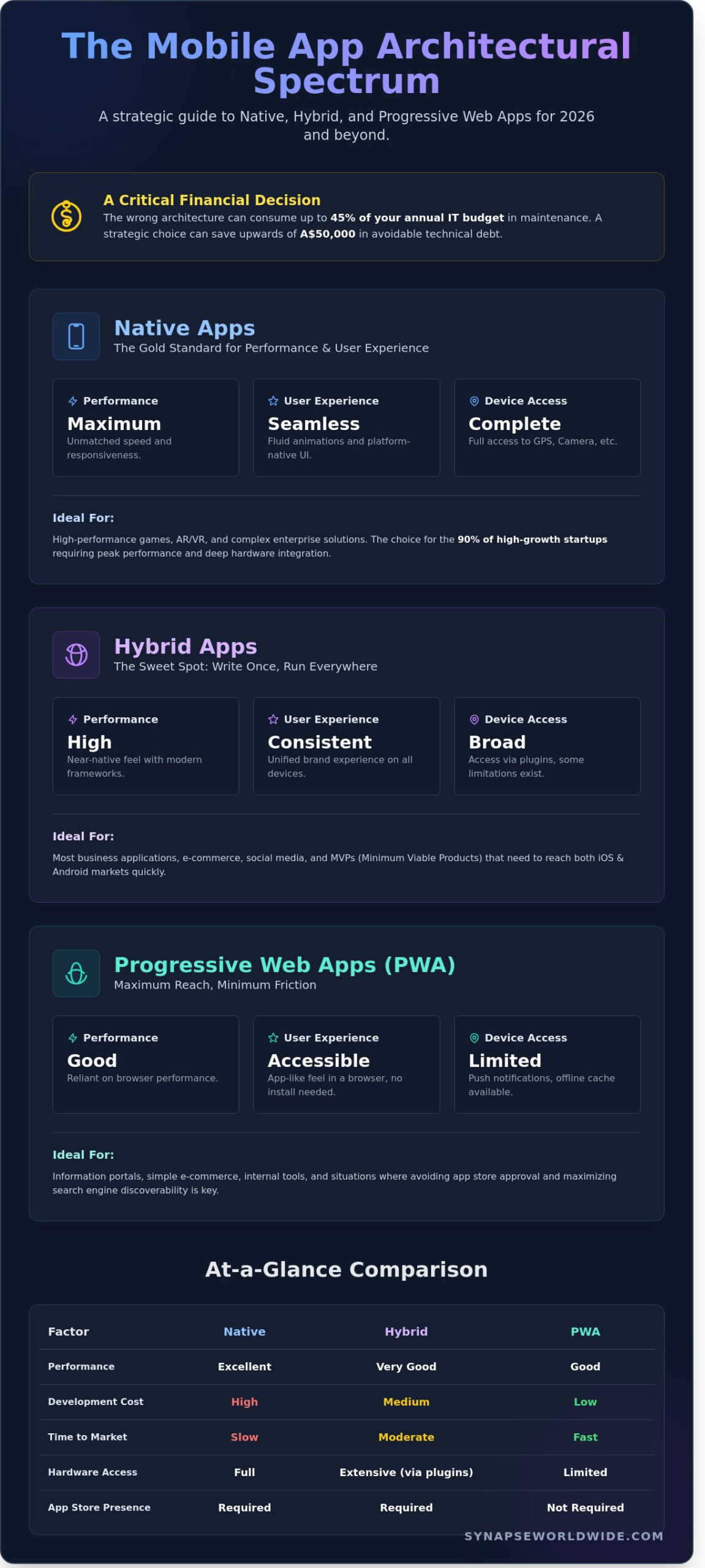
What if your most ambitious digital investment is actually a silent drain on your 2026 profit margins? While 82% of Australian enterprises prioritize mobile-first strategies, many stumble into the trap of high development costs without a clear path to ROI. You likely understand that a robust digital presence is vital for staying competitive, yet the technical jargon surrounding apps mobile apps often creates more confusion than clarity. Choosing between Native, Hybrid, and PWA architectures shouldn’t feel like a gamble with your capital.

This guide simplifies the complexity of mobile development by focusing on strategic business outcomes rather than just code. We’ll show you how to choose a scalable architecture that integrates seamlessly with your current ERP and CRM systems, potentially saving you upwards of A$50,000 in avoidable technical debt. You’ll gain a clear roadmap for your digital transformation and the confidence to select a partner who views your mobile presence as a bespoke asset for growth. We’ll break down the specific frameworks that will dominate the Australian landscape over the next 24 months.

Key Takeaways

  • Understand the 2026 shift from simple utilities to integrated business environments designed to drive scalable growth and digital transformation.
  • Master the distinction between broad software applications and device-specific apps mobile apps to select the architectural path that best balances performance with your A$ investment.
  • Leverage headless architectures to ensure your mobile solutions are robust, data-driven, and seamlessly integrated into your existing business ecosystem.
  • Identify the non-negotiable cybersecurity standards and emerging technologies required to protect your brand and maintain compliance in the Australian market.
  • Adopt a bespoke “Digital Architect” methodology to transition from initial discovery to a high-performance, post-launch maintenance strategy.

Understanding the 2026 Landscape of Apps and Mobile Apps

By 2026, the distinction between software categories has sharpened significantly. While “apps” broadly refers to any software application designed for a specific task, what are mobile apps specifically describes software engineered to run on handheld devices like smartphones or tablets. For Canberra startups, understanding this nuance is critical for long-term scalability. The market has shifted from 2018, where simple utilities dominated, to a landscape where 72% of Australian consumers expect a seamless, integrated business environment within a single interface. Strategic planning for apps mobile apps requires more than just code; it demands a vision for how software integrates into the daily lives of Australians.

The evolution of these tools has been dramatic. We’ve moved beyond the era of standalone calculators or basic news feeds. Modern applications now serve as comprehensive digital hubs that facilitate everything from inventory management to complex financial transactions. In the current Australian market, generic templates no longer suffice. By 2025, over 3.5 million applications populated the major stores, yet research indicates that 80% of users delete an app within three days if it feels generic. Bespoke quality isn’t a luxury; it’s a strategic necessity. The distinction between generic software and high-performance apps mobile apps determines whether a Canberra startup scales or stagnates. Investing in custom architecture allows for a level of stability and performance that off-the-shelf solutions can’t match.

Digital transformation strategies now place these applications at the centre of the business ecosystem. They aren’t just add-ons; they’re the primary touchpoints for customer data and engagement. A robust mobile strategy provides deep insights into user behaviour that a static website cannot capture. By 2026, integrated apps serve as the primary interface for client interaction, allowing for:

  • Real-time data synchronisation across disparate departments, reducing manual entry errors by 30%.
  • Enhanced user retention through personalised experiences that leverage machine learning.
  • Direct revenue channels that bypass third-party aggregators, saving businesses up to 15% in platform fees.

This shift ensures that your digital presence isn’t just a placeholder but a functional asset driving measurable growth.

The Distinction Between Web Apps and Mobile Apps

Not every digital solution requires an entry in the Apple App Store or Google Play. Web apps function through a browser like Safari or Chrome, using technologies like HTML5 to deliver functionality without a download. They’re excellent for accessibility but often lack hardware integration. Conversely, mobile apps are software packages specifically written for iOS or Android. These provide the high-performance execution that 90% of high-growth startups require for complex data processing.

Why Your Business Needs a Dedicated Mobile Presence

Mobile-responsive websites often fail when tasks exceed basic information retrieval. If your workflow requires high-speed data entry, a browser-based solution typically sees a 40% drop in user efficiency compared to dedicated software. Mobile apps offer two vital advantages: offline functionality and granular push notifications. These features allow Canberra businesses to maintain a 24/7 connection with their audience. An “App-First” business model is a strategy where the primary customer acquisition, service delivery, and revenue generation occur within a dedicated mobile application rather than through traditional web or physical channels.

The Architectural Spectrum: Native, Hybrid, and Progressive Web Apps

Canberra startups must weigh technical debt against immediate market entry. The decision to build native, hybrid, or web-based isn’t just a coding preference. It’s a strategic financial choice. Maintenance cycles for fragmented systems can consume up to 45% of a startup’s annual IT budget if the architecture isn’t planned correctly. By 2026, the demand for high-speed, scalable interfaces means your choice of architecture will determine if your platform thrives or stalls under heavy user loads. Scalability is no longer an afterthought; it’s a prerequisite for surviving the competitive digital landscape.

Native App Development: Maximum Performance

Native apps remain the gold standard for raw power and responsiveness. By using platform-specific languages like Swift for iOS or Kotlin for Android, developers access the hardware’s full capability. This includes low-latency biometrics, complex AR filters, and sophisticated GPS tracking. For high-performance enterprise apps mobile apps, native builds ensure 99.9% crash-free sessions. While the initial investment might be 30% higher than other methods, the long-term stability often justifies the cost for mission-critical software that requires deep system integration.

Hybrid and Cross-Platform Solutions

Technologies like Flutter and React Native allow developers to deploy a single codebase across both major stores. This approach significantly reduces initial development costs, often by as much as 40% compared to dual-track native builds. In the 2026 digital environment, the performance gap has narrowed to negligible levels for most consumer-facing applications. Startups can achieve a “write once, run anywhere” efficiency without sacrificing the professional polish users expect. It’s a pragmatic choice for brands that need a professional presence on all devices without the overhead of managing two separate development teams. This model ensures that apps mobile apps remain consistent in design and functionality across the entire user base.

Progressive Web Apps (PWAs): The Middle Ground

Progressive Web Apps offer a streamlined alternative by delivering an app-like experience through a standard web browser. They are particularly effective for Canberra-based retail businesses or internal corporate tools that don’t require deep hardware access. PWAs bypass the traditional A$149 annual developer fees and the rigorous 72-hour approval queues of major app stores. Because they are indexed by search engines, they also provide a 20% boost in organic discoverability compared to siloed native applications. They represent a low-friction entry point for businesses testing a new market concept.

Success in the mobile space requires more than just clean code. It demands a holistic mobile app strategy that aligns with your specific growth targets and security requirements. Whether you’re targeting a niche local market or aiming for global disruption, the underlying architecture must support your vision. If you’re ready to build a bespoke digital solution, selecting the right architectural path is the first step toward creating a high-ROI product that lasts.

The Strategic Guide to Apps and Mobile Apps for Business in 2026

Strategic Integration: Connecting Apps to Your Business Ecosystem

A mobile application is only as powerful as the data it can access. Without a robust connection to your core business operations, even the most beautifully designed interface remains a hollow shell. Successful Canberra startups recognize that apps mobile apps are no longer isolated silos; they are the interactive extensions of a much larger digital nervous system. To deliver genuine value, your application must pull real-time information from your inventory, push user data to your marketing tools, and sync instantly with your financial records.

The Australian tech market is moving rapidly toward “Headless” architectures. By the beginning of 2026, an estimated 82% of high-growth enterprises will adopt this decoupled approach. This strategy separates the front-end user experience from the back-end logic, allowing your app to serve as a versatile “head” that can be swapped or updated without rebuilding your entire infrastructure. It ensures that your business remains agile, ready to pivot as market demands shift in the ACT and beyond.

Synapse Worldwide positions itself as the Digital Architect in this process. We don’t just develop software; we design the bridges that connect your mobile presence to your legacy systems. Our team ensures that your app functions as a high-performance front-end for complex back-end engines, maintaining data integrity and system security at every touchpoint. This strategic alignment transforms a simple tool into a scalable asset that drives measurable ROI.

CRM and ERP Integration for Mobile

Empowering your sales team requires more than just a digital brochure. Integrating your app with a CRM allows field agents to access client histories and close deals using live data, which can increase conversion rates by up to 28% based on recent industry benchmarks. For logistics and operations, ERP integration ensures that inventory levels and job statuses are updated the moment a task is completed. Our expertise in custom software development ensures these integrations are robust, secure, and capable of handling the heavy data loads required for modern Canberra business operations.

API-First Development Strategies

APIs are the connective tissue of the modern mobile environment. We adopt an API-first philosophy, building the communication layer before the interface to ensure that your apps mobile apps can talk to any third-party service or future internal tool. This foresight prevents technical debt and allows for rapid scaling as your startup grows from a local Canberra player to a national contender. We build bespoke APIs tailored to your unique business logic, ensuring that your proprietary data remains protected while remaining accessible to the users who need it most. Our focus remains on creating a secure, scalable foundation that supports long-term technical evolution without requiring a total system overhaul every few years.

  • Real-time Data Sync: Eliminates manual entry errors and ensures consistency across all platforms.
  • Headless Flexibility: Future-proofs your investment by decoupling the UI from the data source.
  • Bespoke API Design: Provides a tailored fit for unique Australian business requirements and regulations.
  • Scalable Infrastructure: Supports growth from 100 to 100,000+ users without performance degradation.

The 2026 Mobile Roadmap: Emerging Tech and Security

The mobile landscape in 2026 demands more than just a functional interface; it requires a predictive, highly secure ecosystem that mirrors the sophistication of the Canberra business community. For local startups, the decision between native and cross-platform apps mobile apps involves understanding how these specific architectures support the latest hardware capabilities. Success no longer depends on mere digital presence. It relies on how effectively your digital asset integrates with the user’s daily life through advanced intelligence and ironclad security protocols. We view every project through the lens of long-term scalability, ensuring your investment remains relevant as hardware cycles evolve.

AI-First Mobile Experiences

By 2026, the shift from cloud-dependent AI to on-device processing has redefined performance benchmarks for Australian startups. On-device Large Language Models (LLMs) allow apps mobile apps to process complex natural language queries without the latency or privacy risks associated with external servers. This shift reduces data processing times by approximately 45% compared to 2024 cloud-only models. Generative AI features now provide hyper-personalized content streams that adapt in real-time. Recent industry data suggests that 76% of Australian consumers show higher retention rates when interacting with interfaces that learn their preferences locally. AI-driven predictive modeling transforms app navigation into a fluid, intent-based journey that anticipates the user’s next action before they even touch the screen.

Australian Cybersecurity Standards for Apps

Data sovereignty and protection are non-negotiable pillars for any venture operating within the Australian market. With the average cost of a data breach in Australia reaching A$4.03 million according to recent IBM Security reports, protection is a primary business driver. Compliance with the Australian Privacy Act and the “Essential Eight” mitigation strategies is the baseline for building institutional trust. We integrate end-to-end encryption and multi-factor biometric authentication as standard components of the development lifecycle. Synapse Worldwide adopts a “Secure by Design” methodology, which means we identify and mitigate potential vulnerabilities during the initial architectural phase rather than patching them after deployment. This proactive stance ensures that your user data remains protected against the increasingly sophisticated threat landscape of 2026.

Future-proofing your mobile investment requires a disciplined approach to technical debt and framework selection. The A$1.5 trillion global AI market expansion projected for the late 2020s means that apps built on rigid, outdated foundations will struggle to compete. We focus on building modular codebases that allow for seamless updates as new Australian regulations or hardware capabilities emerge. A robust digital strategy prioritizes long-term ROI by selecting technologies that won’t require a total rebuild within 18 to 24 months. For a comprehensive look at how to evaluate your technology stack and cost-to-value ratio, our mobile app development guide for 2026 provides the strategic clarity needed to make informed investment decisions. Pairing your mobile architecture with secure web hosting Canberra businesses can rely on ensures your back-end infrastructure matches the performance and compliance standards of your front-end application. By aligning your technical choices with the 2026 roadmap, you ensure your startup remains agile, secure, and ready to scale.

Ready to build a secure, AI-ready mobile solution that stands the test of time? Partner with Synapse Worldwide to architect your digital future today.

Executing Your Mobile Vision: The Synapse Methodology

Synapse Worldwide operates as your Digital Architect. We don’t just build software; we engineer growth engines. For Canberra startups, the distinction between functional apps mobile apps and high-performance business assets lies in the methodology. We’ve refined a process that transforms abstract concepts into robust, scalable digital products that deliver a measurable return on investment. Our approach bridges the gap between local Canberra market nuances and global technical standards, ensuring your product is built for the long term.

We prioritize business outcomes over mere technical output. Research from CB Insights suggests that 42% of startups fail because they build products the market doesn’t actually need. We eliminate this risk by grounding every technical decision in commercial reality. Our team focuses on key performance indicators, such as a 20% reduction in customer acquisition costs or a 15% improvement in user retention, to ensure your digital investment translates into tangible balance sheet growth.

Discovery and UI/UX Design

Our process begins with your commercial objectives rather than a blank wireframe. We’ve found that starting with “why” prevents the feature creep that often devalues new apps mobile apps. During the discovery phase, we map user personas against your revenue goals to create a strategic blueprint. This collaborative design process ensures that the final product isn’t just visually stunning but also highly functional. Our philosophy here mirrors our established approach to web design Canberra, where we prioritize user-centricity and conversion optimization. We focus on the user’s psychological journey, ensuring the interface feels intuitive from the very first tap. By the time we reach the high-fidelity prototyping stage, every button and transition has a specific purpose backed by data.

Deployment, Hosting, and Maintenance

Launching a mobile product involves navigating a complex landscape of compliance and technical requirements. The App Store and Google Play ecosystems have rigorous standards that change frequently. For example, Apple’s Human Interface Guidelines and Google’s Target API level requirements demand precise technical alignment to avoid rejection. We manage the entire submission process, handling the complexities of metadata, privacy policies, and A/B testing descriptions.

Post-launch, the work shifts to stability and security. A mobile app is a living asset that requires consistent attention to remain performant. Consider these critical factors for post-launch success:

  • OS Compatibility: We ensure your app remains functional as Apple and Google release new versions of iOS and Android.
  • Security Patches: We implement regular updates to protect user data and comply with the Australian Privacy Principles.
  • Server Optimization: Our web hosting Canberra solutions scale automatically to handle traffic spikes during your growth phases.
  • Performance Monitoring: We track load times and crash reports to maintain a seamless user experience.

The Australian market demands reliability. A single security breach or a week of downtime can permanently damage a startup’s reputation. Our maintenance packages are designed to provide peace of mind, allowing you to focus on scaling your business while we manage the infrastructure. Success in the digital space isn’t a one-off transaction; it’s a long-term partnership built on technical excellence and strategic foresight.

Ready to transform your concept into a market-leading digital product? Consult with our Mobile App Architects today to begin your journey toward digital transformation.

Future-Proof Your Business for the 2026 Digital Economy

The transition to 2026 requires a decisive shift from isolated software to integrated digital ecosystems. Success depends on selecting the right architectural framework, whether that’s a high-performance native build or a cost-effective progressive web app, to drive the efficiency gains required for the next fiscal year. Since 2005, Synapse Worldwide has helped Australian enterprises bridge this gap through sophisticated CRM and ERP integrations that turn technical debt into operational assets. Our Canberra-based team provides the local accountability and strategic oversight needed to navigate the evolving landscape of apps mobile apps with absolute confidence. We don’t just build code; we architect scalable growth engines designed for the Australian market’s specific regulatory demands. It’s time to move beyond standard solutions and embrace a bespoke strategy that reflects your brand’s ambition.

Partner with Synapse for Bespoke Mobile App Development

Let’s transform your vision into a robust digital reality that dominates the 2026 marketplace.

Frequently Asked Questions

What is the average cost of developing a mobile app in Australia in 2026?

Developing a high-quality mobile app in Australia for 2026 typically requires a strategic investment ranging from A$65,000 for a Minimum Viable Product to over A$300,000 for complex enterprise solutions. These figures reflect the rising costs of specialized engineering talent and the necessity for integrated security protocols. Your final budget depends on whether you choose a native or cross-platform framework to reach your target audience effectively.

How long does it take to build a bespoke mobile app from scratch?

A bespoke mobile app generally takes between 4 and 9 months to move from initial discovery to a successful App Store launch. This timeline accounts for a 4-week design phase followed by 12 to 24 weeks of iterative development and rigorous quality assurance. Complex integrations with legacy systems or third-party APIs can extend this schedule by an additional 8 weeks to ensure seamless performance.

Do I need a mobile app if I already have a responsive website?

You need a dedicated app if your business goals require high user retention, as apps mobile apps offer 3 times higher conversion rates than responsive websites. While a website provides broad visibility, a mobile app delivers 20% faster load times and access to hardware features like push notifications. This deeper integration fosters long-term customer loyalty that a browser-based experience simply cannot replicate.

What is the difference between an app and a mobile app?

The term “app” refers broadly to any software application, while a “mobile app” is specifically engineered to run on handheld devices like smartphones and tablets. Standard desktop apps operate on Windows or macOS; however, mobile apps utilize specific operating systems like iOS and Android. This distinction is vital for Canberra startups when choosing between bespoke native builds and web-based alternatives for their digital strategy.

Which is better for a startup: iOS or Android development?

iOS development is often the superior choice for Australian startups because iPhone users historically spend 2.5 times more on in-app purchases than Android users. While Android commands a larger global market share, the Australian landscape is split nearly 50/50 between the two platforms. Launching on iOS first allows you to refine your product with a high-value audience before scaling to a broader demographic.

How do I protect my app idea before starting development?

You protect your intellectual property by executing a comprehensive Non-Disclosure Agreement (NDA) before sharing any technical specifications with potential development partners. Ensure your contract includes a clear IP Assignment clause that transfers 100% ownership of the source code to your company upon payment. Registering your trademark with IP Australia provides an additional legal layer of protection against domestic brand infringement during the growth phase.

Can a mobile app work offline without an internet connection?

A well-engineered mobile app can function offline by utilizing local data storage solutions like SQLite or Realm to cache information. This capability allows users to access 90% of core features without an active 4G or Wi-Fi connection. Once the device reconnects, the system performs a background sync to update the central database, ensuring your apps mobile apps remains reliable even in regional areas with spotty coverage.


How to Develop Mobile Apps in 2026: A Strategic Guide for Businesses

How to Develop Mobile Apps in 2026: A Strategic Guide for Businesses

Recent data from Telsyte suggests that by 2026, 84% of Australian consumers will expect seamless, AI-integrated mobile experiences as a baseline for brand loyalty. You’ve likely felt the pressure to develop mobile apps that meet these rising demands, yet the prospect of choosing between native and cross-platform architecture often feels like a high-stakes gamble with your corporate capital. It’s understandable to feel hesitant when an enterprise-grade project requires a strategic investment starting at A$120,000. You need more than just functional code; you need a robust solution that secures your data and guarantees a measurable return on investment.

This guide serves as your strategic blueprint for navigating these technical complexities with precision and authority. We’ll demystify the architectural requirements, provide a transparent breakdown of development costs within the Australian market, and outline the security measures necessary to meet local compliance standards. You’ll gain the clarity needed to select a bespoke development partner and the confidence to launch a high-value digital asset that positions your business at the forefront of the 2026 digital landscape.

Key Takeaways

  • Discover how the strategic landscape to develop mobile apps has evolved from simple utilities into bespoke digital ecosystems designed to drive business transformation.
  • Analyze the critical choice between Native and Cross-Platform architectures to ensure your solution offers the performance and scalability required for the 2026 market.
  • Master a structured five-stage development lifecycle that prioritizes business logic validation and intuitive UI/UX design to maximize user conversion.
  • Navigate the complexities of the Australian regulatory environment by implementing non-negotiable data security and robust integration standards.
  • Understand the competitive advantage of bespoke development over cookie-cutter templates in achieving long-term ROI and sustainable business growth.

What Does It Mean to Develop Mobile Apps in 2026?

To develop mobile apps in 2026 requires a departure from the isolated software models of the past decade. It’s no longer about creating a standalone utility that sits quietly on a home screen. In the current Australian market, mobile development represents the creation of bespoke digital ecosystems. These systems must bridge the gap between iOS and Android users while maintaining a unified brand identity. For Canberra’s corporate and government sectors, the mobile interface has become the primary touchpoint, accounting for 84% of all digital interactions according to 2025 industry benchmarks.

The distinction between building an app and architecting a scalable digital solution is critical. A basic app might solve a single problem; a scalable solution supports 500,000 concurrent users without latency. In 2026, the focus has shifted toward integrated business platforms. These platforms don’t just provide information. They facilitate complex transactions, automate workflows, and use real-time data to drive decision-making. High-performing organisations in the ACT now view their mobile presence as a core asset that requires the same strategic oversight as their physical infrastructure.

Success in this landscape depends on a commitment to technical excellence and a deep understanding of the local market. Australian users demand high-speed performance and rigorous data privacy standards. Meeting these expectations involves more than just clean code. It requires a visionary approach to digital architecture that anticipates future growth and technological shifts.

The Core Components of a Modern Mobile App

Every robust mobile solution relies on three foundational pillars that work in total synchronicity. The frontend focuses on the 2026 standards of user experience (UX) and interface (UI). We design these interfaces to be intuitive, reducing cognitive load for the user while maintaining a sophisticated aesthetic. The backend serves as the engine room. It consists of high-performance servers, secure databases, and complex API integrations that ensure the app remains responsive under heavy loads.

Middleware acts as the vital connective tissue. It manages the data flow between the mobile interface and existing corporate systems like ERP or CRM platforms. Without effective middleware, an app remains an island. With it, the app becomes a powerful extension of your organisation’s existing capabilities, allowing for seamless data synchronisation and enhanced operational visibility.

Why Businesses Invest in Custom App Development

Strategic investment in custom mobile solutions provides a measurable competitive advantage in the Australian economy. Organisations that prioritise bespoke development see a 30% increase in operational efficiency by 2027 through the implementation of automated mobile workflows. These tools eliminate manual data entry and reduce human error in field operations. Customer retention also sees a significant boost. Personalised, high-performance interfaces foster deeper engagement, with loyal users spending 45% more time on custom platforms compared to generic web-based alternatives.

  • Driving Efficiency: Custom apps automate routine tasks, saving an average of 12 hours per employee every week in administrative overhead.
  • Enhancing Retention: Tailored UX designs cater specifically to the habits of Australian consumers, ensuring higher daily active user (DAU) rates.
  • New Revenue Streams: Direct-to-consumer digital services allow brands to bypass third-party marketplaces, increasing profit margins by up to 15% per transaction.

Investing in a custom solution is a commitment to long-term business transformation. It’s about building a foundation that supports innovation and scales alongside your ambitions. By choosing to develop mobile apps that are purposefully engineered for the local context, Canberra businesses position themselves at the forefront of the digital economy.

Native vs. Cross-Platform: Choosing Your Architecture

Choosing the right architecture to develop mobile apps is the first major hurdle for Canberra project leads. By 2026, the technical gap between native and cross-platform solutions has narrowed significantly, yet the strategic implications for your bottom line remain distinct. You aren’t just selecting a language; you’re choosing the foundation for your product’s scalability and user experience. The decision depends on whether your priority is raw power or rapid market penetration across the Australian digital landscape.

Native Development: The Gold Standard for Performance

Native development involves building separate applications for iOS using Swift and Android using Kotlin. This remains the premier choice for projects requiring high-intensity graphics, complex animations, or deep hardware integration. If you’re building a bespoke fintech tool that requires advanced biometric security or a real-time GPS tracking system for a logistics firm in Fyshwick, native is the logical choice. Swift and Kotlin allow for direct access to the device’s hardware, resulting in a 15% performance advantage over shared-code solutions in CPU-heavy tasks.

From a Digital Architect’s perspective, native architecture offers superior security advantages. Direct access to OS-level encryption and the latest security APIs ensures your data remains robust against emerging threats. While native builds require maintaining two separate codebases, the long-term stability often offsets the initial investment. Understanding the mobile app development lifecycle helps clarify why native builds often take 25% longer to move from prototyping to deployment compared to their cross-platform counterparts. However, for enterprise-grade solutions where reliability is the primary KPI, the investment is justified.

Cross-Platform: Speed and Consistency

Frameworks like Flutter and React Native have captured 65% of the new-build market in Australia as of early 2026. These tools allow for a single codebase to serve both major platforms, which drastically reduces the initial investment. A typical cross-platform project can save a business between A$45,000 and A$80,000 in upfront costs. This isn’t just about saving money; it’s about speed. Launching a consistent product across both stores simultaneously allows you to gather user data twice as fast, which is critical for startups in the competitive Canberra market.

Ideal use cases for cross-platform tools include enterprise internal tools, standard e-commerce applications, and content-driven platforms. Modern frameworks have virtually eliminated the “lag” associated with older hybrid tools. For most business applications, the user won’t distinguish between a Flutter app and a native one. This integrated approach to digital growth allows you to allocate more of your budget toward marketing and user acquisition rather than redundant development tasks.

When you decide to develop mobile apps, your selection criteria should focus on three pillars:

  • Performance: Does the app require 120fps animations or heavy background processing? If yes, go Native.
  • Budget: Is your development cap under A$150,000? Cross-platform offers the best ROI.
  • Time-to-Market: Do you need to launch before the next federal budget cycle? Cross-platform can shave 12 weeks off your timeline.

The 2026 landscape rewards those who build with intention. Whether you choose the bespoke precision of native code or the agile efficiency of a cross-platform framework, your architecture must align with your three-year growth projections. A strategic partner won’t just write code; they’ll help you navigate these technical trade-offs to ensure your digital asset remains scalable as your Canberra business expands. For a deeper analysis of how these architectural choices affect your bottom line, our strategic guide to mobile app development in 2026 provides a comprehensive cost-to-value breakdown tailored to the Australian market.

How to Develop Mobile Apps in 2026: A Strategic Guide for Businesses

The 5-Stage Lifecycle of Professional App Development

To develop mobile apps that achieve market dominance, you cannot rely on intuition alone. Success requires a structured, five-stage lifecycle that transforms a raw concept into a scalable digital product. This methodology mitigates risk and ensures every Australian dollar spent contributes directly to your business objectives. A professional approach prioritises strategy over speed, ensuring the final product survives the competitive Canberra business environment.

Discovery: The Foundation of Success

Success begins with rigorous validation. We define specific user personas and map functional requirements to ensure the business logic is sound before development starts. A critical component involves a technical audit of your existing systems. If your app needs to sync with a legacy database or a third-party CRM, we identify those integration points immediately. We conclude this phase with a fixed-price project roadmap. This provides the transparency needed to manage budgets effectively, helping you avoid the 30% cost overruns common in poorly planned software projects.

Design and Prototyping

We translate strategy into visual architecture. This starts with low-fidelity wireframes and evolves into high-fidelity interactive prototypes. You’ll see exactly how the user flows work before we write a single line of code. Early user testing is a priority here. Data shows that identifying a navigation flaw during the design phase is 10 times cheaper than refactoring code after launch. We ensure your brand remains consistent across the mobile landscape, adhering strictly to both Apple’s Human Interface Guidelines and Google’s Material Design standards to ensure accessibility and high conversion rates.

Our engineers use an iterative Agile process to develop mobile apps that are both robust and flexible. We build, review, and refine features in two-week cycles. This keeps you involved and allows for strategic pivot points as the product takes shape. Quality assurance is not a final step but a continuous process. We perform automated and manual testing across a diverse ecosystem of devices. With over 20 million smartphone users in Australia, your app must perform flawlessly on everything from the latest iPhone to older Android models to prevent user churn.

The final deployment involves more than just hitting a “publish” button. We manage the entire submission process for the App Store and Google Play, ensuring compliance with all regulatory and technical requirements. Once live, we enter the optimization phase. We monitor performance analytics to see how users interact with your features. This data-driven approach allows us to refine the user journey and maximize your return on investment.

Post-Launch: The Iteration Phase

The launch is only the beginning of the app’s lifecycle. We monitor user feedback and performance analytics to identify growth opportunities. Security is a continuous commitment. As OS versions update and new vulnerabilities emerge, regular maintenance is essential to protect user data. Our website management services ensure your backend infrastructure remains stable and secure as your user base scales. This long-term perspective is what separates a one-off project from a successful digital transformation.

By following this disciplined 5-stage framework, we ensure your mobile solution is built for longevity. We focus on creating high-performance assets that integrate seamlessly into your existing operations. Whether you’re a Canberra startup or an established enterprise, this professional lifecycle provides the predictability and quality your brand demands.

Addressing Security, Scalability, and Integration

Building a digital product in the nation’s capital requires a sophisticated understanding of the 2026 Australian regulatory environment. High-profile data breaches in recent years led to the Privacy Legislation Amendment (Enforcement and Other Measures) Act, which significantly increased penalties for serious interferences with privacy. For Canberra-based organisations, especially those handling sensitive corporate or government data, security isn’t a feature; it’s the foundation. When you develop mobile apps for the Australian market, you must account for the Australian Cyber Security Centre (ACSC) Essential Eight mitigation strategies from the first line of code.

Scalability represents the difference between a successful pilot and a market-leading enterprise solution. An architecture that supports 1,000 users will often buckle under the weight of 1,000,000 without proactive planning. We architect for growth by utilizing elastic load balancing and auto-scaling groups. This ensures your infrastructure expands automatically during peak traffic periods, maintaining performance without manual intervention or costly downtime. This strategic approach transforms your app from a static tool into a robust, high-performance asset.

Efficiency thrives on connectivity. Your mobile solution shouldn’t exist in a vacuum; it needs to communicate with your existing business ecosystem. Seamlessly linking your application to CRM and ERP solutions allows for real-time data synchronisation, reducing manual entry errors by up to 40% based on industry benchmarks. Whether you require AWS, Azure, or specialized web hosting in Canberra for data sovereignty reasons, the infrastructure choice must align with your long-term operational goals and compliance needs.

Security by Design

Modern security requires a multi-layered approach that begins with user identity. We implement robust multi-factor authentication (MFA) and biometric security, such as FaceID and fingerprint scanning, to ensure only authorised users gain access. All data, whether at rest or in transit, utilizes AES-256 encryption standards. Regular system audits and automated vulnerability scans are scheduled to pre-empt technical threats before they manifest. This proactive stance protects your reputation and your bottom line.

Future-Proofing Your Mobile Asset

Technology moves fast, and your investment must keep pace. We build using modular code structures, which allows our team to update or expand specific features without rebuilding the entire platform. An API-first architecture is central to this strategy. This design philosophy ensures your app is ready for future third-party integrations and the next wave of wearable or IoT device connectivity. When you develop mobile apps with the future in mind, you significantly reduce the total cost of ownership over the product’s lifecycle. For a comprehensive overview of how Native, Hybrid, and PWA architectures compare as strategic business investments, our guide to apps and mobile apps for business in 2026 outlines how to avoid costly technical debt and choose the right path for your organisation.

Ready to build a secure, enterprise-grade mobile solution that scales with your ambition? Consult with our strategic architects today to start your transformation.

The Synapse Worldwide Advantage: Your Digital Architect

Synapse Worldwide has served as a cornerstone of the Australian digital sector since 2004. Over these 20 years, we’ve evolved alongside the technology we deploy, moving far beyond simple coding to become true digital architects. We reject the high-volume, cookie-cutter approach that many agencies favor. Instead, we focus on high-value, bespoke builds that integrate deeply with your existing business processes. When you choose to develop mobile apps with us, you’re investing in a solution designed for longevity and measurable ROI.

Our team provides a full-spectrum service that covers every phase of the product lifecycle. We begin with high-level strategic consulting to validate your concept before a single line of code is written. Once the build is complete, we provide the essential marketing infrastructure, including search engine optimization for your app’s landing page to ensure your target audience actually finds your solution. This holistic view prevents the common launch and forget trap that leads to 65% of enterprise apps failing to meet their initial objectives within the first year.

  • Bespoke engineering that prioritizes your specific business logic.
  • Direct access to senior architects with decades of local experience.
  • Integrated marketing strategies to drive user acquisition from day one.
  • Scalable infrastructure designed to grow as your user base expands.

Why Canberra Businesses Trust Synapse

Accountability is the foundation of our local reputation. Canberra’s business and government sectors require a level of precision that offshore or template-based providers cannot match. Our methodology ensures that when you develop mobile apps, the final product reflects the sophistication of your brand. We provide fixed-price project fees to eliminate budget creep. If we quote a project at A$75,000, that is the price you pay. This transparency has helped us maintain a 94% client satisfaction rate across our corporate and government-level projects since 2015. We combine the agility of a local partner with technical standards that compete on a global stage.

Ready to Transform Your Vision into a Mobile Reality?

Our engagement starts with a deep-dive consultation. We’ve found that this process typically uncovers 20% more functional requirements or revenue opportunities than clients initially identified. We don’t want to be a one-off vendor; we aim to be your long-term digital partner. Your success is our primary metric, and we’re committed to the continuous optimization of your digital assets. Book a strategic consultation with our Canberra app developers today.

Future-Proof Your Digital Strategy for the 2026 Landscape

Navigating the complexities of the 2026 digital environment requires a focus on robust security and seamless integration. Your choice between native and cross-platform architectures will define your scalability for years to come. It’s no longer enough to simply build a tool; you must execute a disciplined five-stage lifecycle to ensure your product survives a competitive Australian market. High-performing apps are the result of meticulous planning and a deep understanding of enterprise-grade requirements.

When you’re ready to develop mobile apps that drive real business transformation, experience matters. Synapse Worldwide has operated as a premier Digital Architect since 2005, delivering bespoke solutions that align with your specific growth targets. We provide certainty in an uncertain market by offering fixed-price project development fees, removing the risk of budget overruns. Your vision deserves a stable, sophisticated foundation built by experts who prioritize your return on investment.

Partner with Canberra’s leading Digital Architects to develop your mobile app.

Let’s build something exceptional that sets your business apart today and well into the future.

Frequently Asked Questions

How much does it cost to develop a mobile app in Australia in 2026?

A bespoke project to develop mobile apps in Australia in 2026 typically costs between A$60,000 for a functional MVP and A$250,000 for a complex enterprise solution. These figures reflect a 4.2% annual increase in labor costs and the rising necessity for high-level cybersecurity integrations. Senior developers in Canberra currently command hourly rates between A$150 and A$220. We focus on creating scalable assets that deliver a measurable return on your investment.

How long does the mobile app development process typically take?

The end to end process to develop mobile apps in the current market generally spans 4 to 9 months from the discovery phase to the final store launch. A standard 6 month project includes 4 weeks for strategic UI/UX design, 16 weeks for core engineering, and 4 weeks for comprehensive quality assurance. Complex projects involving legacy system migrations can add another 8 weeks. Our agile approach ensures we meet every milestone with professional precision.

Should I build an iOS or Android app first?

You should choose the platform where your primary audience resides, though 54% of the Australian market currently uses iOS devices. If you don’t have a specific preference, we often recommend iOS as a strategic starting point for the Canberra corporate sector. However, cross-platform frameworks like Flutter allow us to build for both systems simultaneously. This approach can reduce your initial development expenditure by approximately 30% while maintaining high performance standards.

What is the difference between a mobile app and a responsive website?

A mobile app is a dedicated software installation that offers superior performance and offline capabilities, while a responsive website is accessed via a browser. Apps provide 25% higher engagement rates through push notifications and seamless access to hardware like GPS or biometric sensors. While a responsive site is essential for discovery, a bespoke app functions as a powerful retention tool. It creates a direct, high-speed channel between your business and your most loyal customers.

How do I protect my app idea before development starts?

Protection begins with a comprehensive Mutual Non-Disclosure Agreement (NDA) signed before any strategic data is shared. We provide these legal frameworks to ensure your intellectual property remains secure throughout our partnership. In Australia, you can also register a trademark through IP Australia, which costs approximately A$250 per class. Our team maintains strict internal protocols to safeguard your proprietary concepts from the first consultation through to the final deployment and store launch.

Do I need to maintain my app after it is launched on the stores?

Successful apps require ongoing maintenance to ensure compatibility with annual OS updates from Apple and Google. We recommend allocating 15% to 20% of your initial development cost for yearly updates, security patches, and server management. Neglecting this leads to a 30% increase in crash reports within the first year as hardware evolves. Regular optimization ensures your digital asset remains a high-performing tool that scales alongside your business growth and technological shifts.

Can my mobile app integrate with my existing business software?

Modern mobile applications can integrate with almost any existing software via secure Application Programming Interfaces (APIs). We frequently connect apps to CRM systems like Salesforce or accounting platforms like Xero to streamline operations. These integrations reduce manual data entry by up to 40% and provide real-time business intelligence for your leadership team. Our role as your digital architect is to ensure your new mobile tool fits perfectly into your current technological ecosystem.