
Tag Archives: marketing strategy


Integrated Digital Marketing Strategy: The 2026 Framework for Scalable Growth

Integrated Digital Marketing Strategy: The 2026 Framework for Scalable Growth

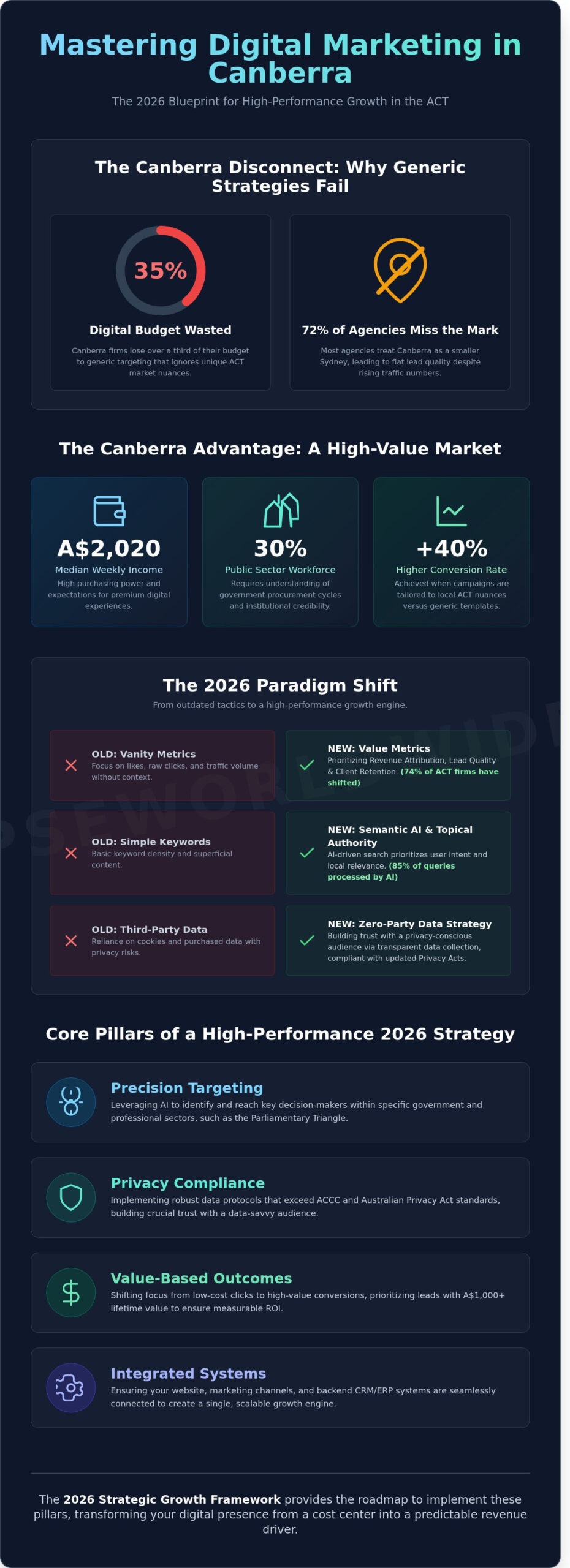
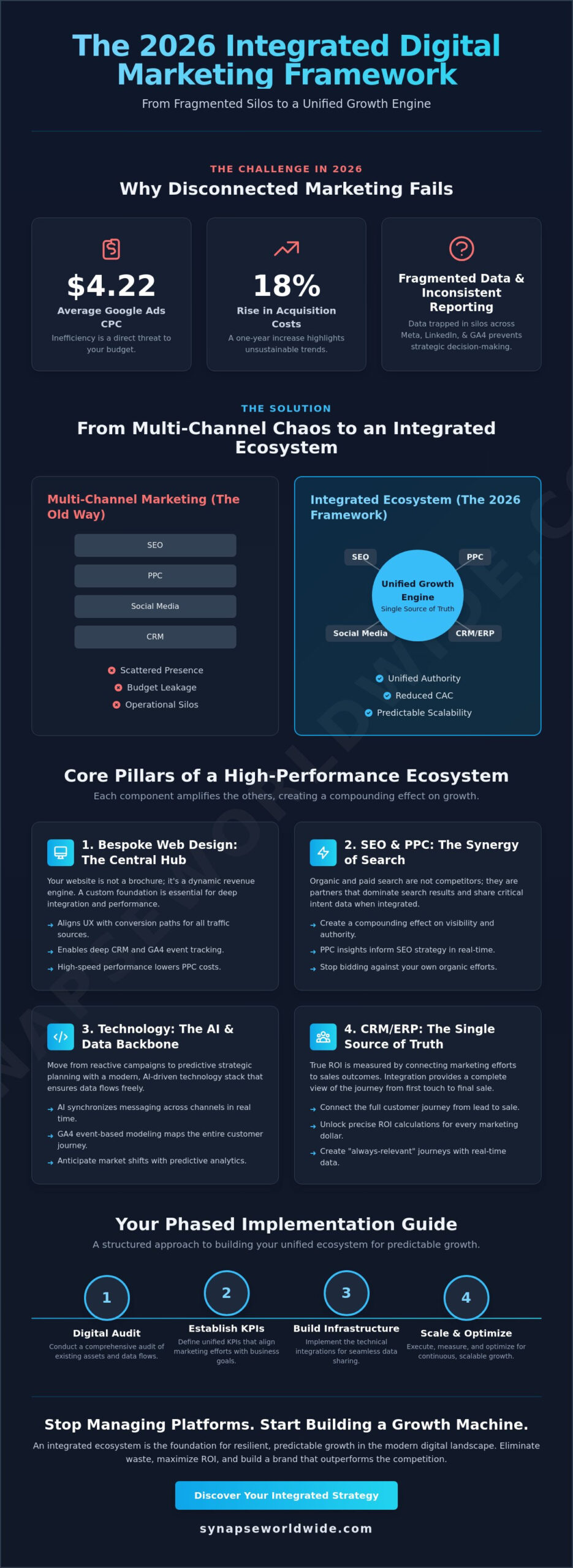
With the average Google Ads cost-per-click hitting $4.22 in 2026, your marketing budget is likely under more strain than ever before. It’s frustrating to watch acquisition costs rise by 18% in a single year while your data remains trapped in disconnected silos. You’re likely tired of the friction caused by inconsistent reporting across Meta and LinkedIn, which makes it nearly impossible to execute a high-performance integrated digital marketing strategy. This fragmentation doesn’t just waste money; it prevents your business from reaching its full potential and reaching the next level of success.

We believe your digital presence should function as a unified ecosystem rather than a collection of competing experiments. This guide introduces the 2026 framework for scalable growth designed to eliminate waste and maximize every dollar spent. You’ll discover how to align your SEO, PPC management, and CRM integration into a single engine that respects the latest CCPA privacy mandates. We’ll walk through the technical architecture needed to automate your operations, streamline your data via GA4, and turn fragmented touchpoints into a predictable path for business transformation. It’s time to stop managing individual platforms and start building a cohesive growth machine.

Key Takeaways

  • Transition from fragmented multi-channel tactics to a unified digital ecosystem that eliminates operational silos and prevents budget leakage.
  • Discover the architectural blueprint for an integrated digital marketing strategy that synchronizes SEO, PPC, and social media into a single growth engine.
  • Understand how CRM and ERP integrations provide a single source of truth for your ROI by connecting the entire customer journey from lead to sale.
  • Follow a phased implementation guide to conduct a comprehensive digital audit and establish the unified KPIs necessary for predictable scalability.
  • Learn why bespoke web design and customized technical solutions are essential for building a resilient brand that outperforms standardized competitors.

The Strategic Evolution of Integrated Digital Marketing in 2026

By 2026, the definition of digital success has shifted from mere visibility to total architectural cohesion. In a market where the average Google Ads cost-per-click has climbed to $4.22, an 18% increase from just a year ago, inefficiency is no longer just a nuisance; it’s a threat to your scalability. Fragmentation acts as a silent drain on your resources. When your SEO efforts don’t communicate with your PPC management, you’re essentially bidding against yourself or missing critical intent signals. A robust integrated digital marketing strategy ensures that every touchpoint reinforces the next, turning your website from a static digital brochure into a dynamic revenue engine. This evolution demands a shift toward “always-relevant” journeys where personalization is driven by real-time data rather than historical assumptions.

Integrated vs. Multi-Channel: The Critical Distinction

Market leadership in this decade isn’t earned by simply being present on every platform. While multi-channel marketing spreads your message wide, it often lacks the connective tissue required for high-level conversion. True integration is rooted in the principles of integrated marketing communications, where a consistent brand voice acts as the anchor across disparate platforms. This synergy directly impacts your bottom line by reducing customer acquisition costs (CAC). When your social media marketing and search strategies work in tandem, you create a compounding effect that drives efficiency and streamlines the path to purchase. It’s about moving from a scattered presence to a unified authority that commands attention.

The 2026 Digital Landscape: AI and Predictive Integration

The modern landscape relies on AI to do more than just generate content; it synchronizes messaging across SEO and paid search in real time. We’ve moved beyond reactive campaigns that look at last month’s performance. Today’s high-performance frameworks use predictive strategic planning to anticipate market shifts before they happen. This requires a seamless flow of data between your CRM integration and automated marketing funnels. By leveraging GA4’s event-based modeling, businesses can now interpret the entire customer journey with precision. This transition from reactive to predictive is the hallmark of a sophisticated integrated digital marketing strategy, allowing you to act on data intelligence before your competitors even recognize the trend. Establishing this real-time data flow is the first step toward building a resilient, self-optimizing growth engine.

Core Pillars of a High-Performance Integrated Ecosystem

A high-performance ecosystem isn’t a collection of disparate tools. It’s a synchronized engine where every component amplifies the others. To achieve scalable growth, your integrated digital marketing strategy must be anchored by four core pillars: bespoke web design, strategic SEO, high-performance PPC, and cohesive content marketing. When these elements operate in isolation, they create friction that slows your momentum. When they’re unified, they create a compounding effect that drives your business toward its next level of success. This structural integrity is what separates market leaders from those who are simply “online.”

Web Design as a Strategic Growth Engine

Your website is the central hub of your digital world. Off-the-shelf templates often struggle to handle the complex requirements of a modern growth strategy, such as deep CRM integration or advanced event tracking in GA4. Investing in custom web design for small business ensures your technical foundation is built specifically to support your unique marketing goals. A well-architected site aligns user experience with conversion paths, ensuring that traffic from your social media marketing or search campaigns doesn’t hit a dead end. High-speed, mobile-optimized pages aren’t just for users; they provide the technical performance required to maintain high quality scores for your paid media landing pages, which effectively lowers your overall acquisition costs.

The Synergy of SEO and Paid Search

In 2026, the most successful brands don’t choose between organic and paid visibility. They use them together to dominate the search engine results pages. By analyzing data from your paid search campaigns, you can identify high-converting keywords in real-time and feed those insights directly into your seo for small business strategy. This data sharing allows you to focus your organic efforts on terms that are proven to drive revenue rather than just empty traffic. This dual-threat approach ensures that your brand captures attention regardless of whether a user clicks an ad or an organic listing. It’s a sophisticated way to optimize ad spend while building long-term authority in your niche.

Content marketing serves as the narrative thread that connects these pillars. It isn’t just about writing articles; it’s about creating a consistent message that resonates from the first social media interaction to the final sale. When your messaging is unified, the customer journey feels seamless and intuitive, which builds the trust necessary for high-value conversions. If you’re looking to build a more resilient digital presence, you might consider how bespoke digital solutions can bridge the gaps in your current framework. Building this level of connectivity requires precision, but the return on investment is undeniable for businesses aiming for serious transformation.
Integrated Digital Marketing Strategy: The 2026 Framework for Scalable Growth

Eliminating Silos: Why Technical Infrastructure is the Backbone

Many businesses mistakenly treat integration as a creative or messaging challenge. In reality, it’s a technical one. Without a robust data layer, your integrated digital marketing strategy is essentially a series of educated guesses. We see growth stall most often when marketing teams can’t see what happens after a lead enters the pipeline. Infrastructure is the connective tissue that allows data to flow from a social media click to a final sale, providing the clarity needed to scale with confidence. Moving away from disconnected spreadsheets toward a unified dashboard isn’t just about organization; it’s about gaining a competitive edge through real-time intelligence.

Data centralization creates a single source of truth for your entire organization. ERP solutions play a critical role here, especially for national enterprises looking to streamline lead-to-sale workflows. By automating the feedback loop between sales data and marketing spend, you can identify exactly which channels produce the highest lifetime value customers. This level of visibility allows you to cut waste instantly and reallocate budget to high-performing segments. It’s a shift from reactive reporting to proactive optimization that ensures your digital presence is always working at peak efficiency.

CRM and Marketing Automation Integration

Connecting your website directly to your lead management systems eliminates the manual entry lag that often kills high-value conversions. It’s not enough to just capture a name; you need to personalize the user experience based on specific CRM data touchpoints. Custom API bridges and system bridges allow your marketing automation to respond to a prospect’s behavior in real time. When your systems talk to each other, the customer journey feels fluid and intentional. This technical harmony reduces friction for the user while providing your team with the granular data needed for sophisticated attribution modeling.

Scalable E-commerce Architecture

For brands selling online, the technical requirements are even more demanding. Sophisticated ecommerce website development requires a deep integration mindset from the start. You must connect inventory management directly with your real-time advertising feeds to ensure you aren’t wasting budget promoting out-of-stock items. Building for future growth means choosing a scalable digital infrastructure that can handle traffic surges without compromising performance. It’s about creating a resilient, interconnected foundation that supports your long-term vision for business transformation and reaches the next level of profitability.

Building Your Framework: A Step-by-Step Implementation Guide

Moving from a conceptual vision to a functional reality requires a disciplined, multi-phase approach. Building a high-performance integrated digital marketing strategy isn’t a weekend project; it’s a structural overhaul of how your business interacts with the digital world. The transition begins by stripping away assumptions and looking at raw data. Success in 2026 depends on your ability to execute these five phases with precision:

  • Phase 1: Conduct a Comprehensive Digital Audit to identify where your budget is leaking.
  • Phase 2: Define Unified KPIs that prioritize revenue over vanity metrics.
  • Phase 3: Execute Technical Synchronization between your website, CRM, and GA4 analytics.
  • Phase 4: Launch Content and Campaign Orchestration to ensure a singular brand voice.
  • Phase 5: Commit to Continuous Optimization to protect your ROI as market conditions shift.

This phased approach ensures that your growth is built on a stable foundation. By addressing technical debt and data silos early, you prevent the friction that typically slows down national enterprises. Each phase builds upon the last, creating a compounding effect that accelerates your transformation.

The Audit: Identifying Fragmented Touchpoints

A successful framework starts with a cold, hard look at your current assets. You can’t fix what you haven’t measured. We look for budget leaks where channels are competing rather than collaborating. For instance, if your social media marketing is driving traffic to pages with high bounce rates, it’s often a sign of a technical health failure or a messaging mismatch. Mapping your current customer journey against a desired state reveals the gaps in your funnel. This phase ensures your foundation is solid before you layer on additional spend. It’s about finding the “single source of truth” that has likely been missing from your previous reports.

Measurement: Tracking What Truly Matters

Vanity metrics like “likes” or “impressions” don’t pay the bills. In an era where Google Ads costs have risen significantly, every click must be accountable. You need revenue-based attribution that shows exactly how an initial search query eventually becomes a closed deal in your CRM. Implementing cross-channel tracking provides a 360-degree view of your ROI. Utilizing professional ppc management services allows for rapid data gathering during this phase, providing the insights needed to refine your long-term strategy. This data-first mindset ensures that every decision is backed by evidence rather than intuition. Ready to eliminate the silos holding your business back? Book a strategic consultation to begin your comprehensive digital audit and start your journey toward scalable growth.

Scaling with a Visionary Strategic Partner

While the framework for an integrated digital marketing strategy is clear, the difference between a plan on paper and a high-performance growth engine lies in the execution. Most businesses fail not because they lack ambition, but because they lack a visionary architect to manage the technical intricacies of their digital ecosystem. Partnering with a strategic consultant ensures that your SEO, PPC management, and CRM integration aren’t just line items in a budget, but interconnected components of a larger business transformation. This high-level oversight is what allows national enterprises to move beyond tactical experiments and toward predictable, scalable growth.

Future-proofing your business requires more than just staying current with trends; it requires building a resilient infrastructure that can withstand the next wave of digital disruption. As ad costs continue to rise and privacy mandates like the CCPA become more complex, having a partner who understands the underlying data layer is your greatest insurance policy. It’s about moving from a state of reactive maintenance to one of proactive, results-oriented leadership. This level of technical depth ensures your brand remains relevant and profitable regardless of how the landscape shifts.

Why a Custom Solution Beats a Standardised Package

Standardized marketing packages are designed for the average business, yet market leadership is rarely achieved by being average. Off-the-shelf solutions often create technical debt that limits your ability to pivot when search algorithms or consumer behaviors shift. Customization is the key to ROI because it allows your digital presence to mirror your unique operational strengths. Whether it’s bespoke e-commerce development or custom ERP solutions, these individualized architectures create a proprietary advantage that competitors can’t simply buy or copy. A long-term partnership focused on bespoke development ensures your infrastructure evolves alongside your ambitious business goals.

Taking the Next Step Toward Digital Integration

The transition from fragmented tactics to a unified strategy begins with expert technical consulting. You need a partner who can see the big picture while managing the intricate details of your automated marketing funnels. This planning phase is critical for identifying the technical bridges required to connect your social media marketing efforts with your sales data. By aligning your digital assets under a single strategic vision, you eliminate waste and create a clear path for expansion. It’s time to stop chasing individual metrics and start building a unified authority that commands the market. To begin your transformation, consult with our strategic architects today and discover how a truly custom solution can redefine your growth trajectory.

Architecting Your Digital Future

The transition from fragmented digital tactics to a unified ecosystem isn’t just a trend; it’s a strategic necessity for any business aiming to scale in 2026. By eliminating the silos between your SEO, PPC management, and web development, you create a resilient engine that turns rising ad costs into a competitive advantage. A successful integrated digital marketing strategy relies on a robust technical backbone where CRM and ERP data flow seamlessly to inform every strategic decision. This level of connectivity ensures that your marketing spend is always aligned with actual revenue growth rather than vanity metrics.

Since 2005, we’ve established a proven track record of driving national growth through bespoke web architecture and high-value system integrations. Our team specializes in custom software solutions that provide the authoritative expertise needed to navigate complex digital landscapes with confidence. You don’t have to settle for standardized packages that limit your transformation potential. Take the first step toward reaching the next level of business success and Partner with Synapse Worldwide for a Custom Strategic Framework. Your digital presence is ready for its next evolution, and the results you’ve been chasing are finally within reach.

Frequently Asked Questions

What is an integrated digital marketing strategy?

An integrated strategy is a unified framework that synchronizes all digital channels into a single growth engine. Instead of treating SEO, PPC, and social media marketing as isolated projects, this approach ensures they share data and messaging. This alignment eliminates budget waste and creates a consistent experience for the customer across every touchpoint, ensuring your brand voice remains authoritative and reliable.

How does integration differ from multi-channel marketing?

Multi-channel marketing simply means being present on various platforms, whereas integration focuses on how those platforms communicate. In a multi-channel setup, your PPC and SEO teams might operate in silos. An integrated digital marketing strategy connects these efforts through a shared technical architecture, allowing insights from one channel to optimize the performance of another and reducing your overall acquisition costs.

Why is CRM integration important for my marketing strategy?

CRM integration is vital because it bridges the gap between lead generation and actual revenue. By connecting your website directly to your sales data, you can track the entire customer journey with precision. This visibility allows you to identify which specific campaigns drive the highest lifetime value, shifting your focus from vanity metrics to tangible business outcomes and long-term transformation.

How long does it take to see results from an integrated approach?

Initial efficiency gains often appear within the first 90 days as budget leaks are identified and closed. While PPC management can drive immediate traffic, the full compounding effect of a unified ecosystem typically matures over six to twelve months. This timeline allows for deep data collection and the gradual build-up of organic authority through strategic SEO and consistent social media engagement.

What are the core components of a successful 2026 digital strategy?

The core pillars include bespoke web design, centralized technical infrastructure, and synchronized campaign orchestration. Success in 2026 requires a focus on data intelligence and privacy-first practices. A high-performance strategy must also include CRM and ERP solutions to ensure that lead-to-sale workflows are fully automated, providing a single source of truth for your business growth.

Do I need to overhaul my entire website to implement an integrated strategy?

An entire overhaul isn’t always mandatory, but your technical foundation must support deep data integration. If your current site cannot handle advanced GA4 tracking or custom API bridges, a strategic upgrade may be necessary. We prioritize the technical health of your digital assets to ensure they can function as a reliable hub for your growth engine and support your ambitious business goals.

How do I measure the ROI of an integrated marketing campaign?

ROI is measured through cross-channel attribution models that track how different touchpoints contribute to a single conversion. By moving away from last-click attribution, you gain a 360-degree view of your marketing spend. We focus on revenue-based KPIs that connect your digital activity directly to the bottom-line growth seen in your ERP systems, ensuring every dollar is accountable.

What role does AI play in digital marketing integration in 2026?

AI serves as the connective tissue that synchronizes messaging and predicts customer behavior in real time. In 2026, AI is used to optimize ad targeting and personalize content based on complex data patterns. It allows your integrated digital marketing strategy to remain agile, automatically adjusting to market shifts and predictive trends before they impact your performance or scalability.

 

Full-Service Digital Marketing Agency Australia: The 2026 Strategic Growth Framework

Full-Service Digital Marketing Agency Australia: The 2026 Strategic Growth Framework

In 2026, the traditional divide between your marketing creative and your technical infrastructure has become the single greatest threat to your company’s scalability. You’ve likely felt the friction of disconnected digital tools that refuse to communicate, leaving you with high ad spend and a frustrating lack of transparency regarding your actual ROI. Many agencies handle the aesthetic elements well but fail when it comes to the complex technical backend integration your national growth requires.

Bridging this gap requires a visionary approach to your digital architecture. This article reveals how a premier full-service digital marketing agency australia can align your custom web design, SEO, and CRM integration into a single, accountable growth engine. You’ll discover a strategic framework designed to turn fragmented tactics into a scalable infrastructure that supports your 2026 objectives. We’ll preview how unifying your search visibility with robust business automation creates the measurable results and long-term stability your brand deserves.

Key Takeaways

  • Learn why the 2026 growth model requires a total alignment of digital strategy, technical infrastructure, and marketing execution to avoid fragmented results.
  • Discover how a premier full-service digital marketing agency australia synchronizes custom web design with SEO and PPC to build a high-performance conversion engine.
  • Understand why marketing automation fails without deep CRM and ERP integration to provide a single point of truth for your business data.
  • Master a framework for evaluating potential partners based on their ability to act as strategic architects rather than mere tactical vendors.
  • Identify the core elements of a scalable digital infrastructure that supports national expansion and ensures long-term ROI for Australian business leaders.

What Defines a Full-Service Digital Marketing Agency in Australia for 2026?

By 2026, the definition of a full-service digital marketing agency australia has transitioned from a simple creative shop to a sophisticated technical partner. Success no longer relies solely on catchy copy or high-bid advertising. Instead, it exists at the intersection of high-level strategy, advanced technology, and precision marketing. To grasp the complexity of this shift, one must first understand What is Digital Marketing? in its modern, integrated form; it’s an engineering discipline where data and design are inseparable.

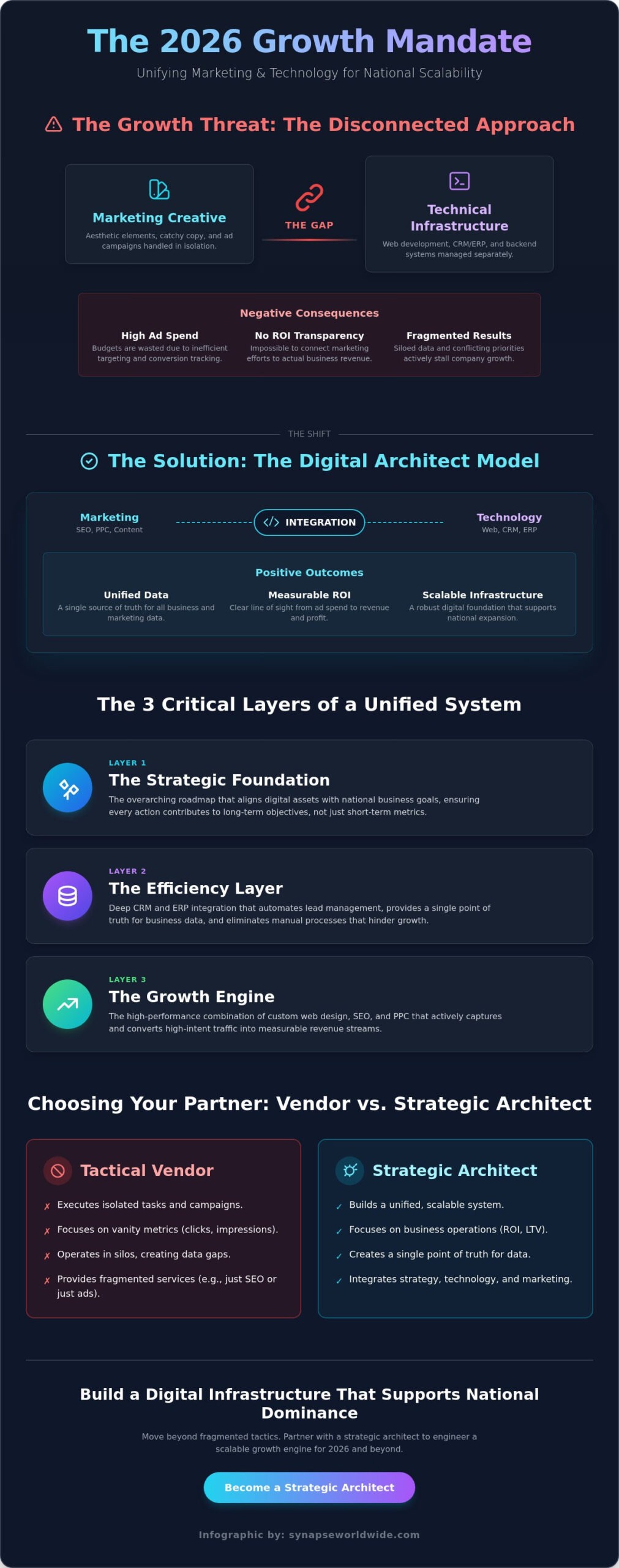
Many Australian firms are abandoning the fragmented model of hiring separate vendors for SEO, web design, and social media. This siloed approach creates data gaps and conflicting priorities that stall growth. A 2026 agency acts as a digital architect, ensuring every component of the ecosystem supports a unified business objective. We define this model through three critical layers:

  • The Strategic Foundation: The overarching roadmap that aligns digital assets with national business goals.
  • The Efficiency Layer: CRM integration and ERP solutions that automate lead management and provide a single point of truth.
  • The Growth Engine: High-performance custom web design, SEO, and PPC management that captures and converts high-intent traffic.

The distinction between a “vendor” and an “architect” is clear. A vendor executes a task; an architect builds a system. This systemic approach is what allows businesses to move beyond simple lead generation toward sustainable, scalable expansion.

The Shift from Tactical to Strategic Partnerships

Agencies in 2026 must understand your balance sheet, not just your click-through rate. A tactical vendor focuses on vanity metrics, but a strategic partner focuses on business operations. This shift is vital for national scaling. When expanding across diverse Australian markets, from Sydney’s competitive finance sector to Perth’s industrial hubs, you need a unified data view. Without this connectivity, your marketing spend remains a gamble rather than a calculated investment. A strategic partner ensures that your digital infrastructure is ready to handle the weight of increased traffic and complex customer journeys.

Core Capabilities: More Than Just Advertising

Modern digital dominance requires a blend of creative excellence and technical consulting. It’s not enough to run ads if your website isn’t optimized for conversion or if your leads vanish into a manual spreadsheet. A premier full-service digital marketing agency australia provides a suite of integrated services including custom web design, e-commerce development, and social media marketing. By linking these with CRM integration and ERP solutions, the agency ensures brand consistency and operational transparency. This holistic view allows for technical backend integration that supports, rather than hinders, your marketing ambitions.

Engineering the Growth Engine: SEO, PPC, and High-Performance Web Design

Your digital presence is only as strong as its weakest connection. For businesses aiming for national dominance, a full-service digital marketing agency australia must treat the website not as a static brochure, but as a high-performance conversion hub. In 2026, the growth engine relies on the seamless integration of custom web design, organic search equity, and precision-targeted paid acquisition. These elements don’t function in isolation; they form a unified system where technical performance directly dictates your marketing efficiency.

Achieving national reach in the Australian market requires a nuanced SEO strategy that recognizes regional search behaviors while maintaining broad authority. Your infrastructure must be mobile-first and exceptionally fast. Google’s Core Web Vitals remain the benchmark for visibility, and even a one-second delay can significantly erode your conversion rates. This technical baseline is non-negotiable for scaling across multiple territories. Additionally, ensuring your promotional tactics align with Australian advertising regulations is essential for maintaining brand integrity and consumer trust as you grow.

Custom Web Design as a Growth Engine

Bespoke development has moved from a luxury to a technical necessity. Standardized templates often carry legacy code that throttles page speed and compromises mobile user experience. A visionary architect understands that custom web design for small business provides the foundational agility needed to outpace competitors. By mapping every design element to specific user journeys, you ensure that traffic from all sources finds a frictionless path to conversion. This tailored approach allows for deeper integration with your backend systems, turning your website into a proactive sales tool rather than a passive asset.

Integrated Search Strategies: SEO and PPC Synergy

Organic and paid search are two sides of the same coin. While seo for small business builds long-term digital equity and reduces your reliance on rented attention, ppc management services provide the immediate visibility required for rapid market testing. A unified agency shares data between these teams. High-converting keywords from your paid campaigns should immediately inform your organic content strategy. Conversely, high organic rankings can lower your paid acquisition costs by improving landing page relevance and quality scores. This synergy is the hallmark of a sophisticated digital strategy that prioritizes total return on investment over individual channel metrics. If you’re ready to unify your search presence, exploring a strategic digital partnership can provide the clarity your brand needs to thrive.

Full-Service Digital Marketing Agency Australia: The 2026 Strategic Growth Framework

The Efficiency Layer: Integrating Marketing with CRM and ERP Infrastructure

The most persistent question business leaders ask is simple: “How do I know my marketing is actually making money?” If your agency only reports on clicks, impressions, or “engagement,” they aren’t providing a complete answer. In 2026, a truly full-service digital marketing agency australia must look beyond the top of the funnel. We believe that marketing success is a data problem as much as a creative one. To prove ROI, your marketing activities must be digitally tethered to your actual sales outcomes through robust CRM and ERP infrastructure.

Technical infrastructure is the secret sauce that separates high-performing enterprises from those stuck in a cycle of speculative spending. Marketing automation might generate thousands of leads, but without a clean CRM integration, those leads often stall in a fragmented sales process. By building a bridge between your digital assets and your operational backend, you create a transparent ecosystem. This connectivity allows you to see exactly which search terms, social ads, or email campaigns resulted in a finalized invoice, transforming marketing from an expense into a predictable investment.

CRM Integration: Closing the Loop on Lead Generation

Closing the loop means ensuring your website and your sales team speak the same language. We focus on automating lead flow directly from your custom web design into your sales pipelines. This eliminates manual data entry, which is often the primary cause of lead leakage and sales team frustration. Beyond simple lead capture, custom CRM hooks allow you to track lifetime customer value (LTV) back to the original acquisition source. When you understand the long-term value of a customer acquired through a specific channel, you can make more aggressive, confident decisions about your scaling strategy. It’s about moving from “guessing” to “knowing” with absolute certainty.

ERP and E-commerce: Scaling Operations Nationally

For Australian enterprises with complex logistics, scaling requires more than just more orders; it requires the ability to fulfill them. This is where ecommerce website development must account for your backend operational reality. Off-the-shelf tools often fail when you need to connect real-time inventory, multi-warehouse logistics, and national shipping providers into a single front-end experience. ERP solutions ensure that your marketing engine doesn’t outpace your fulfillment capacity. By integrating these systems, you provide customers with accurate stock levels and delivery times, which are critical factors for conversion and brand trust. Bespoke software solutions ensure that your growth isn’t limited by the technical constraints of generic platforms.

Evaluating Your Partner: A Framework for Australian Business Leaders

Selecting a partner for your digital transformation is a high-stakes strategic decision. In 2026, the Australian market is crowded with providers claiming comprehensive capabilities, yet only a handful possess the technical sophistication to act as true architects. Identifying a premier full-service digital marketing agency australia requires a fundamental shift in how you evaluate expertise. You aren’t just hiring a team to manage ads; you’re choosing the engineers who will build and maintain your company’s digital nervous system.

A reliable evaluation framework must distinguish between “Strategic Architects” and “Tactical Vendors.” While a vendor might offer lower entry costs, they often lack the technical depth required to integrate your marketing with your business operations. This gap leads to the very pains we’ve discussed: disconnected tools and a lack of conversion transparency. Your partner should be able to demonstrate a clear understanding of national market dynamics and how to navigate the specific regulatory environment in Australia, including the latest consumer protections and data privacy standards.

The “Architect” vs. The “Vendor” Comparison

The primary difference lies in the focus of the engagement. Tactical vendors focus on short-term tasks like monthly blog posts or basic ad management. They often rely on standardized templates that limit your ability to scale. Conversely, strategic architects focus on long-term infrastructure. They prioritize deep technical consulting, ensuring that your custom web design and CRM integration are built to handle future growth. If an agency cannot explain the intricacies of your technical backend or how they will manage complex API integrations, they aren’t equipped to lead a national expansion. Scale requires a partner who understands that every line of code is a business asset.

Transparency, Ownership, and Security

Ownership of your digital assets is a non-negotiable standard. In the 2026 landscape, some vendors still attempt to use “closed” proprietary systems that make it difficult to migrate or update your own site. You must ensure you own the code, the data, and the accounts. Furthermore, your partner must provide clear answers regarding hosting security and uptime. With the increased scrutiny from the ACCC and the strict requirements of the Privacy Act 1988, your agency must be a guardian of your brand’s legal and ethical standing. Ask these critical questions during your vetting process:

  • Data Sovereignty: Where is my customer data stored, and how is it protected under Australian law?
  • Asset Ownership: Do I have full administrative access and legal ownership of all custom code and marketing accounts?
  • Technical Depth: Can the agency manage custom ERP solutions and CRM hooks in-house, or do they outsource technical work?
  • Pricing Alignment: Does the agency offer fixed-price project fees and value-based retainers that align with my ROI goals?

If you’re ready to move beyond tactical tasks and build a scalable digital foundation that drives measurable growth, consult with our strategic architects to begin your 2026 growth journey.

Synapse Worldwide: Your Strategic Architect for National Digital Dominance

The transition from fragmented digital tactics to a unified growth framework requires more than just a vendor; it demands a strategic architect. Synapse Worldwide occupies a unique position as a premier full-service digital marketing agency australia by bridging the gap between high-level business strategy and intricate technical execution. We don’t just manage your digital presence. We engineer it. By aligning your custom web design, search visibility, and backend automation, we transform your digital assets into a single, high-performance engine capable of supporting national expansion.

Our foundation is built on a 20-year legacy of reliability. Established in 2005, Synapse Worldwide has navigated every major shift in the digital landscape, providing our clients with the stability and expertise needed to thrive in a mature market. This longevity is a testament to our results-oriented approach. We’ve spent two decades refining the “secret sauce” of digital growth: the seamless integration of ERP and CRM solutions with award-winning marketing strategies. This allows our clients to move away from the frustration of managing disconnected tools and toward the clarity of executing a cohesive vision.

A Legacy of Custom Excellence

Our history in custom software development is what sets us apart from agencies that only handle “the pretty stuff.” We possess the technical depth to build what other agencies can only buy off the shelf. This capability informs every marketing strategy we deploy. When we design an e-commerce platform or a lead generation site, we do so with a deep understanding of the underlying code and how it interacts with your CRM and ERP systems. This technical precision ensures that your growth engine is robust, secure, and infinitely scalable. We remain committed to fixed-price transparency, ensuring that our partnerships are built on mutual trust and a shared commitment to your long-term ROI. We believe that your digital infrastructure should be an asset, not a bottleneck.

Ready to Scale Nationally?

If you’re ready to stop guessing and start growing, the next step is a comprehensive audit of your digital architecture. Our consulting-first approach is designed to identify the hidden growth opportunities within your current systems and map out a clear path to national dominance. We look beyond surface-level metrics to evaluate how your technical backend supports your marketing ambitions. Whether you need to refine your SEO for small business or implement complex CRM integration, our team provides the discipline and vision required to reach the next level of success. Your journey toward a unified, scalable digital presence begins with a single strategic conversation. Consult with our strategic architects today to secure your brand’s future in the 2026 landscape.

Building Your 2026 Digital Legacy

The Australian market in 2026 demands more than just online visibility; it requires deep synchronization between your business operations and your digital presence. We’ve explored how a premier full-service digital marketing agency australia acts as a strategic architect, bridging the gap between custom web design and complex technical integrations. Success now depends on moving beyond disconnected tools toward a unified ecosystem where every lead is traceable and every asset is fully owned by your brand. Fragments are the enemy of scale.

Since 2005, Synapse Worldwide has specialized in this exact intersection of technology and growth. Our expertise in custom ERP and CRM integrations ensures that your marketing engine doesn’t just generate traffic but drives measurable revenue. We operate with a firm commitment to fixed-price project transparency and a strategic reach that supports your national ambitions. It’s time to stop managing fragmented platforms and start executing a visionary growth strategy that scales with your ambition.

Partner with Australia’s Strategic Digital Architects and secure your path to transformation today. We’re ready to help you reach the next level of business success.

Frequently Asked Questions

What does a full-service digital marketing agency actually do?

A full-service agency unifies strategy, technology, and marketing into a single growth engine. In 2026, this means managing everything from custom web design and SEO to technical CRM integration and PPC management. They act as strategic architects who ensure your digital infrastructure supports your business objectives rather than just running isolated campaigns. This holistic approach provides a single point of accountability for your entire digital presence.

Why is custom web design better than using a template for my business?

Custom web design provides the technical agility and unique architecture required to outperform generic competitors. Templates often include bloated legacy code that slows down page speeds and limits your ability to integrate complex ERP solutions. Bespoke development ensures your site is mobile-first and tailored specifically to your customer’s conversion journey. It creates a foundation for scalable growth that templates simply can’t support.

How long does it take to see results from an integrated SEO and PPC strategy?

You can expect immediate visibility through PPC management while organic search equity typically begins to compound within three to six months. By integrating both, you use paid data to refine your SEO strategy, which helps lower your total acquisition costs over time. This dual approach ensures you capture high-intent traffic today while building long-term digital authority for the future. It’s about balancing immediate wins with sustainable growth.

Do I really need CRM or ERP integration for my marketing to work?

Yes, integration is essential if you want to move beyond vanity metrics and track actual business revenue. Connecting your website to your CRM or ERP systems allows you to automate lead flow and monitor lifetime customer value. Without this connectivity, your marketing remains a speculative expense because you lack a clear view of which campaigns are driving finalized sales. Integration turns your data into a strategic asset.

How do full-service agencies charge for their services in Australia?

Most Australian agencies utilize a combination of fixed-price project fees for initial builds and value-based retainers for ongoing management. These models ensure that the agency’s incentives are aligned with your business outcomes rather than just hourly output. You should check with potential partners to see if they offer transparent, outcome-focused pricing that accounts for both technical maintenance and active marketing execution. This structure supports long-term partnership stability.

Can a full-service digital marketing agency australia help with national business expansion?

A full-service digital marketing agency australia is specifically equipped to manage the complexities of scaling across multiple regional markets. They provide the unified data view and technical infrastructure needed to maintain brand consistency from Sydney to Perth. By leveraging national SEO strategies and scalable e-commerce development, an agency partner ensures your digital presence grows alongside your physical operations. They act as the technical backbone of your expansion.

What is the difference between a digital agency and a traditional marketing agency?

A digital agency focuses on technical infrastructure and online conversion paths, whereas traditional agencies prioritize broad brand awareness through offline channels. In 2026, the distinction lies in a digital partner’s ability to handle custom software, CRM hooks, and data-driven search strategies. Digital agencies act as architects of your online ecosystem, ensuring every click is measurable and every lead is captured. They prioritize technical performance over mere aesthetic appeal.

How do I measure the ROI of a full-service digital partnership?

You measure ROI by tracking the direct correlation between your digital spend and finalized revenue in your CRM or ERP systems. Instead of looking at clicks or likes, you should focus on metrics like Customer Acquisition Cost and Lifetime Value. A strategic partner provides transparent reporting that shows exactly how your search visibility and automation efforts contribute to your company’s bottom line. This transparency ensures your marketing is a predictable investment.


Marketing Automation Setup Services: The 2026 Strategic Architecture for Scalable Growth

Marketing Automation Setup Services: The 2026 Strategic Architecture for Scalable Growth

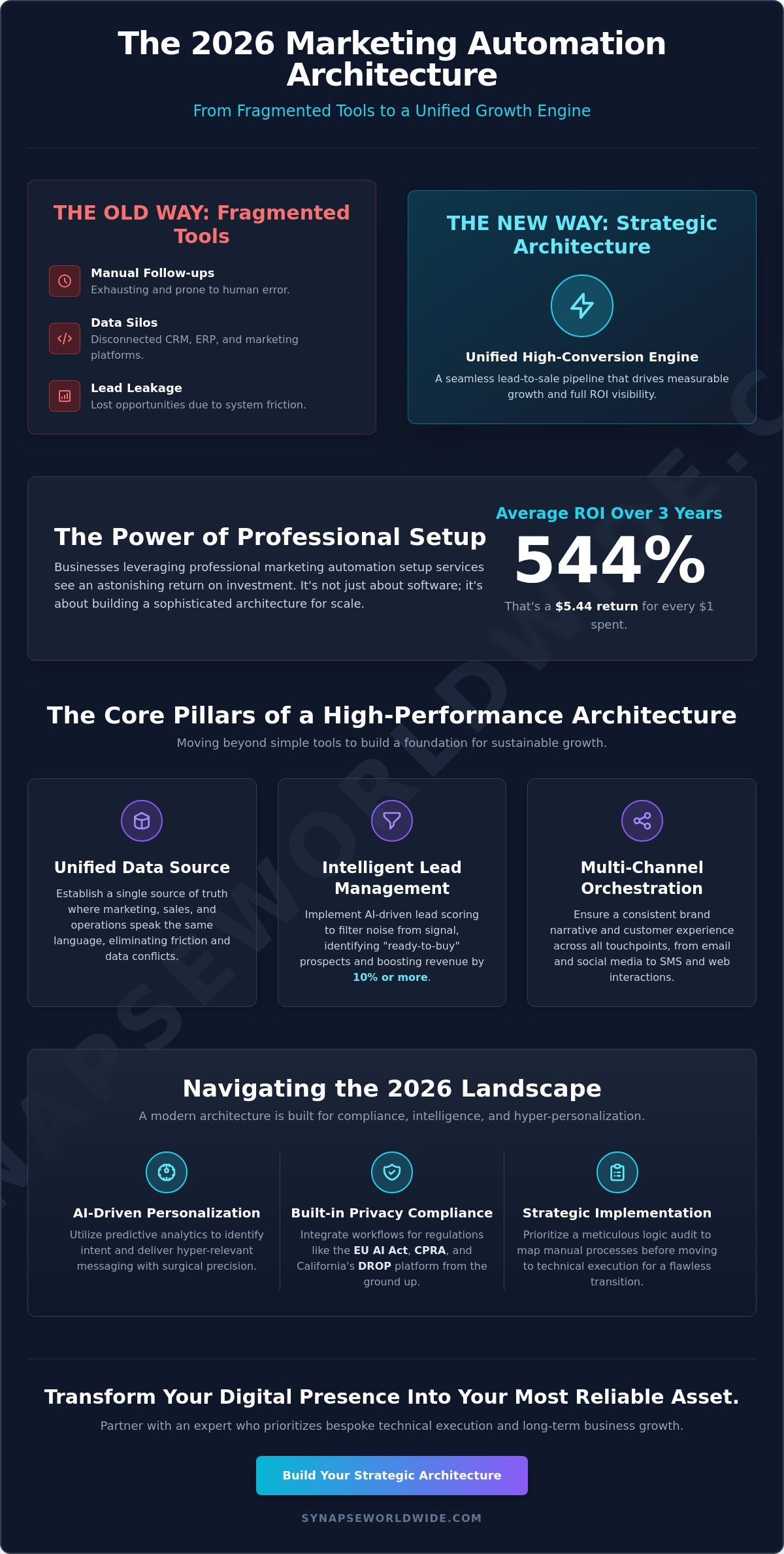
Did you know that businesses leveraging automation see an average ROI of 544% over three years? That is a $5.44 return for every dollar spent. Yet, most organizations fail to capture this value because they treat software as a standalone tool rather than a strategic foundation. When you invest in professional marketing automation setup services, you aren’t just buying a subscription; you’re building a sophisticated architecture for scale. You likely recognize the deep frustration of lead leakage and the friction caused by persistent data silos between your marketing and sales teams. It’s exhausting to manage manual follow-ups while your CRM and ERP systems remain disconnected and out of sync.

We’ll show you how to transform these fragmented efforts into a unified, high-conversion engine. By moving beyond basic email blasts, you’ll build a seamless lead-to-sale pipeline that drives clear, measurable growth. This article explores the 2026 strategic architecture required to integrate your digital tools, comply with evolving privacy regulations like the EU AI Act, and finally achieve full visibility into your marketing ROI. We’ll examine how a visionary approach to connectivity and customization can turn your digital presence into your most reliable asset for long-term success.

Key Takeaways

  • Shift your perspective from viewing automation as a set of isolated tools to a strategic infrastructure that orchestrates sophisticated, multi-channel customer journeys.
  • Learn how professional marketing automation setup services establish a ‘Unified Data Source’ where marketing, sales, and operations finally speak the same language.
  • Resolve the silo effect by integrating your CRM and ERP systems to eliminate fragmented communication and capture every lead opportunity.
  • Master a framework that starts with meticulous logic auditing to map manual processes before moving into technical implementation.
  • Discover the competitive advantage of a visionary partnership that prioritizes bespoke technical execution and long-term business growth over simple software installation.

Redefining Marketing Automation Setup Services in 2026

Marketing is no longer a series of disconnected campaigns; it’s a structural discipline. As we move through 2026, Marketing automation has transitioned from a supplementary tool to the central nervous system of the modern enterprise. Successful organizations don’t just “buy” software. They invest in marketing automation setup services to build a resilient, scalable architecture. This shift moves away from simple email triggers and toward AI-driven multi-channel orchestration. It requires a visionary architect who understands how to bridge the gap between front-end engagement and back-end operational data.

When you approach your digital strategy with this mindset, you transform your marketing department from a cost center into a high-performance revenue engine. A professional setup ensures that every technical decision aligns with your long-term growth objectives. It’s about seeing the big picture while maintaining a disciplined focus on the intricate technical details that make or break a lead-to-sale pipeline.

Beyond Software: The Strategic Value of Professional Setup

Infrastructure is the foundation of scale. Industry data suggests that a vast majority of automation projects fail to meet their objectives because they lack a professional implementation roadmap. Without a strategic guide, businesses often end up with “fragmented automation,” where tools exist but don’t communicate. Professional setup services prioritize custom data mapping to ensure your systems remain scalable as your contact database grows. This process moves your business from a “set and forget” mentality to a dynamic, data-driven growth framework. It ensures that your CRM and ERP systems aren’t just connected; they’re synchronized to provide a 360-degree view of the customer journey.

The 2026 Landscape: AI, Data Privacy, and Personalization

The regulatory environment in 2026 has fundamentally changed how we handle consumer information. Modern setup services must now account for the EU AI Act enforcement that began in early 2026, which imposes strict transparency obligations on marketing applications. Additionally, under California’s CPRA regulations, your business is required to conduct rigorous risk assessments for automated technologies. We also see the emergence of California’s “Delete and Opt-Out Platform” (DROP), which processes deletion requests every 45 days. A professional setup builds these compliance workflows directly into your architecture. This allows you to transition from generic blasts to hyper-personalized customer experiences while maintaining total data integrity. By integrating predictive analytics into your standard stack, you can identify “ready-to-buy” prospects with surgical precision, ensuring your messaging is always relevant and timely.

The Core Pillars of a High-Performance Automation Architecture

Establishing a high-performance architecture requires moving beyond simple tool connections. It demands a Unified Data Source where every department shares a single version of truth. When your marketing, sales, and operations teams speak the same language, you eliminate the friction that typically stalls growth. Professional marketing automation setup services focus on architecting this logic first. We design the lead scoring systems that filter noise from signal, identifying prospects who are genuinely ready to buy based on behavioral data rather than guesswork. Companies that automate lead management in this way often see a revenue increase of 10% or more within just nine months.

Effective marketing automation strategy relies on multi-channel synchronization. Your brand narrative must remain consistent whether a customer interacts via email, social media, or SMS. This orchestration ensures that a lead doesn’t receive a generic discount code via text minutes after they’ve already purchased through your site. Achieving this level of precision starts with a robust digital foundation. For many organizations, investing in custom web design for small business serves as the essential data capture engine. It provides the structured environment necessary to track user intent long before the first form is submitted. This foundational work allows for the 451% increase in qualified leads that top-tier automation can provide.

CRM and ERP Synergy: The Back-Office Connection

True scalability happens when front-end engagement meets back-end efficiency. By leveraging business process automation, you bridge the critical gap between a captured lead and a fulfilled order. We specialize in synchronizing inventory levels and service availability with your live marketing campaigns. This prevents the costly mistake of promoting out-of-stock items or overbooking service slots. Sophisticated API integrations eliminate manual data entry, allowing your team to focus on high-value strategic tasks rather than administrative upkeep. If your current systems feel disjointed, our experts can help you design a more cohesive CRM integration strategy to unify your operations.

Conversion-Centric Web Infrastructure

Your website is the primary entry point for your automation ecosystem. High-performance landing pages must do more than just look professional; they must function as intelligent data entry points. We implement custom tracking protocols to monitor the entire user journey. This ensures your ecommerce website development fully supports complex automation triggers, such as abandoned cart sequences or personalized product recommendations. By building these triggers into the site architecture, you ensure that no lead falls through the cracks of a manual follow-up process.

Marketing Automation Setup Services: The 2026 Strategic Architecture for Scalable Growth

Overcoming the Silo Effect: Why Integration Trumps Isolated Tools

Owning a suite of marketing tools isn’t the same as having a functional automation system. Many leaders express frustration because they’ve invested in a top-tier CRM and an expensive email platform, yet their results remain stagnant. This usually happens because the tools exist in isolation. When your tech stack is fragmented, your brand voice becomes inconsistent and leads slip through the gaps. Professional marketing automation setup services solve this by moving beyond the “tool-first” mentality. We focus on the business logic that connects these systems, ensuring that data flows bi-directionally and in real-time.

Out-of-the-box integrations often fall short of enterprise-level requirements. They might sync basic contact info but fail to carry over the complex behavioral data needed for sophisticated triggers. This is where bespoke APIs and custom middleware become essential. By architecting a solution that mirrors your specific internal workflows, you ensure that your sales team isn’t just getting more leads; they’re getting the right context at the right time. This level of connectivity turns a collection of software into a unified, high-conversion engine.

The Hidden Costs of DIY Automation Setup

Attempting a DIY setup often leads to significant technical debt. Poorly mapped data structures might work for a month, but they eventually break as you scale, leading to expensive cleanup projects later. Inaccurate lead scoring is another silent killer of productivity. If your system incorrectly flags cold prospects as “ready-to-buy,” your sales team wastes hours on dead-end calls. There is also a security risk to consider. Many businesses rely on “free” third-party plugins to bridge gaps, but these often lack the rigorous updates required to stay ahead of modern vulnerabilities. Investing in a professional roadmap from the start protects your data and your reputation.

Bespoke vs. Standardised Solutions

Standard SaaS integrations are fine for basic tasks, but they rarely support long-term growth. You need a partner who understands the intersection of technical development and high-level strategy. For instance, your automation should work in tandem with your SEO for small business efforts. When your search strategy brings in high-intent traffic, your automation must be ready to capture and nurture that specific intent through custom code if necessary. Future-proofing your stack means building an architecture that isn’t tied to the limitations of a single platform. This flexibility allows you to adapt as new technologies emerge, ensuring your digital presence remains an asset rather than a liability.

A Strategic Framework for Implementing Enterprise-Grade Automation

Implementing enterprise-grade automation isn’t a weekend project; it’s a phased deployment that requires precision at every turn. While many competitors suggest starting with a simple email template, our marketing automation setup services begin with a rigorous Discovery and Logic Audit. We map your existing manual customer journey to uncover exactly where potential revenue is leaking. This architectural approach ensures that your technical stack supports your business goals rather than dictating them. Once the logic is sound, we define the technical architecture, selecting the integration points that will sustain your growth for years to come.

A high-performance engine requires high-quality fuel. The third step in our framework involves deep data migration and cleaning. We ensure no legacy errors or duplicate records disrupt your new workflows, as “hidden costs” in automation often stem from contact overages caused by messy databases. Following this, we move into campaign building and logic testing. We deploy your workflows in a controlled environment to verify every trigger and branch before they go live. Finally, we focus on optimization. By leveraging sophisticated ppc management services, you can feed your new automation engine with high-intent traffic, creating a self-sustaining cycle of growth and conversion.

Phase 1: Mapping the Customer Lifecycle

Mapping the customer lifecycle allows us to identify specific friction points in your sales funnel where automation can have the most immediate impact. Perhaps leads are stalling at the mid-funnel stage, or your sales team is overwhelmed by low-quality inquiries that haven’t been properly vetted. We define your Ideal Customer Profile (ICP) within the database logic to ensure your automation prioritizes the most valuable opportunities. Our primary goal is often singular and impactful: “Reducing lead response time to under 5 minutes.” This clarity ensures every automated sequence serves a distinct purpose in moving the prospect toward a sale.

Phase 2: Technical Execution and Integration

Technical execution creates the “Digital Handshake” between your website and CRM. This isn’t a simple form-to-email link. It is a deep integration that captures source attribution, behavioral cues, and intent signals. We implement advanced tracking codes that allow for precise attribution modeling, so you know exactly which touchpoint triggered a conversion. Automated reporting dashboards then provide real-time visibility into your marketing ROI. This gives you the confidence to scale your budget where it works best. Ready to build your scalable architecture? Explore our CRM integration solutions to start unifying your data today.

Partnering for Success: Custom Automation Solutions by Synapse Worldwide

Synapse Worldwide treats every digital project as a bespoke architectural challenge. We don’t just install software; we engineer growth engines. Our marketing automation setup services focus on the deep connectivity between your front-end engagement and back-end operations. This visionary strategy ensures that every automated trigger serves a specific business outcome. By moving away from standardized, low-cost templates, we provide the stability and quality required for long-term success. We believe that true digital transformation requires a sophisticated balance between high-level strategy and meticulous technical execution.

A partnership with our team is an investment in continuous transformation. Unlike a one-off software installation that quickly becomes obsolete, our approach adapts to your evolving business needs. We bridge the gap between national market reach and localized business requirements, ensuring your digital presence remains relevant across diverse audiences. This commitment to client ROI is what transforms a simple technical process into a long-term strategic asset. You can finally move from the struggle of manual lead management to a state of automated, predictable growth.

Why Experience Matters in Automation Architecture

Success in digital infrastructure isn’t accidental. It’s the result of leveraging over 20 years of expertise in building resilient systems for diverse industries. We manage your entire digital ecosystem, from custom web design to complex ERP solutions. This holistic view allows us to deliver highly individualized, evidence-based solutions that standardized agencies simply cannot match. We don’t guess what works; we use data to validate every integration point in your architecture. This disciplined focus ensures that your automation stack remains a proactive participant in your business strategy rather than a technical burden.

Next Steps: Your Roadmap to Automated Growth

Preparing your team for automated workflows is a critical step in the transition. It requires a shift in mindset from reactive tasks to proactive logic management. During a Synapse discovery session, we’ll deep-dive into your current processes to identify the most impactful opportunities for orchestration. We’ll examine your lead flow, data hygiene, and existing tech stack to build a roadmap that prioritizes immediate wins and long-term scalability. It’s time to stop letting leads slip through the cracks of manual follow-ups. Take the first step toward a unified, high-conversion engine and Book a Strategic Automation Audit to see how we can elevate your digital presence.

Architecting Your Future Growth

Success in the digital landscape of 2026 demands more than just adopting new software; it requires a disciplined commitment to structural integrity. We have examined how a unified data source and the strategic orchestration of customer journeys can turn fragmented marketing efforts into a high-performance revenue engine. By prioritizing logic auditing and technical synchronization, you move beyond the limitations of isolated tools to create a resilient foundation for scale.

Professional marketing automation setup services provide the bridge between high-level strategic consulting and meticulous hands-on execution. Synapse Worldwide leverages over 20 years of technical excellence to deliver custom-built CRM and ERP integrations tailored to your specific business logic. We don’t just solve today’s problems; we help you anticipate tomorrow’s opportunities through results-oriented strategy. It’s time to stop managing manual friction and start driving measurable ROI. Scale your business with expert marketing automation setup services today. Your journey toward a transformed, highly automated digital presence starts with a single visionary step. We are ready to help you reach the next level of business success.

Frequently Asked Questions

What is included in a professional marketing automation setup service?

A professional service includes deep discovery, logic auditing, and custom technical integration between your digital presence and sales tools. We focus on architecting a lead-to-sale pipeline that reflects your unique business workflows. This process ensures that your marketing automation setup services result in a scalable growth engine rather than just a collection of triggered emails. We prioritize custom data mapping to ensure your systems remain resilient as your database expands.

How long does it typically take to see ROI from marketing automation?

Organizations that automate lead management typically see a revenue increase of 10% or more within six to nine months. Long-term data shows that businesses using these systems achieve an average ROI of 544% over three years. This equates to a return of $5.44 for every dollar invested. These results depend on a sound initial architecture that eliminates lead leakage and manual friction from the start.

Do I need to replace my current CRM to implement advanced automation?

You don’t necessarily need to replace your existing CRM to achieve high-level results. Our approach focuses on sophisticated CRM integration to bridge the gap between your marketing data and sales activity. We evaluate your current stack to ensure it can handle the advanced API calls and data mapping required for 2026 growth strategies. If your current system has limitations, we build custom middleware to ensure seamless connectivity.

Can marketing automation help with B2B lead nurturing and long sales cycles?

Automation is essential for managing the complexity of B2B sales cycles. It allows you to maintain consistent, personalized communication with prospects over months or even years without manual intervention. By using behavioral triggers, you can identify exactly when a long-term lead is ready for a direct sales conversation. This prevents lead leakage and ensures your sales team focuses only on high-intent opportunities.

What is the difference between an email marketing tool and a full automation setup?

An email tool is a tactical delivery system, while a full automation setup is a strategic infrastructure. While email tools primarily send messages to lists, full automation orchestrates multi-channel journeys based on real-time user behavior. It integrates your website, CRM, and ERP to ensure every touchpoint is informed by the customer’s entire history with your brand. This creates a unified narrative rather than isolated messages.

How does marketing automation integrate with my existing ERP system?

Integration with your ERP system happens through custom-built APIs and secure middleware. This connection allows your marketing campaigns to respond to live operational data, such as inventory levels or service availability. This ensures your marketing automation setup services provide a seamless flow from the initial lead capture to the final fulfilled order. It eliminates the need for manual data entry and reduces the risk of human error.

Is marketing automation setup a one-time project or an ongoing service?

The initial technical architecture is an intensive project, but the most successful businesses treat automation as an ongoing strategic asset. You need a long-term partnership to optimize workflows, adapt to new privacy regulations like the EU AI Act, and refine your lead scoring logic. This continuous improvement ensures your engine stays efficient as your business scales and as consumer behaviors shift in the digital marketplace.

What are the most common mistakes businesses make when setting up automation?

The most frequent error is adopting a tool-first mentality that ignores underlying business logic. Many organizations also suffer from poor data hygiene, which leads to inaccurate lead scoring and wasted sales efforts. Skipping the discovery phase often results in a fragmented system that fails to provide a clear view of marketing ROI. A professional roadmap avoids these pitfalls by prioritizing strategy and data integrity before technical deployment.


Digital Marketing ROI Calculator: The 2026 Strategic Guide to Measuring Growth

What if your current digital marketing roi calculator is actually obscuring your true path to profit? With the average cost per click on Facebook rising to $1.72 in 2026, representing a 11% increase from the previous year, high-growth Australian enterprises can’t afford to rely on fragmented data. You likely understand that traditional attribution models often fail to capture the nuance of brand awareness or the long-term value of a robust technical foundation. It’s frustrating when your spreadsheets don’t reflect the reality of your digital ecosystem’s performance or the impact of technical debt on your margins.

This guide provides the strategic framework you need to master these complexities and align marketing metrics with genuine business transformation. We’ll move past simple clicks to examine how custom web design, SEO, and CRM integration drive measurable revenue. You’ll learn to scale your investments with confidence while navigating 2026 regulatory shifts, including the FTC’s latest consumer review rules and new AI disclosure mandates. We’re moving from basic tracking to an infrastructure-led approach that ensures every digital touchpoint contributes directly to your bottom line.

Key Takeaways

  • Distinguish between immediate ad spend returns and true business transformation by integrating Customer Lifetime Value into your strategic profit models.
  • Utilize a sophisticated digital marketing roi calculator to quantify how your website’s technical infrastructure and user experience multiply the impact of your SEO and PPC investments.
  • Eliminate data silos through CRM integration to accurately track the full customer journey from an initial online search to a completed offline transaction.
  • Transition from static reporting to a culture of continuous testing and iterative development to maintain a competitive edge in a rapidly evolving digital landscape.

Beyond the Formula: Why Digital Marketing ROI is the Pulse of Your Strategy

Digital marketing success in 2026 is no longer defined by vanity metrics or surface-level traffic. True Return on Investment (ROI) serves as the vital pulse of your business strategy, indicating whether your digital presence is evolving into a high-performance asset or remaining a stagnant expense. While many rely on a basic digital marketing roi calculator to subtract costs from revenue, this approach often overlooks the holistic transformation required for high-growth enterprises. Real ROI accounts for the synergy between custom web design, backend efficiency, and market positioning.

Distinguishing between Return on Ad Spend (ROAS) and true ROI is critical for leadership. ROAS measures the immediate effectiveness of a specific campaign, but it ignores the broader overhead of your digital infrastructure. In contrast, ROI provides a comprehensive view of how every dollar invested in your ecosystem contributes to the long-term valuation of your brand. As advertising costs continue to climb, with Facebook CPCs rising 11% year-over-year in 2026, focusing solely on immediate campaign returns can lead to strategic myopia. This shift in perspective transforms digital activity from a line-item expense into a strategic capital investment.

The Limitations of Traditional ROI Calculators

Standard calculators frequently fail because they ignore the invisible drain of technical debt and maintenance requirements. If your website lacks a high-converting architecture or seamless CRM integration, you are essentially pouring capital into a leaky bucket. Short-term gains from a single PPC campaign might look impressive on a spreadsheet, yet they often come at the expense of long-term brand equity if the user experience is neglected.

  • Technical Debt: Standard tools often overlook the cost of maintaining legacy systems that hinder performance.
  • Brand Equity: Focusing purely on immediate conversion rates can erode the premium positioning of your brand.
  • Bespoke Frameworks: Custom digital solutions require a measurement model that values connectivity as much as it values volume.

ROI vs. ROMI: Understanding the Nuance

Understanding the distinction between ROI and Return on Marketing Investment (ROMI) allows for more granular tactical adjustments. Use ROMI to evaluate the profitability of specific social media or search campaigns where the variables are contained. For enterprise-level initiatives like ERP solutions or complete e-commerce redevelopments, ROI remains the gold standard for measuring total business impact.

ROMI is the specific profitability of marketing activities versus total business investment.

Adopting this dual-layered approach ensures that your digital marketing roi calculator reflects the actual growth of your organization rather than just the performance of your latest ad set. It empowers you to make decisions based on the total architecture of profit, rather than isolated data points.

The Architecture of Profit: Key Variables in a 2026 ROI Calculation

Building a profitable digital presence requires more than just high-level strategy; it demands a forensic understanding of the variables that govern your balance sheet. In an era where the median CPM across all industries has reached $13.48, every inefficiency in your funnel acts as a direct tax on your growth. To move beyond surface-level metrics, your digital marketing roi calculator must integrate the total cost of acquisition with the long-term value of the customer. This structural approach ensures that your marketing spend isn’t just a revolving door of capital, but a foundation for scalable expansion.

Calculating the true price of a new lead goes beyond the initial ad click. Customer Acquisition Cost (CAC) should encompass everything from the management fees of your PPC campaigns to the technical overhead of your lead-capture systems. When these costs are weighed against the Average Order Value (AOV), you begin to see the skeletal structure of your profitability. A sophisticated Digital Marketing Metrics and ROI Analysis demonstrates that high-growth enterprises focus on the Lead-to-Close ratio to bridge the gap between marketing visibility and actual sales operations. If your marketing creates interest but your sales operations can’t convert it, your ROI will remain artificially suppressed.

The Impact of Customer Lifetime Value (LTV)

The first sale is merely the entry point into a much larger profit cycle. High-performance websites designed with a focus on user experience naturally increase retention rates, which in turn boosts the Customer Lifetime Value (LTV). By accurately calculating LTV, you can justify higher initial acquisition costs because you understand the total revenue a single client generates over months or years. This long-term perspective is essential when developing seo for small business strategies, where the compounding benefits of organic visibility often take time to fully manifest but deliver the highest long-term returns.

Factoring in Operational Efficiency

Profitability isn’t just about increasing revenue; it’s also about aggressively reducing the “Cost” side of your ROI equation. Automation through CRM and ERP systems streamlines the conversion funnel, ensuring that leads don’t slip through the cracks of manual processing. When you integrate custom software solutions into your workflow, you save hundreds of hours in operational time, which should be factored into your total return. Measuring the time saved through these efficiencies is just as vital as tracking your latest ad set’s performance. Reviewing your current digital infrastructure can often reveal hidden opportunities to reclaim margin through better system connectivity. This holistic view ensures your digital marketing roi calculator provides a realistic and ambitious roadmap for your next level of business success.

Campaign vs. Infrastructure: Why Your Website is Your Biggest ROI Multiplier

Spending capital on premium traffic while ignoring your website’s performance is like pouring water into a leaky bucket. While a digital marketing roi calculator can help you estimate your potential returns, it cannot fix a broken conversion funnel. In 2026, the cost of digital attention is higher than ever. With Facebook CPCs averaging $1.72 and Google Ads reaching $5.26, you can’t afford to waste a single click on a subpar user experience. Your website isn’t just a digital brochure; it’s the primary engine of your profitability.

Our approach to ppc management services prioritizes this infrastructure first. We’ve seen that even the most sophisticated AI-powered bidding strategies, such as Meta’s Advantage+ campaigns which boast a 32% lower cost per acquisition, fail when the destination page is slow or confusing. Custom web design provides a bespoke architecture that templates simply cannot match. It ensures every visitor is guided toward a clear conversion goal with minimal friction. Mobile-first design has become a non-negotiable factor, especially as mobile users now represent the vast majority of digital interactions across Australian enterprises.

The Conversion Rate Optimization (CRO) Factor

Small adjustments in your conversion rate yield exponential results. If you double your conversion rate from 1% to 2%, you effectively halve your acquisition costs. Page speed remains a non-negotiable factor; even a one-second delay can significantly erode your digital marketing profitability. Custom web design for small business is a capital investment that lowers future acquisition costs by creating a more efficient conversion engine. This shift from temporary campaigns to permanent infrastructure is what separates market leaders from their competitors.

E-commerce Scalability and ROI

For retail enterprises, scalability depends on technical stability. High-performance ecommerce website development integrates directly with your inventory management and ERP systems to reduce operational friction. By minimizing cart abandonment through superior technical performance, you maximize the return on every marketing dollar spent. This level of connectivity ensures you can handle high-volume traffic without a corresponding increase in manual overhead. When your backend systems talk to each other, your digital marketing roi calculator starts to reflect true, scalable growth rather than just isolated wins.

Building a Bulletproof Measurement Framework: From Attribution to Analytics

Precision in measurement is the bridge between speculative spending and strategic growth. While earlier sections established the importance of your digital infrastructure, the framework you use to track that performance determines your ability to scale. In 2026, relying on “Last-Click” attribution is a liability. This outdated model ignores the complex, multi-touch journey modern customers take before converting. A robust digital marketing roi calculator must account for the entire funnel, acknowledging that a lead might first engage through social media marketing before eventually converting via a direct search weeks later.

Modern data privacy standards, including the intensified 2026 FTC enforcement on data practices and state-level AI disclosure laws, require a sophisticated configuration of Google Analytics 4 (GA4). You need a system that prioritizes consent-based segmentation while still providing the deep insights required for enterprise-level decision-making. By utilizing ERP data to validate marketing-reported revenue, you ensure that your ROI figures aren’t just theoretical projections but reflect the actual cash flow entering your business. This cross-verification eliminates the discrepancies often found between ad platform dashboards and your actual bank balance.

Closing the Data Loop with CRM and ERP

Your website shouldn’t exist in a vacuum. It must communicate directly with your sales database to provide a single source of truth for your ROI. CRM integration allows you to track offline conversions that originated from online leads, giving you a complete picture of your marketing’s effectiveness. Eliminating data silos through custom-built API integrations is a strategic advantage that allows you to see exactly which campaigns drive the highest value clients, rather than just the highest volume of traffic. To ensure your data is working for you, it is time to optimise your digital tracking infrastructure and secure your path to growth.

Predictive ROI: Using AI and Historical Data

The most advanced enterprises are moving beyond retrospective reporting into the world of predictive analytics. By leveraging historical performance trends and accounting for industry seasonality, you can forecast future returns with remarkable accuracy. This foresight allows you to use your digital marketing roi calculator to set realistic 2026 budgets that are based on evidence rather than intuition. As AI-powered bidding continues to increase ad auction density, having a predictive framework ensures you stay ahead of rising costs and maintain your competitive edge. This proactive approach transforms your measurement framework from a simple report card into a visionary tool for long-term business transformation.

Maximizing Your Returns: The Strategic Path to Scalable Digital Growth

The transition from gathering data to executing data-driven decisions marks the final stage of digital maturity. While a digital marketing roi calculator provides the necessary visibility, actual growth occurs when you apply those insights to iterative development. High-growth enterprises don’t treat digital strategy as a static project. They view it as a living ecosystem that requires continuous testing and refinement. Whether you’re adjusting your social media marketing spend or refining your e-commerce development, every change should be a calculated move toward a higher profit margin.

Scaling success requires a disciplined balance between increasing your ad budget and optimizing your existing infrastructure. If your data reveals a high lead-to-close ratio but rising acquisition costs, the solution isn’t always more spending. It might be time to reinvest in your technical foundation to lower friction. This is where the role of a visionary digital architect becomes indispensable. Instead of chasing short-term trends, a strategic partner aligns your digital assets with your overarching corporate objectives, ensuring every technical decision supports long-term business transformation.

The Value of Professional Digital Strategy

Ad-hoc technical fixes might solve immediate problems, but they rarely contribute to sustainable growth. High-level consulting delivers superior ROI because it addresses the connectivity between your custom web design, SEO, and backend CRM systems. A transactional vendor relationship often misses these nuances, focusing only on the task at hand rather than the final business outcome. By moving toward a long-term partnership model, you gain a dedicated team that understands your unique market position and can anticipate technical requirements before they become bottlenecks.

Taking the Next Step in Your Growth Journey

Your journey toward maximizing returns begins with a comprehensive audit of your current digital performance. Identify the low-hanging fruit in your conversion funnel, such as high-traffic pages with low engagement or manual processes that could be automated through ERP solutions. This audit provides the baseline for your digital marketing roi calculator and helps you set ambitious yet achievable targets for the coming year. When you’re ready to move beyond basic metrics and build a high-performance digital engine, Consult with Synapse Worldwide to architect your next level of success. We don’t just provide services; we build the infrastructure that drives your enterprise forward.

Securing Your Market Leadership Through Strategic Digital Infrastructure

Your digital transformation depends on moving from reactive spending to proactive investment. We’ve explored how true profitability stems from a robust architectural foundation where custom web design and seamless data integration work in harmony. A sophisticated digital marketing roi calculator is a vital tool for any high-growth enterprise, but it only delivers value when backed by a bulletproof measurement framework that connects your marketing spend to actual cash flow. By focusing on variables like Customer Lifetime Value and operational efficiency, you position your brand to thrive despite the rising costs of the digital landscape.

Since 2005, Synapse Worldwide has specialized in building the custom digital infrastructure required for this level of sustainable growth. Our results-oriented strategic consulting ensures that your technology and marketing efforts are perfectly aligned with your corporate objectives. It’s time to move beyond fragmented metrics and build a unified engine for success. Architect Your High-Performance Digital Strategy with Synapse Worldwide today. Your path to scalable growth is ready for construction, and the next level of business success is within your reach.

Frequently Asked Questions

What is a good ROI for digital marketing in 2026?

A 500% return is generally considered a strong benchmark for established enterprises aiming for sustainable growth. While some industry reports, like the 2024 Google Economic Impact Report, show returns as high as 8:1 for search advertising, your target should reflect your specific industry margins. Small businesses typically invest between 7% and 12% of their revenue into marketing to maintain this level of profitability and market presence.

How do I calculate ROI if I don’t sell products directly online?

You must assign a monetary value to your leads based on your lead-to-close ratio and average contract value. By integrating your website with CRM solutions, you can track which digital channels result in offline sales. This connectivity ensures your digital marketing roi calculator accounts for the full revenue cycle rather than just surface-level website interactions.

Why is my ROI calculator showing different results than my bank account?

Discrepancies usually occur when attribution models fail to account for technical debt or hidden operational overhead. Your bank account reflects actual cash flow, while a standard digital marketing roi calculator might only track immediate ad revenue. To fix this, you must integrate ERP data to validate marketing reports against your real-world financial performance and total business costs.

Can I accurately measure the ROI of SEO services?

Yes, you measure SEO ROI by comparing the value of organic traffic and conversions against the total cost of your search strategy. By tracking goal completions from organic search and assigning them a lead value, you can determine the long-term profitability of your organic visibility. Unlike paid ads, the ROI of SEO often compounds over time as your authority grows and acquisition costs decrease.

What is the difference between ROAS and ROI?

ROAS measures the gross revenue generated specifically from ad spend, while ROI calculates the total profit after all expenses are deducted. ROI is a more comprehensive metric because it includes management fees, custom web design costs, and technical infrastructure. Focusing only on ROAS can be misleading if your backend operational costs or technical maintenance fees are high.

How does website speed affect my digital marketing ROI?

Technical performance directly impacts your conversion rate; even a one-second delay in page load time can significantly erode your profit margins. Faster websites provide a superior user experience that lowers bounce rates and increases the efficiency of your paid traffic. High-performance infrastructure ensures you aren’t wasting capital on clicks that never have the chance to convert due to technical friction.

How long does it take to see a positive ROI on a new digital strategy?

Paid campaigns can show initial results within weeks, but a holistic digital strategy typically requires three to six months to reach peak efficiency. This timeframe allows for the continuous testing and iterative development needed to optimize your conversion funnel. Long-term assets like SEO and custom infrastructure often deliver their highest returns after the first year of consistent implementation.

Should I include employee salaries in my marketing ROI calculation?

You should include all internal and external labor costs to understand your true business profitability. For a comprehensive ROI analysis, factor in the time your team spends on campaign management, content creation, and lead follow-up. This total-cost approach prevents you from overestimating your returns and helps you make better decisions about scaling your digital operations effectively.


Google Ads Management for E-commerce: The 2026 Strategic Growth Framework

Google Ads Management for E-commerce: The 2026 Strategic Growth Framework

In 2026, the success of your brand is no longer determined by how much you bid, but by the integrity of the data architecture fueling your automation. While Shopping ads now command 76.4% of all retail search spend, many retailers still struggle with climbing CPAs and fragmented tracking. You’ve likely felt the frustration of watching your budget disappear into low-margin products while your most profitable inventory sits idle. Effective google ads management for e-commerce now requires a shift from manual adjustments to sophisticated systems that bridge the gap between your warehouse and the Google Merchant API.

It’s exhausting to chase a target ROAS when your product feeds are outdated and your conversion data is incomplete. Growth should be intentional. You deserve a predictable path to scale that doesn’t sacrifice your margins. This guide introduces our 2026 Strategic Growth Framework, a data-driven blueprint designed to maximize your return on ad spend through deep inventory integration and advanced API utilization. We’ll explore how to navigate the sunset of the Content API for Shopping, leverage the new Data Manager API for offline conversions, and implement a hybrid campaign structure that puts you back in control of your growth.

Key Takeaways

  • Master the transition from manual keyword bidding to entity-based targeting to stay ahead of AI-driven campaign shifts.
  • Learn to architect a strategic product feed that serves as the high-performance engine for your entire digital storefront.
  • Establish deep connectivity between your Google Ads and internal business systems to eliminate wasted spend on low-margin inventory.
  • Discover why modern google ads management for e-commerce requires a focus on Profit on Ad Spend (POAS) and Lifetime Value rather than simple revenue metrics.
  • Understand the competitive advantage of partnering with a strategic architect who integrates technical development with marketing execution.

The Evolution of Google Ads Management for E-commerce in 2026

Modern e-commerce success is no longer a matter of simply outbidding the competition. It’s a precise blend of artificial intelligence, deep data science, and high-impact creative strategy. The days of manual keyword bidding have faded into the background, replaced by entity-based and audience-centric targeting that requires a holistic understanding of user intent. Success in this environment depends on your ability to feed the algorithm the right signals while maintaining strict control over your margins.

Standard “set-and-forget” campaigns are obsolete in a competitive national market. If you aren’t actively steering the machine, you’re likely funding inefficient experiments for Google’s algorithms. This is why professional google ads management for e-commerce has evolved into a discipline of architecture rather than just administration. You need a partner who understands how to build the infrastructure that allows AI to thrive without draining your profitability. Since the platform’s inception, Google Ads has undergone numerous transformations, but the current shift toward total automation is the most radical yet.

The complexity of the current ecosystem means that a single misconfiguration in your data layer can ripple through your entire account, skewing ROAS and leading to poor investment decisions. A strategic architect doesn’t just push buttons; they design the connectivity between your inventory, your CRM, and the ad platform. This ensures that every dollar spent is an investment in sustainable growth rather than a gamble on broad automation.

The Rise of AI-First Advertising

Performance Max campaigns now account for 67% of Shopping ad spend among advertisers using both Performance Max and Standard Shopping. This dominance highlights the shift toward AI-first advertising. These campaigns have redefined the e-commerce funnel by predicting behavior across every Google-owned property. However, the AI is only as good as the inputs it receives. High-quality creative signals are now the primary lever for guiding machine learning. Without professional oversight, these automated systems often prioritize volume over value, leading to “automated waste.” Strategic management ensures the AI focuses on your highest-margin products and most valuable customer segments.

Privacy and First-Party Data

As of June 15, 2026, Google has consolidated data controls with Consent Mode becoming the single control center for data collection. Navigating this cookieless environment requires a sophisticated approach to first-party data. Tools like Enhanced Conversions are no longer optional for brands that value accuracy. You must build a robust first-party data asset to fuel audience modeling and maintain a competitive edge. Server-side tagging is the gold standard for data accuracy in 2026, providing a secure and reliable way to capture conversion data without relying on fragile client-side scripts.

Architecting a High-Performance Google Merchant Center Strategy

The Google Merchant Center is the engine room of your digital storefront. While many retailers treat it as a secondary technical requirement, high-performance google ads management for e-commerce recognizes it as the primary catalyst for visibility. A standard feed is merely a data dump from your website. A strategic feed is a curated marketing asset designed to satisfy both the user’s intent and Google’s algorithmic requirements. This distinction is what separates stagnant brands from those that achieve predictable revenue scaling.

Rich product data is no longer optional. Detailed attributes like Global Trade Item Numbers (GTINs), high-resolution imagery, and granular product types directly impact your ad rank and cost-per-click. As of April 14, 2026, Google introduced mandatory shipping attributes, including handling_cutoff_time and minimum_order_value. Furthermore, warnings for images below 500×500 pixels began in April 2026, with full enforcement set for early 2027. Staying ahead of these technical shifts is vital. The transition from the Content API to the new Merchant API must be finalized by August 18, 2026, to avoid severe service interruptions. Professional PPC management ensures these updates become competitive advantages rather than operational hurdles.

Strategic Feed Optimization Steps

  • Step 1: Data Auditing. We begin by verifying attribute completeness across your entire catalog. Missing values for new shipping attributes can now trigger policy warnings that suppress your best-selling items.
  • Step 2: Title Engineering. Use supplemental feeds to inject high-converting keywords and specific brand terms into your product titles. This aligns your products with actual search queries rather than just internal SKU descriptions.
  • Step 3: Custom Labeling. Segment your products by margin, seasonality, or stock levels. This allows for precise budget allocation, ensuring you don’t waste spend on low-margin clearance items when your flagship products need visibility.
  • Step 4: Visual Testing. Continuous testing of product imagery is essential for maintaining a high CTR. With the optional video_link attribute now active, adding video content can significantly boost engagement on eligible surfaces starting June 30, 2026.

Dynamic Remarketing and Personalization

Your Merchant Center data fuels more than just the initial search click. It’s the foundation for dynamic remarketing that delivers hyper-specific ads to users based on the exact products they viewed. By leveraging cart abandoners with tailored messaging, you can recover lost revenue that would otherwise go to competitors. Dynamic prospecting takes this a step further by using your feed data to find new customers with profiles similar to your existing buyers. This ensures your brand remains visible to high-intent audiences throughout their decision-making process. Personalization at this scale isn’t just a trend; it’s a requirement for scaling profitability in the 2026 landscape.

Google Ads Management for E-commerce: The 2026 Strategic Growth Framework

Beyond the Click: Why Data Integration is Your Competitive Edge

The most common frustration for retail executives is seeing high traffic numbers that fail to translate into bottom-line growth. Clicks are a vanity metric if they don’t lead to profitable sales. To achieve true scale, your advertising engine must communicate directly with your internal business systems. Google Ads cannot operate in a vacuum. When your marketing data is siloed from your sales and inventory data, you’re essentially flying blind. Strategic CRM integration is the bridge that turns raw click data into actionable business intelligence.

As of June 15, 2026, the Data Manager API has become the primary tool for importing offline conversions, making this technical connectivity a requirement for modern google ads management for e-commerce. By passing profit margin data into your account, you move beyond revenue-based bidding. Instead of pursuing a generic ROAS, which averages between 2.87:1 and 4.0:1 in 2026 according to industry reports, you can optimize for actual profit. This ensures your budget prioritizes products that sustain your business rather than just those that generate high turnover with thin margins.

The ERP-to-Ad Pipeline

Synchronizing your ERP with your ad account ensures inventory levels are reflected in real-time. This prevents the costly mistake of paying for clicks on out-of-stock items, which is a primary source of wasted spend for large-scale retailers. You can also use this pipeline to exclude products with high return rates from premium bidding, protecting your margins from hidden costs. Real-time inventory data prevents customer friction and ad waste by ensuring you only promise what you can deliver. This level of technical discipline turns your supply chain into a marketing advantage.

CRM and Customer Lifetime Value (LTV)

Your CRM is a goldmine for audience modeling. By identifying high-value customer segments, you can instruct Google’s AI to bid more aggressively for users who mirror your best buyers. Simultaneously, excluding existing customers from “New Customer Acquisition” campaigns allows you to reallocate that budget toward finding fresh prospects. For high-ticket e-commerce items that require a consultative sales process, integrating lead scores ensures your google ads management for e-commerce is optimized for qualified interest rather than just initial inquiries. This precision ensures your growth is both sustainable and predictable.

Scaling Profitability: Measuring ROAS vs. Lifetime Value (LTV)

The traditional obsession with Return on Ad Spend (ROAS) often masks the true health of a retail business. While the average ROAS for e-commerce in 2026 sits between 2.87:1 and 4.0:1, these figures don’t account for the variable costs that dictate your actual take-home pay. Sophisticated google ads management for e-commerce has shifted toward Profit on Ad Spend (POAS). By integrating your cost of goods sold and shipping expenses into the bidding logic, you ensure that the algorithm prioritizes orders that actually contribute to your bottom line rather than just inflating top-line revenue numbers.

Dominating high-margin categories requires a framework for calculating an “allowable CPA” based on customer retention. If your CRM data reveals that a customer typically purchases three times within their first year, you can strategically afford a higher acquisition cost on the initial click. This long-term perspective allows you to outbid competitors who are restricted by a narrow 30-day window. Scaling is no longer about finding more clicks; it’s about identifying the most profitable paths to customer acquisition. If you want to transition from transactional bidding to a growth-oriented architecture, our PPC management services provide the technical depth needed to execute this shift.

The 2026 Measurement Framework

Measurement in 2026 has moved entirely beyond last-click models. Data-driven attribution is now the baseline requirement for understanding how different touchpoints contribute to a final sale. For national brands, we implement Marketing Mix Modeling (MMM) to quantify the cross-channel impact of Search, Shopping, and Demand Gen campaigns. This provides a holistic view of your marketing spend. It also allows us to set realistic KPIs for different product categories. You might accept a lower ROAS for “loss leader” products that drive high-value new customer acquisitions, while demanding a much higher return on your flagship, high-margin inventory.

Scaling Without Breaking the Algorithm

Scaling a successful campaign is a delicate process of maintaining algorithmic stability. We follow the “20% Rule,” where budget increases are capped at 20% every few days to prevent the campaign from re-entering a volatile “learning” phase. As you grow, you’ll eventually hit a point of diminishing returns in specific market segments. When this happens, we look toward architectural changes. This might involve moving from a single-account structure to a multi-regional or multi-brand setup. This ensures your google ads management for e-commerce remains efficient even as your reach expands into more competitive territories.

Partnering with a Strategic Architect for Sustainable Growth

Navigating the complexities of the 2026 digital marketplace requires more than just a tactical approach. As we’ve explored, the integration of the Merchant API, the shift to POAS-based bidding, and the necessity of server-side tracking have turned advertising into a high-stakes technical discipline. In this environment, professional PPC management services are no longer a luxury for growing brands. They’re a fundamental necessity. You need an architect who doesn’t just manage your spend but actively builds the infrastructure required for global scale.

Synapse Worldwide offers a unique synthesis of technical development and marketing strategy. We don’t believe in standardized, one-size-fits-all packages that many low-cost competitors favor. Instead, we focus on highly customized solutions that respect the intricate details of your specific business model. Effective google ads management for e-commerce demands a partner who understands your ERP systems as well as they understand your audience segments. By moving from a tactical vendor relationship to a strategic partnership, you ensure your brand remains resilient against algorithmic shifts and competitive pressure.

The Synapse Methodology

Our process begins with Deep Discovery. We dive into your specific profit margins, inventory turnover rates, and long-term business objectives. This isn’t just about keywords; it’s about business viability. From there, we move to Custom Architecture. This involves building the technical bridge between your digital storefront and Google’s AI ecosystem, ensuring every data point is captured and utilized. Finally, we commit to Continuous Evolution. The 2026 landscape moves fast, with monthly API updates and shifting consumer behaviors. We provide weekly optimizations and strategic pivots based on real-world performance data to keep your growth on track.

Ready to Scale Your E-commerce Empire?

Sustainable growth is only possible when your advertising is supported by a scalable ecommerce architecture. At Synapse Worldwide, we bridge the gap between local expertise and global best practices, providing the sophisticated oversight needed for complex national and international ventures. We invite you to step away from the stress of managing high CPAs and inaccurate tracking. Let our team of experts handle the technical discipline so you can focus on leading your business. google ads management for e-commerce is most effective when it’s part of a broader, visionary strategy. Consult with our strategic architects today to begin your transformation.

Architecting Your Path to E-commerce Dominance

The 2026 retail environment demands more than just visibility; it requires a sophisticated data ecosystem that prioritizes profit over volume. We’ve explored how the transition to the Merchant API and the implementation of server-side tracking have become the new baseline for performance. These technical foundations allow you to move from simple ROAS to a Profit on Ad Spend (POAS) model that reflects the true health of your inventory. Success today is defined by those who bridge the gap between their internal business systems and Google’s automated bidding engines.

Mastering google ads management for e-commerce is a journey toward technical maturity and predictable scaling. Established in 2005, Synapse Worldwide specializes in building bespoke digital architecture for brands that refuse to settle for standardized results. Our expertise in complex CRM and ERP integrations ensures that your advertising spend is always aligned with your actual margins. It’s time to stop reacting to platform changes and start leading your industry with a framework designed for long-term transformation.

Scale your e-commerce growth with a strategic Google Ads audit from Synapse Worldwide. Your next level of business success is within reach.

Frequently Asked Questions

How much should an e-commerce business spend on Google Ads in 2026?

Your investment should be determined by your unit economics and growth targets rather than a fixed industry average. Most national brands aim for a budget that allows for at least 50 conversions per month per campaign to satisfy machine learning requirements. This ensures the algorithm has enough data to optimize effectively. You should base your investment on your allowable CPA and the total addressable market for your high-margin products.

Is Performance Max better than Standard Shopping for e-commerce stores?

Performance Max is generally superior for broad reach and prospecting, but it works best when paired with Standard Shopping for granular control. While Performance Max accounts for roughly 67% of shopping spend in 2026, it can lack transparency in search term reporting. A hybrid approach allows you to capture high-intent traffic with Standard Shopping while using AI-driven campaigns to find new customers across YouTube, Gmail, and Search.

How do I track conversions accurately in a cookieless world?

Server-side tagging and Enhanced Conversions are the primary methods for maintaining data integrity in a cookieless environment. By moving your tracking from the browser to the server, you bypass the limitations of third-party cookie restrictions and ad blockers. This architecture ensures that your google ads management for e-commerce is fueled by accurate, first-party data. It’s the only way to maintain a clear view of your true ROAS.

Can I integrate my ERP system directly with Google Ads for better bidding?

Direct ERP integration allows you to feed real-time inventory and profit margin data into your bidding strategies. This prevents the system from bidding on out-of-stock items and shifts focus toward products with the highest net profitability. Using the Data Manager API or custom middleware, you can ensure your ad spend is always aligned with your physical warehouse reality. This level of connectivity is a hallmark of sophisticated digital architecture.

How long does it take to see a positive ROAS from a new Google Ads campaign?

Most new campaigns require a learning phase of two to four weeks to stabilize and begin showing a consistent return. During this period, Google’s AI experiments with different audiences and placements to find the most efficient path to conversion. While initial results may appear sooner, true scaling usually happens after the second month. This is when the system has gathered enough historical data to refine its bidding logic.

What is the difference between Google Ads management and simple media buying?

Media buying is the act of purchasing ad space, whereas google ads management for e-commerce is the holistic architecture of your sales funnel. Management involves product feed optimization, technical data integration, and creative strategy. It’s the difference between just spending a budget and building a scalable engine that talks to your CRM and ERP. A managed approach focuses on long-term business growth rather than just transactional clicks.

How do I prevent my ads from showing for irrelevant searches in 2026?

Advanced negative keyword lists are still vital, but you must also focus on negative signals in your audience data. By providing Google with high-quality first-party data, you train the AI to avoid users who don’t fit your ideal customer profile. Utilizing the new Merchant API to keep your product attributes precise also helps the system understand exactly what you sell. This reduces the likelihood of appearing for broad, non-converting queries.

Should I bid on my own brand name in Google Ads?

Bidding on your brand name is a defensive necessity to prevent competitors from poaching your most loyal customers. It ensures you dominate the top of the search results page and allows you to control the messaging users see first. Brand campaigns typically have the highest ROAS and lowest CPCs in any account. They provide a safety net that captures high-intent traffic that might otherwise be distracted by rival offers or AI-generated search overviews.


Google Ads vs. Social Ads: The 2026 Strategic Comparison for Growth

Google Ads vs. Social Ads: The 2026 Strategic Comparison for Growth

Advertisers running coordinated campaigns across three or more platforms are seeing 25-35% better performance than those tethered to a single channel. If you’re still treating the google ads vs social ads debate as a binary choice, you’re likely leaving a significant portion of that $413.24 billion 2026 digital ad market on the table. The margin for error has narrowed as platforms evolve, making a fragmented strategy a recipe for wasted spend and missed opportunities.

You’ve likely felt the frustration of watching your budget disappear into low-quality leads or struggling with Meta’s new engage-through attribution metrics. It’s exhausting to manage the complexity of modern tracking while trying to determine which platform actually drives your bottom line. We’ll help you master the fundamental differences between high-intent search and passive social discovery so you can stop guessing and start scaling with confidence. This strategic comparison breaks down the latest 2026 shifts, from Google’s new regulatory search disclaimers to TikTok’s mandatory disclosure rules, providing a bespoke roadmap for an integrated, high-ROI marketing investment.

Key Takeaways

  • Master the distinction between pull marketing and push marketing to ensure your budget aligns perfectly with your customer’s current intent stage.
  • Identify which high-intent search strategies and social discovery tactics will drive the most qualified leads for your specific business model in 2026.
  • Analyze the 2026 google ads vs social ads landscape using a data-driven framework that compares CPC, CPA, and total sales cycle length.
  • Build a robust, integrated PPC architecture that utilizes social platforms to warm up prospects before they transition into high-converting search queries.

Understanding the Digital Landscape: Search Intent vs. Social Discovery

The 2026 digital advertising market is defined by a fundamental split between pull and push marketing strategies. Google Ads serves as the primary engine for pull marketing, capturing users who are actively seeking solutions. Social platforms represent push marketing, where sophisticated algorithms introduce products to users based on behavioral patterns. Successfully navigating the google ads vs social ads divide requires a deep understanding of this intent gap. While intent-based marketing often yields higher immediate conversion rates because it meets a pre-existing need, social discovery is essential for building the brand equity that fuels future searches. In this landscape, a bespoke strategy doesn’t choose one over the other; it aligns both to the customer’s psychological state.

By May 2026, AI integration has shifted from a luxury to a core requirement. Features like Google’s Performance Max and Meta’s Advantage+ now use predictive modeling to identify intent before a user even articulates a need. With US digital ad spend projected to grow 14.2% annually to reach $413.24 billion this year, the ability of these AI-driven systems to distinguish between casual browsing and commercial intent is the primary driver of ROI. Marketers who fail to calibrate their campaigns to these algorithmic shifts risk significant budget leakage on low-quality interactions.

The Psychology of Search: Why Intent Matters

Search marketing relies on a problem-solving mindset. When a user types a query into Google, they’ve already identified a pain point and are actively hunting for a resolution. This state of readiness is why high-intent keywords command a premium. The average cost-per-click on the Google Search network sits at $2.69 as of January 2026, reflecting the high value of capturing a user at the bottom of the funnel. Because these users are closer to a purchase decision, search-driven traffic typically converts faster and more reliably than passive traffic. It’s a high-efficiency environment where precision beats volume every time.

The Power of Passive Interest: How Social Ads Create Demand

Social ads operate on the power of interruption and discovery. Instead of waiting for a search, platforms like Meta and TikTok use vast datasets to present a solution to a user who didn’t yet know they needed it. This visual-first approach is highly effective for brand recall and emotional connection. With global social media ad spend reaching $310 billion in 2026, the focus has shifted toward social commerce and direct-to-consumer sales within the apps. Social ads create demand by moving users from a state of passive interest to active consideration, effectively filling the top of the funnel so that search ads can later close the deal.

Google Ads remains the bedrock of performance marketing by capturing commercial intent at the exact moment of need. By January 7, 2026, Google is projected to capture 38.6% of the total US digital ad spend. This dominance isn’t just about search volume; it’s about the platform’s ability to interpret complex user behavior. The introduction of AI Overviews has transformed how users discover information, making visibility more competitive than ever. For businesses in regulated sectors like financial services or healthcare, the May 2026 rollout of text disclaimer assets ensures that legal compliance is seamlessly integrated into responsive search ads. This level of precision is why businesses earn an average of $2 in revenue for every $1 spent on the platform.

Success in this environment requires a move away from generic strategies. Performance Max and AI-driven bidding have become the standard for campaign management, but they require high-quality data to function effectively. Without a clear strategy, it’s easy to waste budget on broad queries that don’t convert. Professional PPC management ensures that these automated tools are guided by business objectives rather than just platform defaults. Our digital architects focus on refining these inputs to ensure your brand appears when the intent is highest.

The Search Network: Precision and Performance

In 2026, the concept of a keyword has evolved into intent-matching. Google’s algorithms now understand the context behind a search query, allowing for more relevant ad placements. While the average cost-per-click on the Search network is $2.69, prices for top-tier B2B keywords can be significantly higher. Maintaining a high Quality Score is the only way to reduce these costs over time. This requires a seamless transition from the ad to the destination. Implementing rigorous ppc landing page optimization is no longer optional; it’s a requirement for maintaining a competitive edge in auction-based bidding.

YouTube and Display: The Hybrid Intent Channels

YouTube has solidified its position as a search engine for educational and “how-to” content. It offers a unique middle ground in the google ads vs social ads comparison, combining the visual impact of social media with the intent-driven nature of search. Meanwhile, the Google Display Network provides a cost-effective way to stay top-of-mind, with an average CPC of only $0.63. We use Display for strategic remarketing, showing tailored ads to users who have already engaged with your site. This integrated approach ensures that your brand remains visible throughout the entire decision-making process, from the initial search to the final conversion.

Google Ads vs. Social Ads: The 2026 Strategic Comparison for Growth

Social Media Ads: Cultivating Brand Affinity and Discovery

Social media advertising has transformed from a mere awareness tool into a sophisticated engine for demand generation and direct commerce. By the end of 2026, global social media ad spend is projected to reach $310 billion, reflecting a massive shift in how brands reach their ideal customers. Unlike search engines that wait for a user to express a need, social platforms use deep behavioral data to predict desires. This proactive approach is the core differentiator in the google ads vs social ads comparison. Social ads don’t just capture traffic; they cultivate brand affinity by placing your message in front of users before they even think to search for a solution.

The 2026 digital landscape rewards creative excellence over granular manual targeting. Algorithms now prioritize high-quality video content and authentic storytelling to drive engagement. TikTok’s 2026 policies now mandate clear labeling for AI-generated content and promotional disclosures, ensuring a more transparent user experience. These shifts mean your brand must focus on “Social Commerce” strategies that allow for seamless, in-app purchases. Meta continues to lead the market with a 39% share of social ad spend, but platforms like Reddit are seeing explosive growth, with ad revenue increasing 74% year-over-year in Q1 2026. This diversity allows for a bespoke targeting approach that feeds the top of your marketing funnel, eventually driving high-intent searches on Google.

Meta vs. LinkedIn vs. TikTok: Choosing Your Battlefield

Selecting the right platform depends entirely on your Ideal Customer Profile (ICP). LinkedIn remains the premier choice for B2B precision, despite having the highest cost-per-click in the industry, ranging from $6 to $12. For Australian enterprises looking for broad reach and sophisticated retargeting, Meta’s 39% market share offers unparalleled scale. TikTok, capturing 12% of the market, utilizes an entertainment-first model that is essential for reaching younger demographics. We help you navigate these choices by aligning platform strengths with your specific business goals, ensuring your investment is placed where it will yield the highest return.

The Evolution of Social Targeting and Privacy

Privacy regulations in 2026 have fundamentally changed how we track success. The shift away from third-party cookies means that first-party data is now the most valuable asset in your digital arsenal. Meta’s March 2026 attribution update now distinguishes clearly between “click-through” and “engage-through” conversions, providing a more accurate picture of how likes and video views contribute to the bottom line. Because manual targeting has become less effective, broad targeting paired with rigorous creative testing has become the new standard. This AI-driven modeling allows the platform to find your best customers based on how they interact with your content, rather than just their static demographic profile.

Choosing between platforms requires a clear-eyed analysis of your unit economics and growth objectives. The google ads vs social ads comparison isn’t just about where your audience spends time; it’s about the cost of acquisition relative to the speed of conversion. Google Search ads, with an average CPC of $2.69 as of January 2026, typically offer a shorter sales cycle because they capture users at the point of decision. In contrast, social platforms like LinkedIn command a premium of $6 to $12 per click, reflecting the high value of its professional demographic targeting. For SMBs, the decision matrix hinges on whether you need to harvest existing demand or create it from scratch.

Creative requirements also differ significantly between these ecosystems. Google Search demands text-based precision and headline optimization to win the auction. Social platforms require a heavy investment in visual assets, particularly video, to interrupt the scroll and build brand recall. Developing high converting ad copy that bridges user intent with tangible business value is essential across both channels, as generic messaging consistently underperforms in the increasingly competitive 2026 landscape. By May 2026, TikTok’s enforcement of mandatory promotional disclosures and AI labeling has made authentic, high-production content even more critical for maintaining trust. If you’re ready to stop wasting spend on low-quality leads, our team can design a bespoke PPC strategy that aligns your creative output with platform-specific requirements for maximum ROI.

Budget Allocation: Where to Spend Your First Dollar

Businesses with immediate revenue targets should prioritize Google Search to capture high-intent traffic. This “harvesting” phase ensures you’re visible when a prospect is ready to buy. Once search demand is saturated, social ads become the primary vehicle for scaling brand awareness and expanding your reach. We typically recommend a “70/30” split for balanced growth: 70% of the budget focused on high-intent search to maintain steady cash flow, and 30% dedicated to social discovery to fill the top of the funnel. This strategy mitigates the risk of rising search costs by building a proprietary audience on social channels before they even hit the search bar. For entrepreneurs who need a precise framework for allocating spend across these channels, understanding the fundamentals of a ppc budget for small business is an essential first step toward predictable, scalable growth.

Measuring ROI: Tracking the Multi-Touch Journey

Last-click attribution is obsolete in the 2026 digital landscape. Data shows that a user often sees a social ad, engages with the content, and then performs a branded Google search days later to complete the purchase. Meta’s March 2026 update to its attribution model, which now separates “click-through” from “engage-through” interactions, highlights this complexity. Relying solely on platform-reported ROAS can lead to incorrect budget decisions. Instead, focus on blended metrics like Marketing Efficiency Ratio (MER) to understand the true impact of your cross-channel efforts. Successful brands use integrated data to see how social awareness directly lowers the cost of their search conversions.

Beyond the Binary: Building an Integrated PPC Architecture

The most successful advertisers in 2026 have moved beyond the binary choice of google ads vs social ads. Instead, they build a unified digital ecosystem where data flows seamlessly between platforms. Research from February 10, 2026, indicates that brands running coordinated campaigns across three or more channels see a 25-35% performance increase compared to single-channel strategies. This isn’t just about presence; it’s about architecture. We use social ads to warm up cold audiences, introducing them to a solution so that when they eventually turn to Google with high-intent queries, your brand is already a trusted entity. This strategic alignment reduces the friction of the sales cycle and maximizes the efficiency of every dollar spent.

Managing this level of cross-channel complexity requires more than just platform knowledge; it demands a holistic view of the digital landscape. Our ppc management services are designed to bridge these gaps, ensuring that your search data informs your social creative and vice versa. For instance, if we identify high-converting search terms on Google, we integrate those specific pain points into your Meta or LinkedIn video scripts. This creates a feedback loop that lowers your overall blended cost-per-acquisition (CPA) and builds a robust, scalable growth engine for your business.

The Omnichannel Advantage: Why 1+1 = 3

A multi-channel presence creates a ‘halo effect’ that significantly boosts conversion rates. When a user sees your brand on TikTok or LinkedIn and then finds you at the top of Google Search, the perceived authority of your business doubles. We implement cross-channel remarketing to ensure no lead is left behind. If a user clicks a Google ad but doesn’t convert, we serve them a tailored social ad that addresses common objections or showcases social proof. This sequential messaging keeps your brand top-of-mind without being intrusive, guiding the prospect toward a decision with logic and consistency.

Scaling with Bespoke Digital Solutions

Cookie-cutter templates and automated defaults are the primary causes of wasted ad spend in the sophisticated 2026 market. As digital ad spend in the US approaches $413.24 billion, the competition for attention is fierce. A professional audit is the first step in identifying the leaks in your current funnel and transitioning to a bespoke strategy. We don’t believe in one-size-fits-all packages; we build custom architectures that reflect your specific business stage and ROI goals. If you’re ready to reach the next level of growth, contact Synapse Worldwide today for a consultation on a tailored national digital strategy that secures your 2026 marketing investment.

Securing Your Competitive Edge in the 2026 Digital Market

The digital landscape of 2026 leaves no room for guesswork. Success depends on your ability to synthesize high-intent search with the predictive power of social discovery. By aligning these channels, you create a robust ecosystem that captures demand while simultaneously building the brand equity needed for long-term scalability. The strategic debate regarding google ads vs social ads is no longer about choosing a winner; it’s about engineering these platforms to work in perfect harmony to serve your unique business goals.

Since 2005, Synapse Worldwide has acted as a digital architect for businesses seeking data-driven national growth strategies. We specialize in integrated CRM and marketing automation to ensure every lead is tracked and nurtured through a seamless funnel. Our expertise helps you navigate the complexities of modern attribution and platform shifts with total confidence. It’s time to stop reacting to market changes and start leading them. Scale your growth with a bespoke PPC strategy from Synapse Worldwide and transform your marketing investment into a predictable engine for success. Your next level of business achievement is within reach.

Frequently Asked Questions

Is Google Ads more expensive than Facebook Ads in 2026?

Google Ads typically command a higher cost-per-click compared to Meta platforms because they capture direct commercial intent. As of January 2026, the average CPC on the Google Search network is $2.69, while the Display network remains more affordable at $0.63. While Meta’s costs are often lower, your total cost-per-acquisition depends on your industry’s conversion rate and the quality of your landing page. Higher intent usually justifies the search premium.

Which platform is better for B2B lead generation in Australia?

LinkedIn is the superior choice for professional targeting in Australia, allowing you to reach decision-makers by job title and company size. However, the $6 to $12 average CPC requires a high customer lifetime value to remain viable. For capturing immediate needs, Google Search remains essential for B2B firms. A bespoke strategy often uses LinkedIn for building brand authority and Google for closing the lead when the prospect is ready to buy.

Can I run successful social ads without a large video production budget?

You don’t need a massive production budget to succeed, as 2026 algorithms increasingly favor authentic content over polished commercials. TikTok’s May 2026 policies now require labeling for realistic AI depictions, which has shifted user preference toward raw, human storytelling. High-performing ads often use simple smartphone footage that feels native to the platform’s feed. Authentic engagement consistently outperforms high-cost studio production in the current digital landscape.

How long does it take to see results from a new Google Ads campaign?

You’ll typically see initial traffic and data within 48 hours of campaign launch, but the learning phase for AI-driven bidding takes approximately 14 to 21 days. During this period, Google’s algorithms calibrate based on user interactions to improve your Quality Score. Realistically, a campaign requires three months of consistent management to reach peak efficiency and a stable return on investment. Patience during the initial optimization phase is critical for long-term success.

Should I stop social ads if my Google Ads are performing well?

Stopping social ads can negatively impact your search performance because these channels create the brand awareness that fuels future searches. Advertisers using three or more platforms see 25% to 35% better performance than those on a single channel. Social ads often introduce your brand to users who aren’t yet searching. This effectively lowers the long-term competition and cost of your search campaigns by building a proprietary audience.

What is the minimum budget required to start testing social media ads?

A testing budget should be large enough to generate at least 50 conversions per month for the algorithm to optimize effectively. While there’s no hard minimum, starting with less than $50 to $100 per day often results in slow data collection and delayed insights. This investment allows you to test multiple creative assets simultaneously. You’ll identify which visual hooks resonate with your specific audience segments much faster with an adequate testing floor.

How do 2026 privacy changes affect my ability to target ads?

Privacy regulations in 2026 have moved the industry away from third-party cookies toward first-party data and AI-driven predictive modeling. Meta’s March 2026 update now emphasizes “engage-through” attribution to better account for the value of non-click interactions. You must now rely on your own CRM data and platform-based “Lookalike” audiences. Success in this environment requires a robust data strategy that captures user information directly on your own digital properties.

Does social media activity improve my Google Ads Quality Score?

Social media activity doesn’t directly influence your Quality Score, but it improves the metrics that do. Higher brand awareness from social ads leads to a higher click-through rate when users eventually see your google ads vs social ads in search results. Since CTR is a major component of Quality Score, a strong social presence indirectly lowers your search CPC. It makes your ads appear more relevant and trustworthy to the user at the moment of search.


PPC Management Services: The 2026 Strategic Architecture for Scalable Growth

PPC Management Services: The 2026 Strategic Architecture for Scalable Growth

Global PPC spending is projected to reach $391.4 billion in 2026, yet 78% of all Google Ads spend is now managed by automated Smart Bidding. It’s easy to feel like you’re losing control when your ad spend increases while your lead quality plateaus. You’ve likely experienced the frustration of disconnected data between your ads and CRM, or felt the sting of diminishing returns from agencies that lack transparency. Professional ppc management services must now function as a strategic co-pilot, navigating complex regulatory shifts like the New York AI disclosure law taking effect June 9, 2026.

You recognize that sustainable growth requires more than just high click-through rates; it demands a system that converts intent into revenue. We’ll show you how a bespoke strategic architecture transforms paid search from a draining cost center into a scalable engine for national expansion. This guide explores the transition to value-based optimization, the critical role of first-party data in a privacy-first world, and how to leverage the 8.14% average conversion rate seen across the industry this year.

Key Takeaways

  • Understand the critical shift from basic keyword bidding to the sophisticated audience-based targeting strategies required for 2026 market dominance.
  • Discover how professional ppc management services utilize high-intent commercial queries to transform paid search into a predictable revenue engine.
  • Compare the strategic advantages of specialist agency partnerships over the hidden inefficiencies of automated “Express” tools and internal team structures.
  • Learn to implement closed-loop reporting by seamlessly integrating your CRM data with live ad performance for total financial transparency.
  • Identify the core elements of a bespoke digital architecture that scales your business while maintaining a robust and reliable return on investment.

What are Professional PPC Management Services?

Professional ppc management services represent a comprehensive strategic framework designed to oversee every facet of a brand’s paid digital presence. It’s no longer a simple matter of selecting keywords; it’s a sophisticated discipline that encompasses high-level strategy, technical execution, and iterative optimization. At its core, the Pay-Per-Click (PPC) model requires a partner who acts as a Digital Architect, building a robust foundation that integrates directly with a company’s broader growth objectives. This bespoke approach ensures that every ad dollar is an investment in scalable revenue rather than a speculative expense.

In 2026, the complexity of the digital ecosystem has reached a tipping point. With global PPC spending projected to hit $391.4 billion this year, the margin for error has narrowed significantly. Professional management is essential for navigating rising costs and the intricate platform requirements that now define the industry. A strategic partner doesn’t just manage ad spend; they serve as a consultant who aligns paid search with national business scaling efforts, ensuring your brand remains visible and competitive in a crowded marketplace.

The Evolution of Paid Search in 2026

The role of the PPC manager has undergone a radical transformation. As of April 2026, 78% of all Google Ads spend is managed by Smart Bidding algorithms. This shift means that human expertise is now focused on “managing the machine” rather than manual bid adjustments. Strategists must provide the AI with high-quality creative inputs and precise guardrails to ensure performance doesn’t drift. Additionally, the move toward a privacy-first landscape makes first-party data the most valuable asset in your arsenal. Successful ppc management services now rely on deep integration with CRM systems to bypass the limitations of third-party cookies. While Google remains dominant, an effective 2026 strategy is multi-platform, incorporating Meta, Microsoft, and Amazon to capture the full customer journey. Understanding the nuanced google ads vs social ads dynamics is essential for allocating budget across these channels with confidence.

Core Objectives of Strategic Management

The primary goal is the relentless pursuit of a superior Return on Ad Spend (ROAS). While the cross-industry average ROAS currently sits at 200%, bespoke management aims to exceed these benchmarks through continuous refinement of audience segments. We focus on three critical pillars:

  • Refined Lead Quality: Using sophisticated intent-based targeting to ensure that the 8.14% average conversion rate consists of high-value, sales-ready prospects rather than window shoppers.
  • Brand Authority: Establishing a dominant and consistent presence in search results to build trust before a user even clicks your ad.
  • Data Integrity: Ensuring that every dollar spent is tracked through to the final sale; this provides total financial transparency for your marketing investment.

The Technical Pillars of a High-Performance Paid Search Architecture

Building a high-performance engine requires more than just launching campaigns; it demands a robust technical architecture. In an era where 78% of Google Ads spend is automated, the competitive advantage lies in the quality of your data and the precision of your inputs. Bespoke ppc management services prioritize a foundation that integrates deeply with your business logic. This ensures your ad spend isn’t just a cost, but a scalable asset that drives national growth. We move beyond basic keyword lists to build a multi-layered system that captures high-intent commercial queries while insulating your brand from inefficient spend.

Effective architecture relies on continuous A/B testing of ad creatives and bidding strategies. With the average click-through rate across Google Search sitting at 6.42% in 2026, standing out requires creative that resonates with sophisticated audiences. We maintain strict compliance with FTC guidelines on digital advertising to ensure your messaging is as ethical as it is persuasive. This disciplined approach prevents the high ad spend with diminishing returns that many businesses face when using cookie-cutter solutions.

Sophisticated Keyword and Audience Strategy

We focus on identifying “Goldilocks” keywords, those that strike the perfect balance between search volume, commercial intent, and cost-efficiency. Our strategists utilize custom affinity and in-market audiences to reach users who aren’t just searching, but are ready to convert. Negative keyword management is treated as a daily discipline to eliminate wasted spend. By filtering out low-intent traffic, we push your conversion rates toward the 2026 industry benchmark of 8.14%. This precision is a hallmark of elite ppc management services that value quality over sheer volume.

The Role of Data and Attribution

Accurate attribution is the backbone of strategic growth. We implement server-side tagging to bypass the limitations of modern browser privacy settings, ensuring every conversion is tracked with 100% accuracy. Understanding the complex, multi-touch buyer journey is essential for informed budget allocation across search, display, and remarketing channels. Data-driven insights from your campaigns should inform your entire digital marketing strategy, not just your ads. If you’re ready to move beyond basic tracking, it’s time to consult with a strategic digital partner who understands the intersection of code and commerce.

PPC Management Services: The 2026 Strategic Architecture for Scalable Growth

Evaluating PPC Management Services: Agency vs. In-House vs. Automated Solutions

Deciding who steers your paid search strategy is a critical fork in the road for national growth. Many firms weigh the control of an in-house team against the specialized expertise of professional ppc management services. While internal staff offer deep brand knowledge, they often struggle to keep pace with the rapid technical shifts of 2026. Agencies, by contrast, leverage cross-industry data and advanced toolsets that an internal hire might not access. As of April 2026, 72% of agencies use AI for task automation. This shift has led to a 15% reduction in management fees for bid optimization, but the true value of a partner isn’t found in their software. It’s found in their ability to provide high-level strategic oversight that aligns with your bottom line.

Automated “Express” tools often appeal to growing firms looking for a shortcut. These solutions frequently lead to inefficient spend because they prioritize volume over value. Without a human strategist to set guardrails, automation can ignore the nuances of your specific commercial goals. Low-cost, high-volume providers often hide their lack of depth behind tiered monthly plans that restrict your agility. These rigid structures are the antithesis of a bespoke strategic architecture. They focus on managing tasks rather than managing outcomes, which often results in the poorly qualified leads that don’t convert.

The Limitations of Cookie-Cutter PPC Plans

Rigid plans often impose arbitrary limits on campaign counts or keyword volume. This forces your business into a pre-defined box rather than allowing your strategy to evolve with the market. A “set and forget” mentality in automated management is a recipe for diminishing returns. Bespoke architecture outperforms standardized packages because it’s built to scale with your specific CRM data and lead quality requirements. You shouldn’t be penalized for growing; your ppc management services should be the catalyst for it.

Questions to Ask a Potential PPC Partner

Selecting a partner requires a deep dive into their operational transparency. Use these questions to separate digital architects from simple executioners:

  • Do you provide full data ownership and administrative access to our accounts?
  • How do you integrate our CRM data to optimize for sales rather than just clicks?
  • What specific measures do you take to comply with the 2026 New York AI in Advertising Law?
  • How do you measure success beyond vanity metrics like impressions?

A reliable partner will offer clear, data-driven answers that align with your long-term business outcomes. They should view paid search as a long-term partnership rather than a one-off transaction. Transparency is the bedrock of confidence, ensuring your digital presence is in expert hands.

Strategic Integration: Turning Clicks into Measurable Business Revenue

Generating traffic is only half the battle. In a digital landscape where mobile devices account for 68.4% of total search ad spend, the bridge between the initial click and the final transaction must be seamless. Clicks are a cost, but revenue is the benchmark of success. High-performance ppc management services act as a strategic integrator, ensuring that your paid search data doesn’t exist in a vacuum. By connecting ad performance directly to your business operations, we transform a series of digital interactions into a robust pipeline for national growth. This level of technical cohesion is what separates visionary architects from simple campaign managers.

Your paid search insights should fuel your entire marketing ecosystem. Data from high-converting search queries provides a roadmap for your SEO and content marketing strategies, identifying exactly what your audience wants before you invest in long-term organic assets. For businesses with complex logistics, we leverage ERP data to manage ad spend based on real-time inventory levels. This prevents wasting budget on out-of-stock items and ensures your ppc management services are always aligned with your physical operational capacity. A coordinated approach that addresses the strategic differences between Google Ads vs social ads allows you to deploy each channel where it delivers the highest return across the full customer journey.

Landing Page Optimisation: The Post-Click Secret

Directing high-intent traffic to a generic homepage is the fastest way to deplete a marketing budget. Each ad group requires a bespoke destination designed to fulfill the specific promise made in the ad copy. The impact of page speed and mobile responsiveness on your Quality Score cannot be overstated, especially as user expectations for instant loading continue to rise. To ensure your post-click experience is engineered for maximum conversion, refer to our ppc landing page optimization guide. A well-architected page doesn’t just look professional; it functions as a high-velocity sales tool that justifies every cent of your ad spend.

Closing the Loop with CRM Integration

True financial transparency requires closed-loop reporting. By integrating your PPC data with your CRM, we track leads from the first interaction to the final handshake. This allows us to identify which campaigns drive the highest lifetime value (LTV) customers rather than just the highest volume of inquiries. With Google’s April 2026 update to the Performance Max “Results” tab, we now have deeper transparency into automated recommendations, allowing us to refine your strategy with surgical precision. Automating lead follow-ups within your CRM further ensures that no qualified prospect falls through the cracks. If you’re ready to bridge the gap between ads and income, it’s time to partner with an agency that prioritizes your bottom line.

Why a Bespoke Approach to PPC Management Drives Superior ROI

Rigid, tiered service plans are the relic of a bygone era. In 2026, a “one-size-fits-all” approach is a liability that leads to wasted ad spend and stagnant growth. Synapse Worldwide operates as the Digital Architect of your paid search, constructing a bespoke strategic architecture that integrates code, data, and market psychology. We don’t just buy clicks; we build a scalable engine designed for national expansion. This tailored approach ensures your ppc management services remain agile, adapting to unique business models and shifting market dynamics with surgical precision.

Bespoke solutions prioritize long-term scalability over short-term vanity metrics like impressions or clicks. We focus on the metrics that actually impact your balance sheet. With the average ROAS across industries sitting at 200%, earning $8 for every $1.60 spent on Google Ads, the difference between average and elite performance is found in the technical details. We bridge the gap between high-level strategy and practical execution, ensuring your digital presence is in expert hands. There is no room for fluff when your goal is reaching the next level of business success.

The Synapse Worldwide Methodology

Our process begins with a rigorous discovery and audit phase. We uncover hidden inefficiencies in your existing accounts, from poor attribution to misaligned bidding strategies that ignore the 2025 pricing disclosure laws. Next, we build your bespoke architecture from the ground up. This includes utilizing the April 2026 updates to Google’s Performance Max “Results” tab to provide total transparency into automated recommendations. A critical component of this build phase is developing high converting ad copy that bridges the gap between user intent and measurable business value. Finally, we ensure continuous evolution. Our team makes proactive, daily adjustments based on real-time performance data, ensuring your campaigns never stagnate in a fast-moving digital landscape.

Your National Growth Partner

Scaling a business requires a partner who understands the full digital landscape. We leverage over 20 years of digital experience to navigate the complexities of modern advertising, including the New York AI in Advertising Law effective June 9, 2026. By seamlessly integrating ppc management services with custom web design for small business, we create a unified digital presence that converts. This commitment to ROI-focused results and professional transparency is what makes us a reliable partner for your next level of success. We don’t just manage accounts; we build long-term partnerships based on measurable growth and technical excellence.

Architecting Your Future in the 2026 Digital Landscape

The transition toward an AI-driven, privacy-first ecosystem demands a shift from manual campaign adjustments to high-level strategic oversight. You’ve discovered how integrating server-side tracking and CRM data turns a standard ad account into a robust growth engine. By prioritizing bespoke architecture over rigid, tiered plans, your business gains the agility needed to outpace competitors. Success in 2026 is reserved for those who treat their digital presence as a unified infrastructure rather than a series of isolated campaigns. High-performance ppc management services must now function as the technical bridge between your ads and your bottom line.

Synapse Worldwide has been at the forefront of this digital evolution since 2005. With over two decades of expertise, we specialize in building the custom infrastructure and marketing automation required for national scaling. Our proactive, data-driven approach ensures full transparency while focusing exclusively on measurable business outcomes. It’s time to move beyond vanity metrics and build a foundation that lasts. Partner with a Strategic Digital Architect for Your PPC Management and transform your paid search into a high-performance asset. Your next level of business success is within reach.

Frequently Asked Questions

How much do professional PPC management services typically cost?

Average agency fees in 2026 range between $1,500 and $5,000 per month, or approximately 15% of the total monthly ad spend. For accounts with a spend under $10,000, flat monthly fees are the most common pricing model. Freelancers typically charge between $500 and $2,000 per month. These professional ppc management services ensure your budget is allocated strategically to exceed industry benchmarks rather than just buying traffic.

What is included in a standard PPC management agreement?

A standard agreement covers comprehensive strategy development, keyword research, ad creative production, and ongoing bid optimization. It also includes technical tracking setup, such as server-side tagging, and monthly performance reporting. Sophisticated partners go further by integrating your CRM data for closed-loop reporting. This ensures the service isn’t just about launching ads; it’s about maintaining a robust digital architecture that scales with your specific business goals.

How long does it take to see measurable results from a new PPC campaign?

Initial traffic and lead data usually appear within the first 48 hours of a campaign launch. However, reaching full performance potential typically requires a three-month optimization period. This timeframe allows machine learning algorithms to process enough data to hit industry benchmarks, such as the current 8.14% average conversion rate. Continuous refinement during this window ensures your Return on Ad Spend (ROAS) moves toward the 200% industry average.

Can I manage my own Google Ads, or do I really need an agency?

You can manage your own ads, but the increasing complexity of the 2026 landscape makes this risky for firms seeking national growth. With 78% of spend now managed by automated bidding, the manager’s role has shifted to strategic oversight and technical governance. Professionals navigate critical regulatory hurdles, such as the New York AI in Advertising Law taking effect June 9, 2026. An agency acts as a Digital Architect, preventing inefficient spend.

What is the difference between PPC management and SEO?

PPC provides immediate visibility and traffic by paying for each click, while SEO focuses on building long-term organic authority through content and technical optimization. PPC is a “tap” you turn on for instant lead generation. SEO is an “asset” that grows in value over time. Integrating both allows ppc management services to use high-converting search data to inform your organic content strategy, creating a unified and scalable growth engine.

How do you ensure our ad spend is not being wasted on invalid clicks?

We use advanced click-fraud detection software and manual IP exclusions to protect your budget from bot traffic and competitor clicks. Google’s internal systems also filter out a significant portion of invalid activity before it’s billed to your account. By monitoring click-through rate (CTR) anomalies and conversion patterns, we ensure your ad spend is reserved for genuine human intent. This proactive management maintains data integrity and protects your profit margins.

What metrics should I be looking at to judge the success of my PPC partner?

Judge success based on Return on Ad Spend (ROAS) and Lead Quality rather than vanity metrics like impressions. The average ROAS across all industries is currently 200%, which means earning $8 for every $1.60 spent. You should also monitor the conversion rate, which averages 8.14% in 2026. A transparent partner will show you how these metrics translate into actual business revenue by integrating ad data directly with your CRM or ERP systems.


Digital Marketing Canberra: The 2026 Strategic Growth Framework

Digital Marketing Canberra: The 2026 Strategic Growth Framework

A 2024 audit of local accounts revealed that Canberra firms often lose 35% of their digital budget to generic targeting that ignores the specific professional and public sector nuances of the ACT. You’ve likely noticed that while traffic numbers might rise, the actual quality of leads often plateaus because 72% of agencies treat our market like a smaller version of Sydney or Melbourne. It’s frustrating to manage a disconnect between your marketing spend and your internal CRM data. Mastering digital marketing canberra requires more than just running ads; it demands a sophisticated, integrated architecture that aligns your digital presence with your specific sales goals and technical infrastructure.

We’ve developed the 2026 Strategic Growth Framework to solve these systemic inefficiencies and provide a clear roadmap for scalable success. You’ll learn how to implement a results-oriented system that prioritizes high-value conversions over vanity metrics and integrates seamlessly with your existing technology stack. This guide breaks down the three pillars of our bespoke methodology; ensuring your business achieves long-term authority and sustainable growth in the nation’s capital.

Key Takeaways

  • Learn how to pivot from superficial vanity metrics to high-impact value metrics that prioritize revenue growth and long-term customer retention.
  • Discover how to dominate the digital marketing canberra landscape by evolving your SEO from simple keywords to comprehensive topical authority.
  • Solve the conversion gap by understanding the critical technical integration between your marketing channels and internal CRM or ERP systems.
  • Master a practical framework for conducting deep-dive digital audits and setting measurable KPIs aligned with the 2026 economic environment.
  • Identify the benefits of partnering with a local digital architect to design bespoke, scalable strategies tailored for the unique ACT market.

What is Digital Marketing in Canberra for 2026?

By 2026, Digital marketing has evolved into a multi-channel ecosystem specifically engineered for the Australian Capital Territory’s high-performance economy. It’s no longer enough to “be online.” Success now requires a bespoke strategy that acknowledges Canberra’s unique position as a hub for government, defense, and specialized professional services. This environment demands more than just visibility; it requires a sophisticated integration of technology and human-centric strategy.

The industry has undergone a fundamental shift. We’ve moved away from vanity metrics like likes or raw click-through rates. Instead, digital marketing canberra focuses on value metrics that directly impact the bottom line. By early 2026, 74% of ACT-based B2B firms have shifted their primary KPIs to revenue attribution and long-term client retention. Businesses now prioritize the quality of the lead over the quantity of the traffic. This change reflects a maturing market where ROI is the only metric that justifies a marketing spend.

Effective growth in this climate requires a Digital Architect. This isn’t just a consultant; it’s a partner who builds the strategic blueprint and the technical tools simultaneously. They ensure that your CRM, your automated funnels, and your creative assets work as a single, scalable unit. In a city where 30% of the workforce is tied to the public sector, your digital infrastructure must be robust, secure, and highly targeted.

The Canberra Advantage: Why Local Context Matters

Canberra’s demographics are distinct from any other Australian city. With a median weekly income of approximately A$2,020, the local population possesses high purchasing power and even higher expectations for digital experiences. A “one-size-fits-all” national campaign usually fails here because it ignores the specific professional psyche of the ACT. Local consumers and procurement officers value efficiency, data-backed claims, and institutional credibility. They respond to marketing that understands the rhythmic nature of the parliamentary calendar and the specific procurement cycles of national institutions. We see a 40% higher conversion rate when campaigns are tailored to these local nuances rather than repurposed from Sydney or Melbourne templates.

The 2026 Digital Landscape: What’s Changed?

The rise of AI-driven personalization has redefined local search. By 2026, 85% of search queries are processed through semantic AI models that prioritize intent and local relevance. This means your digital marketing canberra strategy must leverage structured data and hyper-local content to remain visible. Furthermore, privacy-first marketing is the non-negotiable standard. Following the 2024-2025 updates to the Australian Privacy Act, Canberra businesses must utilize zero-party data strategies to build trust with a privacy-conscious audience. Digital marketing in 2026 is the convergence of data science and creative strategy.

  • Precision Targeting: Leveraging AI to reach decision-makers in the Parliamentary Triangle.
  • Privacy Compliance: Implementing robust data protocols that exceed ACCC standards.
  • Value-Based Outcomes: Focusing on A$1,000+ lifetime value conversions rather than A$0.10 clicks.
  • Integrated Systems: Ensuring your website, social proof, and backend sales tools are seamlessly connected.

The goal is simple. We aim to transform your digital presence from a static brochure into a proactive growth engine. This requires a disciplined approach to both the creative and the technical, ensuring every A$1 invested delivers a measurable, scalable return.

Core Pillars of a High-Performance Digital Strategy

A robust digital presence isn’t built on guesswork; it requires a structured Digital Marketing Strategy Framework to align technical execution with commercial objectives. For businesses seeking digital marketing canberra, success depends on four foundational pillars that convert cold traffic into predictable revenue. We view these pillars as an integrated ecosystem where data from one channel informs the optimization of the next.

Search Engine Optimization (SEO) has evolved far beyond the simple keyword density metrics of the past. Since the March 2024 Google Core Update, the algorithm prioritizes topical authority and genuine user intent over superficial content. We build bespoke strategies that position your brand as the definitive answer to complex user queries. This involves a deep dive into the psychological triggers of your audience, ensuring every page serves a specific purpose in the buyer’s journey.

SEO Canberra: Dominating Local and National Search

Technical performance starts with the foundation of your site. There’s a direct correlation between high-performance Web Design Canberra and organic rankings. Sites that load in under 2.1 seconds see a 15% higher conversion rate in the ACT’s competitive, tech-savvy market. We focus on rigorous technical SEO, including schema markup and local citations, to ensure your Google Business Profile dominates the local map pack. This visibility is essential for capturing the 46% of all Google searches that have local intent. For businesses ready to build a future-proof organic presence, our dedicated SEO Canberra strategic architecture guide outlines exactly how to transition from traditional keyword tactics to an AI-ready digital framework that delivers measurable ROI.

Paid media provides the immediate scale that organic search cannot always reach. While SEO builds long term equity, Pay-Per-Click (PPC) and paid social media generate immediate lead flow. By 2026, the shift toward AI-driven bidding means success relies on high-quality creative and first-party data rather than just budget size. We manage Google Ads and Meta Ads with a focus on high-intent targeting, ensuring your A$ is spent on users ready to convert.

Paid Media: Strategic Google and Social Ads

We move away from broad awareness campaigns that drain resources without clear outcomes. Instead, we target users based on specific lifecycle stages. Measuring real ROI involves advanced attribution models, moving beyond simple click-through rates to track the lifetime value of an acquired lead. Australian businesses using integrated tracking see a 22% average improvement in ad spend efficiency. To understand how a structured approach to PPC management services can transform paid search from a cost center into a scalable growth engine, our 2026 strategic architecture guide outlines the transition to value-based optimization and bespoke campaign frameworks. This data-driven approach ensures your digital marketing canberra efforts are scalable and transparent.

Content strategy and marketing automation act as the glue for these pillars. Content builds the trust necessary for high-value transactions, while automation streamlines the customer journey from the first touch to the final sale. 76% of companies using marketing automation see a positive return on investment within the first 12 months. We create authoritative, bespoke content that solves specific user problems, then use automated workflows to nurture those leads without manual intervention. For smaller enterprises looking to reduce reliance on paid channels, our SEO for small business 2026 strategic growth framework provides a practical roadmap for building organic visibility that compounds in value over time. If your current strategy feels fragmented, a bespoke digital audit can identify exactly where your growth is stalling.

Digital Marketing Canberra: The 2026 Strategic Growth Framework

Beyond the Click: Why Technical Integration is the Key to Growth

Many Canberra business owners face a frustrating reality. They see Google Analytics showing a 20% increase in traffic, yet their sales figures remain stagnant. This disconnect usually occurs because marketing efforts operate in a vacuum, isolated from the back-end business systems that manage customers. High-performance digital marketing Canberra strategies fail when the hand-off from a website to a sales team is broken. Generating a click is only the first step; the technical architecture behind that click determines whether it becomes a transaction or a lost opportunity.

A sophisticated digital presence requires more than just aesthetics. It demands a seamless flow of information. When your marketing platform doesn’t communicate with your inventory or lead management system, you’re flying blind. We’ve observed that businesses integrating their front-end marketing with robust back-end systems see a 25% increase in lead conversion efficiency. This integration allows for a unified view of the customer journey, enabling your team to act on high-intent leads while they’re still warm. A high-performance web design Canberra platform engineered to integrate with your CRM and ERP systems is the critical foundation that makes this seamless data flow possible. For growing SMEs, understanding how custom web design for small business can eliminate technical debt and sync with your internal workflows is an essential step toward closing this conversion gap.

The CRM and Marketing Connection

Effective CRM Integration ensures that no enquiry is lost in the marketing funnel. We’ve seen local firms lose up to 40% of potential revenue because leads sat in an email inbox instead of a structured sales pipeline. Real-time data flow between your website and your sales team eliminates this friction. While off-the-shelf plugins often break during updates, custom-built solutions provide a stable bridge for your marketing data.

Bespoke web applications take this a step further by enhancing the user experience through functionality that templates can’t match. Whether it’s a custom booking engine or a client portal, these tools provide immediate value to the user. They don’t just look good; they solve specific business problems. By automating the data entry process through an integrated ERP, your staff can focus on closing deals rather than manual data reconciliation. This level of technical sophistication is what separates market leaders from those just getting by. For businesses operating an online store, investing in strategic ecommerce website development that natively integrates with your ERP and automates backend operations is equally critical to eliminating this data friction.

Conversion Rate Optimization (CRO) as a Standard

Your website is your silent salesperson. If a user in the ACT encounters a slow-loading page or a confusing checkout process, they’ll bounce to a competitor in less than three seconds. We focus on identifying friction points in the Canberra user journey. Using A/B testing and heatmaps provides concrete evidence of where users drop off. This data-driven approach turns existing traffic into loyal customers without increasing your advertising spend.

Data-driven decision-making transforms a digital marketing Canberra retainer from a monthly expense into a strategic growth engine. We don’t rely on gut feelings; we analyze performance metrics to refine your strategy constantly. For instance, if heatmaps show that 65% of mobile users ignore your primary call-to-action because of its placement, we move it. These incremental changes, backed by hard data, result in significant long-term growth. We use these insights to adjust your digital strategy every month, ensuring your investment is always aligned with actual user behavior. This disciplined approach ensures that every A$1 spent on marketing is working toward a measurable business outcome.

Strategy precedes execution. To dominate the local landscape, your first step is a comprehensive digital audit. This process examines your technical infrastructure, backlink profile, and competitor performance metrics. A 2024 benchmark report showed that 62% of Canberra businesses fail to optimize their mobile user experience; this leaves a massive opening for agile competitors. You can’t improve what you don’t measure, so start by identifying the gaps in your current visibility.

Define clear, measurable KPIs aligned with your 2026 business objectives. Instead of tracking vague metrics, focus on a 20% increase in conversion rates or a specific A$50,000 growth in monthly recurring revenue. Success in digital marketing canberra requires this level of precision. You must select a channel mix that reflects the ACT’s unique professional demographic. With a high concentration of public sector employees and professional services, a LinkedIn-heavy strategy often yields a higher ROI than broad-spectrum Facebook ads for B2B entities. For businesses that rely on paid search to capture immediate demand, partnering with expert PPC management services built for scalable growth ensures your ad spend is governed by a strategic architecture rather than automated bidding alone.

Choosing a partner involves looking for a Digital Architect. You need a team that understands both high-level strategy and granular technical execution. This ensures your vision doesn’t get lost in translation between the boardroom and the server. Implement a continuous optimization cycle; don’t treat your strategy as a static document. Market shifts occur rapidly, and your digital presence must adapt to maintain its competitive edge.

Choosing a Digital Marketing Agency in Canberra

Local presence matters because it ensures your agency understands the nuances of the Canberra economy. Look for technical depth rather than just creative flair. Ask potential partners if they provide bespoke solutions or rely on restrictive templates. A template might save A$1,500 upfront, but it often restricts your SEO growth and scalability. Decide between Fixed-Price and Retainer models based on your goals. A retainer is often superior for digital marketing canberra campaigns, as it allows for the ongoing optimization required to outpace competitors who are constantly updating their tactics.

Measuring What Matters

Stop focusing on vanity metrics like “likes” or “shares” that don’t impact your bottom line. Your reporting dashboard should highlight business outcomes, such as cost per lead and total pipeline value. It’s vital to calculate the Lifetime Value (LTV) of a lead generated through digital channels. If a client brought in through a search campaign has an LTV of A$15,000, you can justify a higher initial acquisition cost. Conduct regular strategy audits every 90 days to ensure your ACT-based business remains relevant. This data-driven approach transforms your marketing from a cost center into a predictable engine for growth.

Ready to move beyond generic tactics and implement a high-performance strategy? Partner with Synapse Worldwide to scale your Canberra business through expert execution and strategic consulting.

Partnering for Success: The Synapse Worldwide Approach

Navigating the complexity of the modern internet requires more than just a service provider; it demands a Digital Architect. Since 2004, Synapse Worldwide has operated as the strategic foundation for Canberra’s most ambitious brands. Our team doesn’t rely on generic templates or outsourced shortcuts. We build digital ecosystems from our Griffith ACT office, ensuring every line of code and every ad campaign aligns with a singular vision for growth.

Our presence in the capital for over 20 years has taught us that local businesses require a sophisticated blend of precision and scale. We’ve seen 72% of regional digital projects fail because of fragmented communication between different agencies. We eliminate this risk by housing design, development, and high-level digital marketing Canberra expertise under one roof. This integrated model ensures that your brand identity remains consistent while your technical infrastructure supports rapid expansion.

We achieve superior results because our creative decisions are backed by engineering logic. When a designer proposes a layout, our developers ensure it’s optimized for speed, and our marketers verify it’s built for conversion. This collaborative environment removes the friction that typically slows down digital transformation. It allows us to move your business from a basic digital presence to total digital dominance with a speed that disjointed teams simply cannot match.

Bespoke Solutions for a Global Perspective

Our deep roots in Custom Software Development provide a significant advantage for our marketing clients. We don’t just use tools; we build them. This technical proficiency allows us to create smarter marketing funnels that utilize proprietary data and automated workflows. By integrating custom software into your strategy, we help you capture lead intelligence that standard off-the-shelf platforms often overlook.

Canberra businesses trust us with high-stakes digital transformation because we bridge the gap between local nuance and a global digital landscape. We understand the specific regulatory and economic environment of the ACT, yet we apply world-class standards to every project. This dual perspective ensures your brand is competitive on a local street level while remaining scalable enough to reach international markets. A cohesive visual identity is equally critical to this success; partnering with a graphic design agency that understands your commercial goals ensures your brand communicates trust and authority at every touchpoint.

Ready to Level Up Your Digital Strategy?

Growth is never an accident; it’s the result of a deliberate, data-backed plan. Our strategic consulting sessions are designed to identify the specific bottlenecks holding your business back from its next revenue milestone. We look beyond surface-level metrics like “likes” or “clicks” to focus on the numbers that actually impact your bottom line.

Our team offers a comprehensive SEO audit as a starting point for every new partnership. This isn’t a generic automated report. It’s a manual deep-dive into your current performance, providing a clear roadmap for your digital marketing Canberra objectives. We provide the clarity you need to make informed investment decisions that yield measurable returns.

Contact our Canberra experts today to start your growth journey. Let’s build a digital legacy that sets your business apart from the competition and secures your position as a market leader.

Mastering Your Digital Evolution for 2026

The 2026 landscape demands more than just visibility; it requires a robust integration of technical infrastructure and strategic vision. By aligning your CRM and ERP systems with high-performance marketing pillars, you create a scalable engine for growth. Since 2005, Synapse Worldwide has delivered these exact results for corporate and government entities across the capital. We don’t believe in generic templates. We build bespoke systems that bridge the gap between complex software and measurable ROI. Navigating digital marketing canberra requires a partner who understands both the local market nuances and the global shifts in consumer behavior.

Our team provides the technical depth needed for custom software integration, ensuring your data works as hard as your brand does. Whether you’re managing a complex government contract or scaling a corporate enterprise, the right framework transforms digital presence into a long-term asset. For smaller enterprises looking to eliminate template constraints and build a platform that truly integrates with their business tools, our guide to custom web design for small business as a strategic growth engine provides a practical roadmap for making that transition. It’s time to transition from reactive tactics to a proactive, data-driven strategy that secures your business’s future. Scale your business with a bespoke digital marketing strategy from Synapse Worldwide. You have the vision for your brand; we have the architectural expertise to build the digital path that gets you there.

Frequently Asked Questions

What does a digital marketing agency in Canberra actually do?

A digital marketing agency in Canberra manages your online presence to drive measurable business growth through search, social, and paid channels. We bridge the gap between your local audience and your services by implementing bespoke strategies like SEO, PPC, and content marketing. At Synapse Worldwide, we act as your strategic partner to ensure your brand’s digital architecture remains robust and scalable.

How much should a Canberra business spend on digital marketing in 2026?

Most Canberra businesses should allocate between 7% and 12% of their total annual revenue toward digital marketing in 2026. For a company generating A$1,000,000 in revenue, this equates to a budget of A$70,000 to A$120,000 per year. This investment covers essential pillars including search engine optimization, paid media management, and high-quality content production tailored to the Australian market.

Is SEO or Google Ads better for my Canberra-based business?

The choice depends on your timeline; however, an integrated approach usually yields a 25% higher conversion rate than using a single channel alone. Google Ads provides immediate visibility for competitive terms in the ACT market, while SEO Canberra strategies build long-term organic authority. We recommend a balanced strategy where paid search captures immediate demand while organic efforts lower your cost per acquisition over 12 months.

How long does it take to see results from a digital marketing strategy?

You’ll typically see initial engagement metrics improve within 30 days, while substantial ROI usually materializes between months 4 and 8. Paid campaigns can generate leads in under 48 hours, but a robust digital marketing canberra strategy requires time for search engines to index and rank new content. We provide monthly data-driven reports to track these milestones against your specific business KPIs.

Can you help with digital marketing for government-adjacent contractors?

Yes, we specialize in building professional digital profiles for contractors seeking to secure work within the A$70 billion annual federal procurement market. These businesses require a sophisticated online presence that communicates security, reliability, and technical expertise. We focus on LinkedIn positioning and targeted thought leadership to reach decision-makers within the APS and private sector partners effectively.

Do I need a new website before starting digital marketing?

You only need a new website if your current platform has a conversion rate below 2% or fails core web vitals. A high-performing digital marketing canberra campaign relies on a seamless user experience to turn clicks into clients. If your site is older than 3 years, we often recommend a strategic refresh to ensure it can handle increased traffic and meet modern mobile-first standards. Our 2026 strategic guide to web design Canberra businesses can trust outlines exactly what a high-performance website requires to support your digital marketing goals.

What makes Synapse Worldwide different from other Canberra agencies?

Synapse Worldwide differentiates itself through a 95% client retention rate and a commitment to bespoke, data-backed solutions. We don’t offer generic packages. Instead, we function as Digital Architects who design tailored ecosystems for each client. Our global perspective combined with local Canberra expertise allows us to deliver scalable growth that outperforms standard industry benchmarks. For businesses looking to reduce their dependence on paid advertising, our SEO for small business strategic growth framework demonstrates how a disciplined organic search strategy can build a compounding digital asset that delivers predictable leads well into the future. For SMBs specifically navigating tight budgets and rising acquisition costs, our digital marketing strategy for SMBs 2026 Strategic Growth Framework provides a structured architecture for integrating your website, ads, and sales data into a unified, cost-efficient system.