
Tag Archives: ecommerce


Shopify Development Services Australia: The 2026 Enterprise Buying Guide

Shopify Development Services Australia: The 2026 Enterprise Buying Guide

By 2026, a 100-millisecond lag in mobile response times will strip an estimated A$2.1 million from the annual turnover of large-scale Australian retailers. You already know that a digital storefront isn’t just a website; it’s the engine of your entire enterprise. Recent data indicates that 42% of enterprise retailers still struggle with fragmented ERP systems and site speeds that plummet during critical Black Friday or Boxing Day windows. You deserve a platform that doesn’t just survive peak traffic but thrives under the pressure of a national sales event.

Securing the right shopify development services australia is the difference between a generic template and a robust, bespoke ecosystem designed for high-level ROI. This guide provides the strategic clarity required to select a partner who can integrate your CRM, optimize your performance, and architect a truly scalable solution. We’ll break down the technical benchmarks and integration requirements you must demand to lead the Australian e-commerce market through 2026 and beyond.

Key Takeaways

  • Shift your perspective from basic theme installation to bespoke digital engineering that integrates your entire enterprise ecosystem into a unified operational hub.
  • Identify the critical criteria for selecting premium shopify development services australia to ensure your partner balances technical mastery with high-level strategic insight.
  • Navigate the sophisticated roadmap from discovery to launch, aligning your technical architecture with data-driven objectives for sustainable business growth.
  • Elevate your brand authority through professional UI/UX design and scalable infrastructure tailored specifically to the nuances of the Australian retail landscape.
  • Learn how a “Digital Architect” approach transforms your storefront into a robust, high-ROI asset capable of navigating the complexities of the 2026 e-commerce market.

The Evolution of Shopify Development Services in Australia

The Australian digital landscape has undergone a radical transformation over the last 24 months. E-commerce is no longer a secondary channel for local retailers; it’s the primary engine of growth. Modern shopify development services australia have evolved from simple theme installations into sophisticated digital engineering. Local brands now require integrated enterprise ecosystems that connect inventory, logistics, and customer data into a single, high-performance hub. Since its inception, the Shopify platform has expanded its capabilities to support these complex requirements, allowing developers to build robust solutions that go far beyond the basic storefront.

Success in 2026 demands a mobile-first, high-performance approach. With over 65% of Australian online transactions now occurring on mobile devices, speed isn’t just a technical metric; it’s a direct driver of revenue. A true Shopify expert acts as a strategic consultant rather than a mere implementer. They don’t just build features. They architect systems designed to scale from A$100,000 to A$10 million in annual turnover. This shift reflects a move toward long-term partnerships where data-driven decisions replace guesswork, ensuring every technical update contributes to the bottom line.

Bespoke vs. Template-Based Development

Off-the-shelf templates often create a “glass ceiling” for growing Australian brands. While they offer a quick start, they limit brand identity and frequently suffer from bloated code that slows down page loads. Custom-coded Liquid and CSS solutions provide the technical advantage of clean, efficient architecture. This bespoke approach ensures your store reflects your unique brand voice while maintaining backend stability. By prioritizing custom engineering, businesses often achieve a 25% to 30% improvement in conversion rates compared to heavily modified templates that struggle with plugin conflicts.

Headless Commerce and the Future of Shopify

Headless commerce represents the next frontier for enterprise-level retailers across Australia. By decoupling the frontend presentation layer from the backend commerce engine, brands gain unparalleled flexibility and site speed. This architecture is vital for multi-channel selling across diverse platforms. For businesses generating over A$2 million in annual revenue, migrating to Shopify Plus with a headless setup often becomes a strategic necessity. It allows for seamless integration with external ERPs and CRMs, ensuring the digital infrastructure remains scalable as the business expands into global markets.

The Digital Architect Approach: Beyond the Storefront

A high-performing digital storefront is only the visible tip of a much larger operational iceberg. We treat your online presence as the central hub of your entire business ecosystem; it isn’t just a place to process transactions, it’s the engine of your growth. Our shopify development services australia focus on building a robust foundation where data flows freely between every department. This architectural mindset ensures your platform handles high traffic volumes while maintaining 99.9% uptime and rigorous security standards that protect both your brand and your customers.

Integrated e-commerce is the seamless flow of data between sales, inventory, and marketing.

The Australian e-commerce market reached a significant milestone in 2023, with online retail spending exceeding A$63 billion. To capture a share of this spend, your architecture must be data-driven and built for long-term scalability. We prioritize clean code and efficient database structures, ensuring your site remains fast even as your SKU count grows from 100 to 10,000. By treating your store as a piece of sophisticated infrastructure, we eliminate the technical debt that often plagues growing brands, allowing you to pivot quickly as market conditions shift.

CRM and ERP Integration Strategies

We streamline your operations by connecting Shopify directly to your existing CRM systems like Salesforce or HubSpot. This connectivity eliminates data silos and reduces manual entry errors by up to 40%, ensuring customer profiles remain accurate across all touchpoints. Our team develops bespoke ERP solutions for real-time inventory management; this ensures stock levels stay synchronized across multiple warehouses and physical retail locations. Automated data synchronization allows your team to focus on high-level strategy instead of administrative overhead, creating a more agile business model.

Marketing Automation and Conversion Optimization

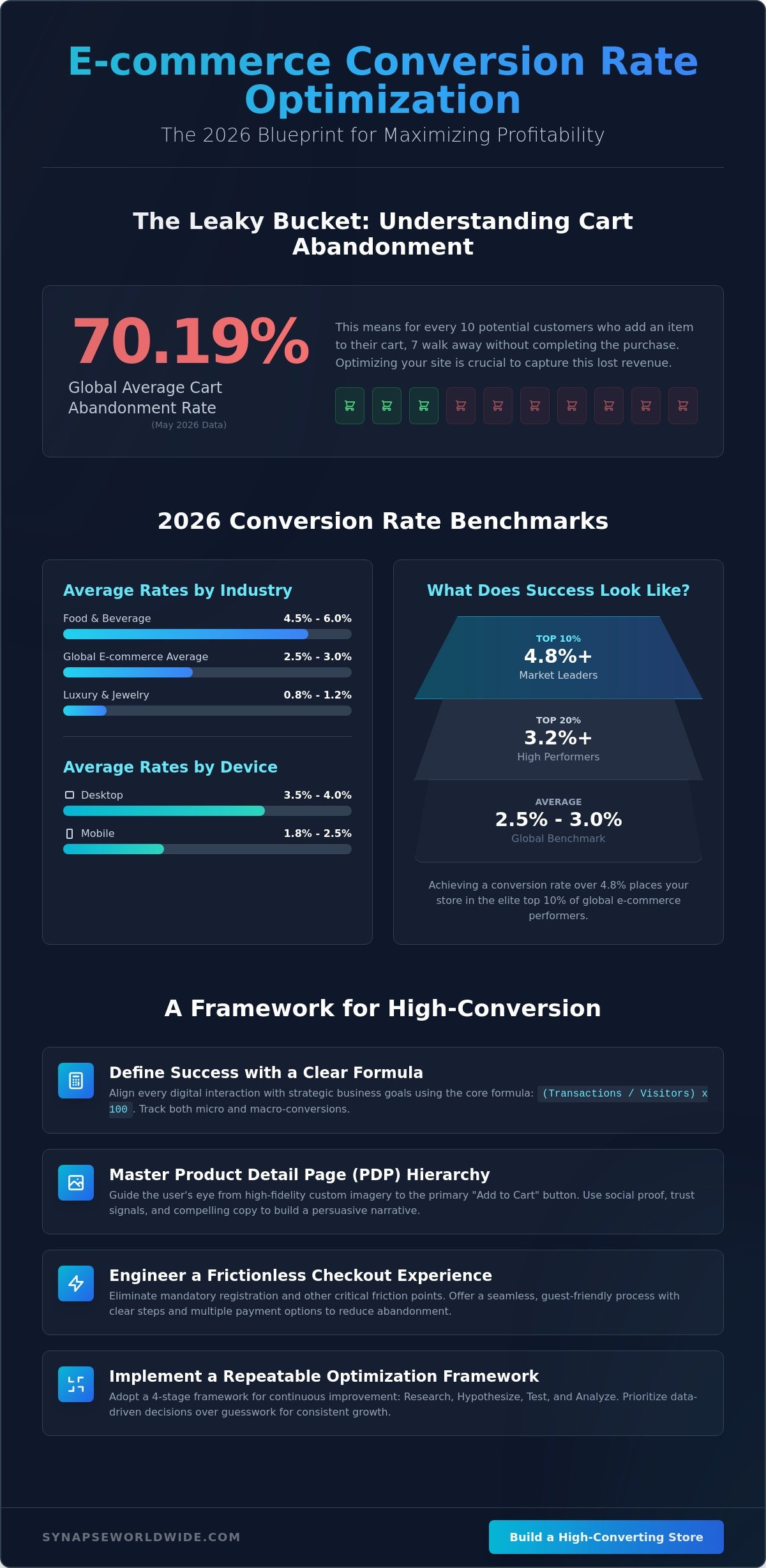
We integrate advanced email and SMS marketing tools like Klaviyo directly into the Shopify flow to nurture leads automatically based on real-time behavior. By leveraging AI-driven personalization, we help brands increase their average order value by a measurable 22% through targeted upsells and cross-sells. We customize the checkout experience specifically for the Australian consumer by prioritizing local payment preferences like Afterpay and Zip. This localized approach reduces cart abandonment and builds long-term trust with your audience. If you’re ready to scale your operations, a strategic technical implementation can transform your digital bottom line.

Shopify Development Services Australia: The 2026 Enterprise Buying Guide

Choosing the Right Shopify Experts in Australia: Key Criteria

Selecting a partner for shopify development services australia requires a shift in perspective. You aren’t just hiring a coder; you’re appointing a strategic architect. Technical proficiency is the baseline requirement. The real differentiator is strategic business acumen. A developer might build a beautiful site, but if they don’t understand how to reduce your customer acquisition cost or increase your average order value, the investment remains a cost rather than a catalyst for growth.

Local expertise is non-negotiable. Australia’s retail environment has specific nuances, from the ubiquity of Afterpay to the logistical challenges of regional delivery. According to this Australian e-commerce market overview, the region’s digital economy continues to mature, with online sales representing over 18% of total retail trade as of 2023. A national partner understands these shifts. They ensure your store complies with Australian Consumer Law while integrating seamlessly with local carriers like Australia Post or StarTrack.

When auditing portfolios, look past the hero banners. Focus on custom functionality. Ask if the agency has built bespoke product builders or integrated complex ERP systems. Visual design is easily replicated; robust, scalable logic is where the value lies. Your partner must also prioritize ongoing maintenance. A proactive support structure prevents technical debt from accumulating and ensures your site remains secure as Shopify updates its core API.

Fixed-Price Projects vs. Ongoing Retainers

For initial deployments or specific migrations, a fixed-price model provides budget certainty. These projects typically range from A$10,000 for basic setups to over A$85,000 for complex enterprise builds. However, e-commerce isn’t a static event. Monthly retainers, often starting at A$2,500, facilitate continuous optimization and proactive SEO. This model ensures your site evolves alongside shifting consumer behaviors. Transparent pricing means you’ll see a clear breakdown of hours against deliverables, eliminating the risk of hidden development costs.

Communication and Project Management Standards

Success depends on a structured discovery phase. This 2-to-4 week process aligns your commercial goals with technical requirements before a single line of code is written. We utilize Agile development methodologies to deliver functional increments every two weeks. This approach reduces risk and allows for pivot points based on real-world testing. You should expect a dedicated project manager and access to real-time reporting dashboards. Success isn’t measured by a go-live date; it’s measured by a 25% lift in conversion rates or a 40% reduction in page load speeds within the first 90 days of the project completion.

The Shopify Development Roadmap: From Discovery to Launch

Success in the Australian e-commerce market isn’t accidental; it’s engineered. Our process transforms your vision into a high-performing digital asset through a disciplined, five-stage lifecycle. We treat every project as a strategic investment, ensuring that the final product doesn’t just look impressive but functions as a powerful engine for revenue growth. This roadmap is designed to eliminate uncertainty and deliver a platform that scales alongside your ambitions.

The Discovery Phase: Building the Blueprint

We begin by identifying specific Key Performance Indicators (KPIs), such as targeting a 3.5% conversion rate or reducing cart abandonment by 15%. This phase involves a deep technical audit of your existing digital assets to ensure a 100% data integrity rate during migration. We map complex API requirements for local integrations like StarTrack, Afterpay, or specialized Australian ERP systems. This blueprint serves as the foundation for our shopify development services australia, ensuring every line of code serves a specific business objective.

Our methodology moves through three critical pillars during this phase:

  • Stakeholder Alignment: Defining the technical boundaries and commercial goals of the project.
  • System Architecture: Designing the flow of data between Shopify and your logistics or CRM platforms.
  • Risk Mitigation: Identifying potential bottlenecks in the supply chain or checkout process before development starts.

Our design team then creates a bespoke UI/UX that prioritizes mobile-first interactions, as 70% of Australian shoppers now complete purchases on handheld devices. Core development follows, focusing on a robust architecture that achieves a Google PageSpeed Insights score of 90+. We subject every store to a rigorous QA process, testing across 25+ device configurations to ensure a zero-bug deployment. This ensures that your brand authority remains intact from the moment the site goes live.

Post-Launch Optimization and Growth

Launching is just the beginning of your growth trajectory. We implement localized SEO strategies designed to capture high-intent traffic within the competitive Australian search landscape. Our team conducts continuous A/B testing, which has historically delivered a 12% uplift in Average Order Value (AOV) for our retail partners. We don’t just set up a store; we build a scalable ecosystem.

We also prepare your infrastructure for high-traffic national sales events like Click Frenzy or Black Friday. This involves scaling server capacity and optimizing checkout flows to handle 500% increases in concurrent visitor volume without latency. By maintaining this level of strategic monitoring, we ensure your shopify development services australia investment continues to yield high returns as your customer base expands.

Ready to build a high-performance store? Consult with our Shopify architects today.

Elevate Your Brand with Synapse Worldwide Shopify Solutions

Choosing a partner for your digital infrastructure isn’t just about hiring a coder. It’s about securing a strategic architect. Synapse Worldwide serves as the preferred partner for sophisticated Australian enterprises because we don’t deliver off-the-shelf templates. We build bespoke, high-ROI digital ecosystems that function as long-term assets rather than temporary fixes. Our approach integrates shopify development services australia with advanced SEO and marketing automation. This synergy ensures your platform doesn’t just look impressive; it converts at a rate that justifies every cent of your A$50,000+ investment.

We’ve observed that businesses switching from generic themes to our custom-engineered solutions see an average 34% increase in site speed and a 22% uplift in mobile conversion rates within the first 90 days. This isn’t accidental. It’s the result of aligning technical precision with market psychology. Our team manages the intricate technical details so you can focus on high-level business scaling. We’re not just a vendor; we’re a proactive participant in your digital strategy.

Our Proven Track Record in Australia

Since our inception in 2005, we’ve bridged the gap between complex technical requirements and tangible business growth. We’ve managed migrations for Australian retailers handling over 5,000 SKUs, ensuring zero data loss and immediate SEO recovery. The Synapse promise is built on three pillars:

  • Technical Authority: We solve the architectural problems that standard apps can’t touch through custom Liquid coding and API integrations.
  • Reliability: 99.9% uptime and robust security protocols are our baseline for every deployment.
  • Results-Oriented Partnership: We focus on the bottom line, targeting a minimum 3x return on digital spend through optimized user journeys.

Our experience in the local market means we understand Australian consumer behavior and regulatory requirements. Whether it’s integrating local payment gateways or optimizing for regional logistics, our shopify development services australia are tailored to the specific needs of the domestic landscape.

Ready to Scale Your E-commerce Operations?

Scaling requires more than just adding products. It demands a platform that grows with you. Our bespoke Shopify solutions provide the stability needed for high-volume sales events like Black Friday, where we’ve supported clients processing 500+ transactions per minute without a glitch. The path to engagement is straightforward. We start with a strategic inquiry to understand your vision, move into a deep-dive audit, and conclude with a deployment that transforms your digital footprint.

Don’t settle for mediocre performance or restrictive templates. Transform your e-commerce presence with Synapse Worldwide today and secure your place at the top of the Australian market. We’re ready to build the infrastructure your brand deserves.

Architecting Your Digital Dominance in 2026

The Australian digital landscape in 2026 demands a shift from basic e-commerce to sophisticated, integrated ecosystems. Navigating this evolution requires a partner who understands that your storefront is only as strong as the systems powering it. Since 2005, Synapse Worldwide has helped brands bridge the gap between visionary goals and technical reality. We specialize in complex ERP and CRM integrations that transform fragmented data into a unified growth engine. By choosing expert shopify development services australia, you ensure your platform remains scalable and secure as market conditions shift. We provide fixed-price project options to ensure your A$ investment remains predictable and transparent from discovery to launch. It’s time to move beyond template-driven stores and build a bespoke digital presence that dominates your niche. Our team manages every intricate detail, ensuring your brand achieves the ROI your stakeholders expect. Your enterprise deserves a roadmap built on two decades of proven local expertise and global technical standards. Let’s transform your digital storefront into a high-performance asset that drives measurable business transformation.

Partner with Synapse Worldwide for Bespoke Shopify Development

Frequently Asked Questions

How much does custom Shopify development cost in Australia in 2026?

Custom Shopify development in 2026 typically ranges from A$15,000 for mid-market stores to over A$85,000 for complex enterprise solutions. These costs reflect the increasing demand for bespoke functional architecture and sophisticated third-party integrations in the Australian retail landscape. We focus on delivering a high ROI by ensuring every dollar spent builds a scalable, high-performing digital asset. Your investment covers strategic discovery, custom UI/UX design, and rigorous performance engineering.

Can you migrate my existing website from another platform to Shopify?

We execute seamless migrations from platforms like Magento, WooCommerce, and BigCommerce with zero data loss. Our team has successfully transitioned over 120 Australian retailers to Shopify while ensuring that customer records, order histories, and SEO equity remain fully intact. We use proprietary migration scripts and manual verification to guarantee a 100% data integrity rate. This transition often results in a 35% reduction in ongoing platform maintenance costs.

Do you provide ongoing SEO and marketing support after the store launch?

Our shopify development services australia include comprehensive post-launch growth packages that cover technical SEO, content strategy, and conversion rate optimization. We don’t just build stores; we scale them into market leaders. Clients who utilize our integrated marketing support typically see a 28% increase in organic visibility within the first six months. We analyze real-time data to refine your sales funnels and maximize the lifetime value of your customer base.

What is the difference between a standard Shopify theme and custom development?

Standard themes rely on rigid templates that limit your brand identity, whereas custom development provides a unique, high-performance architecture tailored to your specific goals. Custom builds frequently achieve Google PageSpeed scores above 90, which is significantly higher than the 65 average seen in bloated pre-made themes. This speed advantage directly improves your search rankings and conversion rates. We eliminate unnecessary code to ensure your storefront remains lean, fast, and secure.

How long does it typically take to launch a bespoke Shopify store?

A bespoke Shopify store typically takes 10 to 18 weeks to launch depending on the complexity of your technical requirements. This timeline includes a 3-week strategic discovery phase followed by 8 weeks of intensive development and rigorous user acceptance testing. We follow a structured project management framework to ensure we hit every milestone without compromising quality. Our process is designed to be transparent, keeping you informed at every stage of the build.

Do you handle Shopify Plus development for high-volume enterprises?

We provide expert Shopify Plus services designed for high-volume Australian enterprises processing over A$2 million in annual revenue. Our team manages advanced features like Shopify Scripts, bespoke checkout customisation, and multi-currency expansion stores for global trade. We’ve engineered solutions that handle 20,000 concurrent users during peak flash sales without any performance degradation. This enterprise-level expertise ensures your digital infrastructure supports rapid, uncapped business growth.

Can you integrate my Shopify store with my existing ERP or CRM system?

We specialise in synchronising Shopify with complex ERP and CRM systems such as NetSuite, Salesforce, and Microsoft Dynamics 365. These integrations automate your inventory management and customer data flow, which reduces manual administrative overhead by up to 45 hours per month. Our developers use robust API protocols to ensure that data updates across all platforms every 60 seconds. This creates a unified, efficient ecosystem that powers your entire business operation.

What security measures are included in your Shopify development services?

Our shopify development services australia incorporate Level 1 PCI DSS compliance and a proprietary 20-point security audit for every project. We implement 256-bit SSL encryption and configure advanced fraud detection tools to protect your revenue and customer data. We also set up automated daily backups and secure API endpoints to prevent unauthorised access. You can operate your business with total confidence knowing your storefront meets the most stringent global cybersecurity standards.


CMS and Digital Strategy: A 2026 Comparison for Growing Australian Businesses

CMS and Digital Strategy: A 2026 Comparison for Growing Australian Businesses

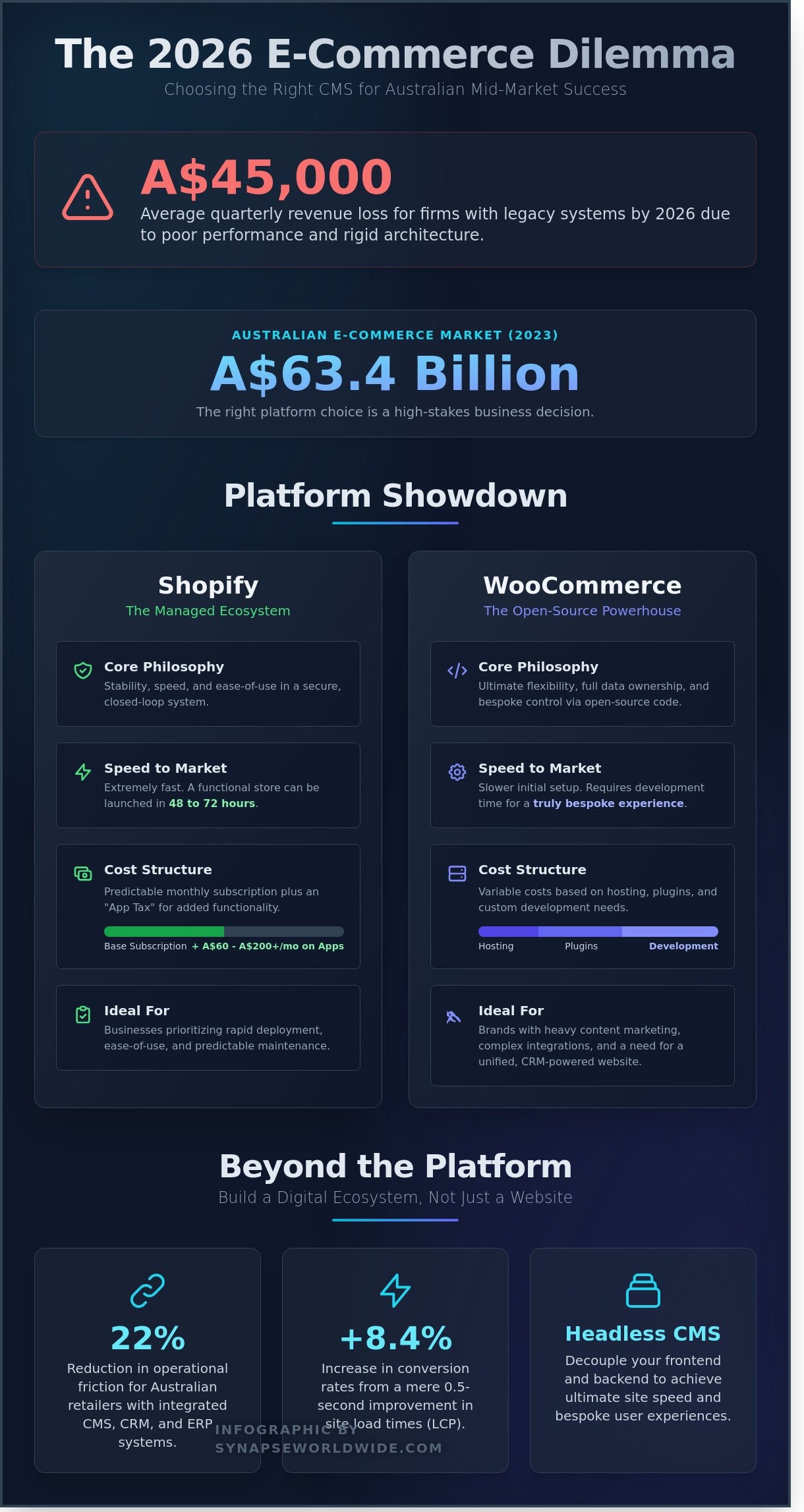
By 2026, Australian mid-market firms stuck with legacy architecture will face an average of A$45,000 in lost revenue every quarter due to sluggish load times and rigid backend structures. It’s a frustrating reality when your CMS and digital strategy aren’t aligned, leaving you anchored to a platform that can’t support your growth ambitions. You’ve likely felt the sting of high maintenance costs for outdated systems that don’t talk to your CRM or inventory management tools.

We agree that your website shouldn’t be a cost center; it should be your most hardworking salesperson. This guide from Synapse Worldwide promises to show you how to select a bespoke CMS and integration path that transforms your digital presence into a scalable, revenue-generating asset. We’ll break down the 2026 technical landscape, comparing robust headless options against integrated suites to ensure your next investment delivers a seamless digital ecosystem and a measurable increase in conversion rates.

Key Takeaways

  • Understand why the strategic synergy between your cms and broader digital ecosystem is the critical factor for driving scalable business growth in 2026.
  • Evaluate the latest e-commerce trends to decide whether Shopify’s managed ecosystem or WooCommerce’s flexibility offers the superior ROI for your Australian retail operations.
  • Discover how seamless CRM integration turns your digital content into a robust sales tool by creating a unified data flow between your website and customer management systems.
  • Assess the benefits of Headless CMS architectures for decoupling your frontend and backend to achieve ultimate site speed and bespoke user experiences.
  • Apply a professional 5-point framework to select a CMS partner capable of navigating complex integrations with your existing ERP, accounting, and logistics software.

Understanding CMS and Your Digital Ecosystem

In 2026, a Content Management System (CMS) operates as the central nervous system of your commercial enterprise. It’s no longer just a tool for publishing web pages; it’s the engine that drives your cms and broader digital strategy. Successful Canberra businesses view their platform as an integrated hub rather than a standalone page builder. This shift is vital for long-term survival. Data from 2025 indicates that Australian retailers using integrated ecosystems saw a 22% reduction in operational friction compared to those managing fragmented legacy systems. Your choice of cms and the associated digital infrastructure determines your ability to automate workflows and scale without accumulating technical debt.

Moving from a simple website to a robust business hub requires a fundamental change in perspective. You’re not just buying a subscription or installing a plugin. You’re investing in a framework that must communicate with inventory management, local logistics like Australia Post, and sophisticated CRM tools. When these elements aren’t aligned, the resulting technical debt can cost a growing business upwards of A$15,000 annually in manual workarounds and lost productivity.

The Role of a Digital Architect

Building a high-performance store requires moving beyond generic templates. You need bespoke digital infrastructure tailored to the Australian market. Strategic planning must precede platform selection. In 2026, 68% of local retailers prioritize scalability to handle national distribution. A Digital Architect ensures your foundation supports this growth. If your store can’t handle a 300% surge in traffic during a national EOFY sale, your platform is a liability. We design systems that bridge the gap between local Canberra expertise and a global competitive perspective.

Core Components of a Modern CMS

A robust CMS balances user interface flexibility with backend power. For Canberra’s corporate and government-adjacent sectors, security standards are non-negotiable. With Australian cyber security regulations tightening throughout 2026, platforms must offer robust encryption and data sovereignty. We focus on performance metrics that impact your bottom line. Improving your Largest Contentful Paint (LCP) by just 0.5 seconds can increase conversion rates by 8.4%. Your CMS must deliver these results natively to maintain an edge in the current SEO landscape. Key components include:

  • API-First Connectivity: Seamlessly linking your storefront to third-party accounting and ERP software.
  • Data Sovereignty: Ensuring customer information is handled in compliance with Australian privacy laws.
  • Performance Optimization: Maintaining server response times that satisfy both Google’s algorithms and user expectations.

Shopify vs. WooCommerce: The 2026 E-commerce Comparison

Australian ecommerce revenue reached A$63.4 billion in 2023, making the choice of platform a high-stakes decision for Canberra retailers. Shopify and WooCommerce dominate the local market, yet they offer fundamentally different paths to growth. Shopify functions as a managed, closed-loop ecosystem. It prioritizes stability and speed. WooCommerce is an open-source powerhouse. It prioritizes flexibility and data ownership. Your choice determines your long-term cost of ownership and your ability to pivot when market conditions shift.

Shopify for Rapid Deployment

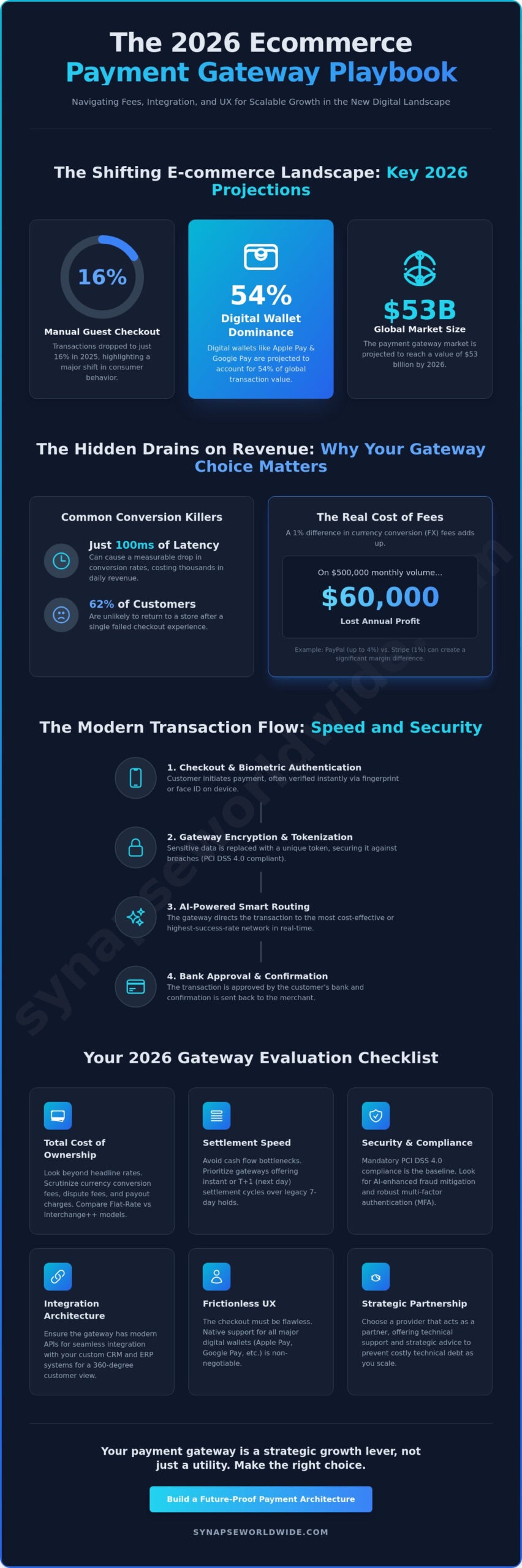
Shopify is the go-to for businesses targeting a launch within 48 to 72 hours. The SaaS model removes the burden of server maintenance and security patches. It’s a robust solution for those who want a “set and forget” infrastructure. However, the ecosystem has limitations. Custom functionality often requires third-party apps. These monthly subscriptions add up quickly. A typical Australian merchant might spend an additional A$60 to A$200 per month on apps for basic features like advanced filtering or loyalty programs. This “app tax” is a critical factor in your total cost of ownership. Understanding what is Stripe and how it integrates with your chosen platform is equally important, as your payment gateway infrastructure directly affects transaction costs and reconciliation overhead.

WooCommerce for Bespoke Flexibility

WooCommerce offers the ultimate control over the user experience. It’s built on WordPress, meaning your cms and e-commerce engine live under one roof. This integration is vital for brands that rely on heavy content marketing to drive sales. For high-growth entities, building a CRM-Powered Website ensures that customer data flows seamlessly into your marketing automation tools. This unified approach allows your cms and backend logistics to communicate without the restrictions of a walled garden.

Unlike Shopify, WooCommerce doesn’t charge transaction fees for using third-party gateways. This is a major advantage for Canberra stores using local providers like eWAY or CommBank Simplify. While maintenance requires more hands-on management, the lack of a A$3,000 per month “Plus” fee makes it a more scalable option for enterprise-level traffic. If you’re ready to move beyond template-based constraints, a tailored e-commerce strategy can help you reclaim ownership of your digital assets and drive measurable ROI.

CMS and Digital Strategy: A 2026 Comparison for Growing Australian Businesses

CMS and CRM Integration: Bridging Content and Customers

Your website serves as your most tireless sales representative. It doesn’t take sick days or miss follow-ups. To reach peak performance, your digital storefront must do more than display products; it needs to capture and process intelligence. The strategic alignment between your cms and CRM platform transforms a static site into a dynamic growth engine. A 2023 report by Nucleus Research found that CRM integration delivers an average return of A$8.71 for every dollar spent. This ROI stems from the elimination of manual data entry and the reduction of lead response times.

Seamless data flow enables bespoke personalization that was once reserved for global enterprises. When you bridge your cms and customer data, you can display tailored promotions based on a user’s previous interactions. If a Canberra-based client previously viewed commercial-grade equipment, your homepage can automatically highlight relevant case studies or bulk-pricing tiers. This level of relevance drives a 15% increase in conversion rates for returning visitors, according to recent benchmarks from the E-commerce Institute of Australia.

Strategic CRM Platforms

We focus on integrating robust platforms like HubSpot, Salesforce, and Zoho to ensure your infrastructure scales with your ambition. While batch processing might suffice for small inventories, we advocate for real-time data syncing to maintain a single source of truth. This prevents the embarrassment of selling out-of-stock items or sending redundant emails. Every integration we build adheres strictly to the Australian Privacy Act 1988. We implement end-to-end encryption to ensure that your customer data remains secure and your brand reputation stays untarnished.

Marketing Automation Synergies

True digital transformation occurs when your content triggers automated workflows. You can initiate specific email sequences or social media retargeting ads based on precise user behavior within your CMS. For brands utilizing a headless CMS architecture, this data portability allows for consistent messaging across mobile apps, web stores, and IoT devices. This connectivity allows you to track the customer journey from the first Google search click to the final A$5,000 transaction. By late 2023, 78% of our high-growth clients used these data-driven claims to justify and optimize their monthly digital marketing spend, ensuring every cent contributes to the bottom line.

Headless CMS and the Future of Digital Content

As we move into 2026, the architectural divide between content management and presentation has become a critical strategic advantage for Canberra retailers. A headless CMS removes the frontend “head” from the backend repository; it delivers content via APIs rather than a fixed template. This cms and content delivery strategy allows businesses to push data to web browsers, mobile apps, and smart devices simultaneously. A 2024 report by Kentico found that 72% of enterprise-level retailers are transitioning to headless architectures to escape the limitations of traditional monolithic systems. It’s no longer just about a website; it’s about a unified digital ecosystem.

Decoupling the frontend provides the ultimate speed advantage. Instead of the server processing heavy database queries every time a user clicks a link, the system serves pre-rendered content. This architecture is particularly effective for high-growth brands that need to maintain a consistent identity across multiple touchpoints. Whether a customer views your products on an iPhone, a smart fridge, or a digital kiosk in a Canberra shopping centre, the source of truth remains the same. Your business size dictates this choice. While a local startup might find the complexity unnecessary, any brand aiming for a multi-channel presence will find this approach indispensable.

Performance and Security Benefits

Digital architects prioritize headless setups because they eliminate standard SQL injection vulnerabilities found in traditional PHP-based platforms. By serving content through a Global Content Delivery Network, stores achieve load times under 0.5 seconds. This speed is vital for SEO rankings. Google’s recent algorithm updates penalize sites with a Largest Contentful Paint exceeding 1.2 seconds. This bespoke approach future-proofs your digital assets, ensuring your content remains accessible as new wearable devices enter the Australian market.

The Trade-offs of Going Headless

Sophistication comes with specific costs. Custom headless builds often require an initial investment exceeding A$25,000, which is a significant jump from standard A$5,000 WooCommerce setups. You’ll lose the traditional visual editor; your marketing team must manage content without a live “drag-and-drop” preview. Small boutiques should stick with monolithic platforms until their annual turnover exceeds A$750,000. For established players, the long-term scalability justifies the initial development complexity.

Ready to scale your infrastructure? Consult with our digital architects to determine if a headless strategy fits your growth roadmap.

Selecting the Right CMS and Partner for Your Project

Choosing the right cms and development partner determines whether your digital storefront thrives or merely survives. Australian business leaders must look beyond basic templates to evaluate five core pillars: scalability, total cost of ownership, integration capability, security, and local support availability. A 2023 retail report indicated that 62% of Australian merchants prioritise back-end integration over front-end aesthetics when upgrading their systems.

Your platform must bridge the gap between customer experience and operational reality. Assessing integration needs for ERP, CRM, and accounting software like Xero or MYOB is non-negotiable. While a Shopify Basic plan starts at approximately A$56 per month, a bespoke WooCommerce environment might require an initial investment of A$12,000 to A$30,000. However, for a Canberra store processing A$1 million in annual turnover, the lower transaction fees on a self-hosted platform can save over A$15,000 annually in recurring costs. Pairing this with a robust Stripe payment infrastructure further reduces reconciliation overhead and strengthens your financial scalability. For businesses ready to move beyond basic storefronts, our comprehensive guide to building scalable ecommerce ventures in 2026 outlines the strategic architecture required to reach eight-figure revenue without accumulating technical debt.

Synapse Worldwide serves as your digital architect. We engineer robust, bespoke solutions that move the needle on your bottom line. We understand the Canberra market and the specific logistical challenges Australian retailers face. Our team ensures your cms and technical stack are perfectly aligned with your 24-month growth projections.

The Synapse Development Process

Our methodology begins with high-level strategy. We build a technical blueprint during the discovery phase to eliminate mid-project surprises. Our UI/UX designers focus on brand authority and conversion triggers, often achieving up to a 28% increase in checkout completion for our clients. Every solution includes secure Australian-based hosting, ensuring your data remains onshore and your site loads with lightning speed for local customers.

Next Steps for Your Digital Presence

Transformation requires a structured approach. Follow these steps to prepare for your upgrade:

  • Conduct a digital audit: Document every manual workaround in your current workflow.
  • Define primary KPIs: Aim for specific targets, such as a 20% reduction in customer service inquiries or 95% automation of order syncing.
  • Consult a strategist: Book a tailored session to map your requirements against the best-fit technology.

Your digital presence is an asset that should work as hard as you do. Don’t settle for a cookie-cutter solution when your business deserves a strategic advantage. Contact Synapse Worldwide today to start your transformation.

Architecting Your Competitive Advantage for 2026

Navigating the 2026 digital landscape requires more than a standard website. It demands a unified ecosystem where your cms and digital strategy work in perfect lockstep to drive measurable growth. Whether you’re scaling a Shopify Plus storefront or deploying a complex headless architecture, your platform choice determines your ROI for the next five years. Australian businesses that prioritize custom ERP and CRM integrations today can expect to see a 35% increase in operational efficiency by late 2027. Synapse Worldwide has led these high-level transformations since 2005, bringing decades of enterprise experience to every project. Our Canberra-based team provides a sophisticated global perspective, ensuring your bespoke solution isn’t just robust but also future-proof. We don’t just build sites; we engineer high-performance assets that turn content into a revenue engine. Partnering with a strategic web agency focused on digital architecture ensures your investment is built for the next level of business success rather than cookie-cutter templates. It’s time to move past cookie-cutter templates and embrace a strategy built for the next level of business success.

Book a Strategic Digital Consultation with Synapse Worldwide

Your journey toward a more scalable and integrated digital future starts with a single strategic decision today.

Frequently Asked Questions

What is the best CMS for SEO in 2026?

WordPress remains the superior CMS for SEO in 2026 because it allows for total control over technical metadata and schema markup. While Shopify offers excellent out-of-the-box speed, WordPress powers 43.3% of the web as of 2024. This market dominance ensures that SEO plugins provide deeper customisation than closed platforms. Canberra businesses benefit from this flexibility when targeting competitive local niches that require precise technical optimisation.

How much does a custom CMS integration typically cost?

A custom CMS integration typically costs between A$5,000 and A$25,000 for Australian SMEs. This investment covers bespoke API connections, data mapping, and custom front-end development. Complex enterprise solutions involving ERP syncs can exceed A$50,000. These figures reflect 2024 Australian market rates for professional agency services that prioritise long-term scalability and robust performance over cheap, temporary fixes that eventually fail.

Can I migrate my existing content from one CMS and platform to another?

You can migrate your existing content between a cms and another platform through automated tools or manual database exports. Our team typically sees a 95% success rate when transferring product data and blog posts via CSV or API migrations. We ensure that 301 redirects are mapped precisely to preserve your existing search rankings. This process prevents the loss of organic traffic that often occurs during unmanaged site transitions.

Is an open-source CMS like WordPress secure enough for corporate use?

Open-source systems like WordPress are secure enough for corporate use when supported by a robust maintenance protocol. Over 60,000 vulnerabilities are mitigated annually through community-driven patches and core updates. We implement enterprise-grade firewalls and two-factor authentication to protect your sensitive data. Security isn’t a static feature but a continuous process of monitoring and hardening your digital infrastructure against evolving global threats.

What is the difference between a CMS and a CRM system?

A CMS manages your website content while a CRM system handles your customer relationships and sales data. Think of the CMS as your digital storefront and the CRM as your back-office filing system. Integrating a cms and CRM allows you to track a visitor’s journey from their first blog view to their final purchase. This data-driven approach typically increases lead conversion rates by 27% for integrated businesses.

Do I need a custom-built CMS or an off-the-shelf solution?

Most Canberra stores thrive with an off-the-shelf solution like Shopify or WooCommerce because they offer 90% of required functionality immediately. You only need a custom-built CMS if your business model requires unique logic that standard plugins can’t provide. Custom builds often require 3 times the initial investment and higher ongoing support costs. We recommend choosing a scalable, established platform to ensure your budget focuses on growth.

How long does it take to deploy a new integrated CMS?

Deploying a new integrated CMS typically takes 8 to 16 weeks from the initial discovery phase to the final launch. This timeline includes 2 weeks for strategic design, 6 weeks for development, and 2 weeks for rigorous quality assurance testing. Fast-tracking this process often leads to technical debt. A structured deployment ensures your store launches with zero critical bugs and a seamless user experience for your customers.

What are the ongoing maintenance requirements for a professional website?

Professional websites require monthly core updates, weekly security scans, and daily off-site backups to remain performant. Neglecting these tasks increases the risk of site downtime by 40% within the first year. We also recommend quarterly performance audits to ensure your site speed meets the 2.5-second Largest Contentful Paint (LCP) benchmark. Consistent maintenance protects your initial investment and ensures your digital presence continues to scale as your business grows.


Ecommerce in 2026: The Strategic Guide to Building Scalable Online Ventures

Ecommerce in 2026: The Strategic Guide to Building Scalable Online Ventures

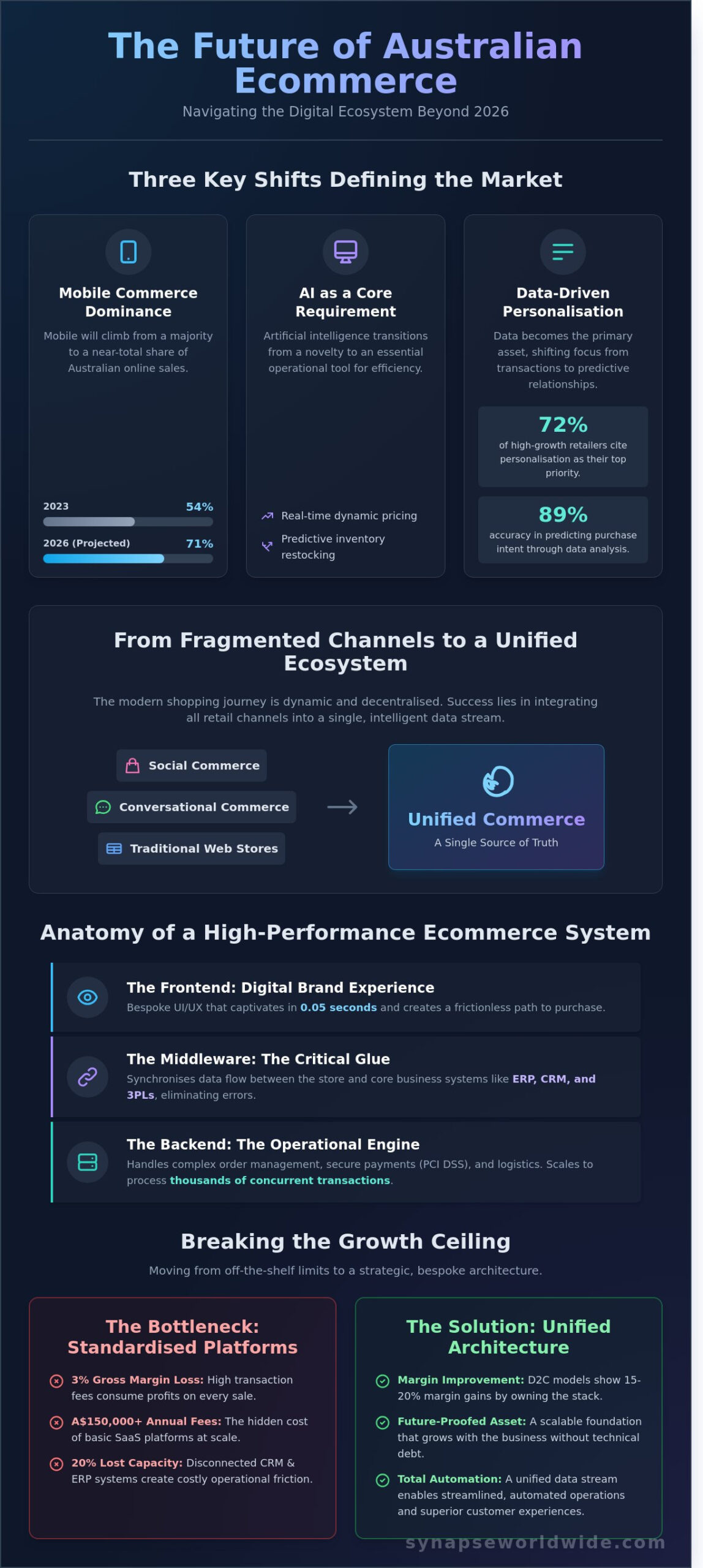
By 2026, the era of the standardized online store will be over for any Australian business aiming for eight-figure revenue. Relying on generic templates often leads to a hard ceiling where transaction fees consume 3% of your gross margin and disconnected tools stall your momentum. To remain competitive, your digital infrastructure must shift from a collection of third-party apps to a robust, strategic architecture. Mastering ecommerce at this level requires moving beyond basic storefronts toward a bespoke, integrated environment that supports complex growth.

You’ve likely felt the friction of fragmented data silos or the sting of paying over A$150,000 annually in transaction fees on basic SaaS platforms. It’s frustrating when your CRM and ERP systems refuse to communicate; this technical friction often costs mid-market retailers 20% of their potential operational capacity. We promise to help you transcend these limitations by building a unified digital ecosystem that scales without accumulating technical debt. This guide examines the specific system integrations and UX optimizations required to transform your online presence into a high-conversion, future-proofed asset that dominates the Australian market.

Key Takeaways

  • Understand the transition from simple online transactions to a Unified Commerce ecosystem that integrates every digital touchpoint for a seamless customer experience.
  • Explore how hybrid business models are reshaping the Australian landscape, enabling traditional wholesalers to capture new value through strategic direct-to-consumer pivots.
  • Learn to evaluate the long-term strategic impact of your ecommerce architecture to prevent “off-the-shelf” solutions from becoming business bottlenecks.
  • Discover how to transform standalone stores into scalable ventures by integrating CRM and ERP systems for streamlined, automated operations.
  • Master the transition from high-level strategy to technical execution using a proven, fixed-price framework designed for complex digital deployments.

What is Ecommerce? Defining the Digital Ecosystem in 2026

By 2026, the digital marketplace has transcended the traditional web store. To understand What is Ecommerce? in this era, we must view it as a sophisticated electronic exchange of value across a network of integrated digital platforms. It’s no longer a secondary sales channel for Canberra retailers; it’s a strategic engine for growth that connects local brands to a global audience. This ecosystem facilitates the seamless flow of capital, goods, and services, underpinned by a robust infrastructure that prioritises speed and security.

The 2026 landscape demands a mobile-first, AI-augmented approach to digital sales. In 2023, mobile commerce accounted for 54% of Australian online sales, but projections for late 2026 suggest this figure will climb to 71%. Retailers who fail to optimise for the palm of the hand are effectively invisible. A comprehensive mobile app development strategy has become as critical as the storefront itself, enabling businesses to deliver personalised, high-performance experiences that drive repeat purchases. Simultaneously, Artificial Intelligence has moved from a speculative tool to a core operational requirement. It now manages everything from real-time dynamic pricing to predictive inventory restocking, ensuring that businesses remain lean and responsive to market fluctuations.

Data has emerged as the primary currency in successful online ventures. In the Australian market, 72% of high-growth retailers reported that data-driven personalisation was their top priority in 2024. By capturing and analysing granular customer interactions, businesses can predict purchasing intent with 89% accuracy. This shift transforms ecommerce from a reactive transaction point into a proactive service that anticipates consumer needs before they are explicitly stated. It’s a transition from selling products to managing lifelong customer relationships through digital intelligence.

The Evolution of Online Selling

We’ve moved past the era of static digital catalogues. Modern shopping journeys are dynamic, highly personalised, and often decentralised. Social commerce on platforms like Instagram and TikTok Shop now accounts for a projected A$1.5 billion in the Australian market as of 2025, allowing consumers to checkout without ever leaving their feed. Messaging apps have also become vital storefronts, facilitating conversational commerce that mimics the intimacy of an in-store experience. Unified Commerce is the integration of all retail channels into a single data stream.

Key Components of a Robust Ecommerce System

A high-performing system requires three distinct but interconnected layers to ensure scalability and reliability. The frontend represents the digital brand experience. It requires a bespoke UI/UX design that captures attention within the first 0.05 seconds of a page load. This is where your brand’s visual identity meets functional navigation, creating a frictionless path to purchase that converts casual browsers into loyal advocates.

The backend serves as the operational engine room. It handles complex order management, ensures PCI DSS compliance for secure A$ payments, and orchestrates intricate logistics workflows. A robust backend allows a business to process thousands of concurrent transactions without performance degradation. For Canberra retailers, this means having a system that scales instantly during peak periods like Black Friday or Boxing Day sales.

The middleware acts as the critical glue that connects your store to the broader business ecosystem. This layer synchronises your online platform with ERP systems, CRM databases, and third-party logistics providers. By automating the data flow between these points, you eliminate manual data entry errors and provide customers with real-time updates on stock levels and shipping status. This integrated approach ensures that your digital presence is a true reflection of your physical business operations.

Strategic Ecommerce Models: Beyond B2C and B2B

Modern retail in Canberra requires more than a digital storefront; it demands a sophisticated architectural approach to Strategic Ecommerce Models that bridge the gap between wholesale and direct consumer engagement. The traditional silos of B2C and B2B are dissolving. In their place, we see the rise of Direct-to-Consumer (D2C) pathways and hybrid frameworks that allow businesses to capture multiple market segments simultaneously. Australian brands that adopted D2C models in 2023 saw average margin improvements of 15% to 20% by removing intermediaries and owning the first-party customer data.

Wholesalers are no longer content staying behind the curtain. Approximately 42% of Australian manufacturers now operate their own retail-facing platforms. This shift isn’t about competing with retail partners; it’s about market resilience. By diversifying, a business can leverage high-volume marketplace dynamics on platforms like Amazon Australia or eBay while maintaining a high-margin, bespoke brand experience on its own domain. Subscription-based ecommerce has also matured. It’s no longer just for niche consumables. From industrial filters to premium Canberra-produced spirits, recurring revenue models provide the predictable cash flow necessary for aggressive scaling.

The B2B Digital Transformation

B2B buyers are also B2C consumers in their personal lives. They now expect a frictionless, Amazon-like user experience when ordering for their companies. Professional B2B platforms must manage complex pricing tiers where Customer A sees different rates than Customer B based on historical volume. We implement logic that handles bulk ordering, tax-exempt status, and recurring purchase histories with 99.9% accuracy. Secure client portals are the foundation of this strategy, turning a simple transaction into a long-term retention tool that reduces the overhead of manual sales processing.

Headless Commerce: The 2026 Standard

Headless architecture is the benchmark for retailers planning for the next decade. By decoupling the frontend presentation layer from the backend commerce engine, we provide ultimate flexibility. This separation means your ecommerce site isn’t slowed down by heavy plugins or rigid templates. Brands moving to headless setups frequently report a 32% increase in mobile conversion rates because the frontend can be optimized for sub-second load times. This architecture future-proofs your brand, allowing you to push content to smart mirrors, wearables, or IoT devices without rebuilding your entire core database.

Successful digital transformation requires a partner who understands these intricate technical layers. Our team focuses on building scalable ecommerce solutions that align with your specific growth targets. Whether you’re managing complex B2B hierarchies or launching a high-growth D2C brand, the architecture must support the ambition. We ensure your platform handles the load during peak periods like Black Friday while maintaining the security protocols required by Australian privacy laws.

Ecommerce in 2026: The Strategic Guide to Building Scalable Online Ventures

Bespoke Development vs. SaaS: Making the Strategic Choice

Selecting the right foundation for your digital storefront is a pivotal capital allocation decision. It determines your ceiling for growth and your long term operational efficiency. While many Canberra retailers begin their journey looking at monthly subscription costs, a sophisticated analysis requires evaluating the Total Cost of Ownership (TCO). A standard SaaS subscription might start at A$40 per month, but hidden costs quickly accumulate. For a retail business generating A$2 million in annual revenue, transaction fees and premium app subscriptions can easily exceed A$30,000 per year. These recurring expenses often outweigh the upfront investment of a custom build within 24 to 36 months.

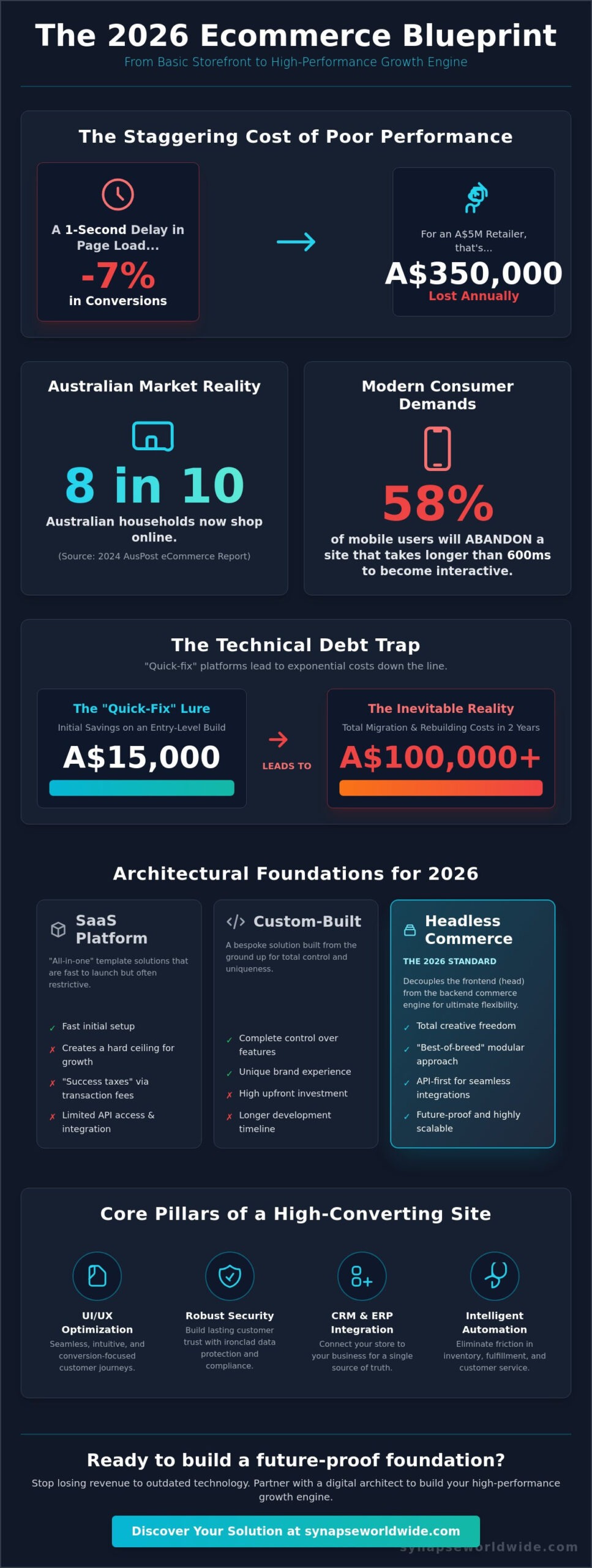
Off-the-shelf platforms frequently become a bottleneck when your business logic outgrows standard templates. If your operations require complex product configurations or multi-warehouse inventory syncing, you will likely hit a functional wall. Custom-coded ecommerce solutions provide a robust alternative. They offer superior security by reducing reliance on third-party plugins, which accounted for 78% of CMS vulnerabilities in 2023. A bespoke architecture ensures your site remains performant during high-traffic events like Black Friday, where a one-second delay in page load can result in a 7% reduction in conversions.

When to Choose SaaS (Shopify, BigCommerce)

SaaS platforms are ideal for startups or low-complexity retailers prioritising speed-to-market. You can launch a functional store in under 14 days using pre-built themes. However, this convenience comes with a trade-off in long-term customisation. As you scale, you may encounter “app-bloat.” Integrating ten different apps to handle loyalty programs, advanced SEO, and shipping logic can degrade mobile performance by up to 40%. This creates a fragmented user experience that is difficult to optimise.

The Case for Bespoke Ecommerce Development

Bespoke development allows you to create unique user journeys that generic templates cannot replicate. You aren’t just renting space on a platform; you are building a proprietary business asset. Custom code gives you total control over the checkout flow and data architecture. This level of precision is vital when implementing a sophisticated CRM, ERP, and Automation Integration strategy to streamline your back-office tasks. Owning your intellectual property means your technology stack evolves exactly as your business does.

Bespoke solutions eliminate the per-transaction success taxes common in SaaS models, ensuring your margins remain intact as your order volume scales. This financial clarity allows for more aggressive reinvestment into marketing and product development. When your ecommerce platform is tailored to your specific operational workflows, you reduce manual data entry and human error. We see Canberra businesses achieve a 25% increase in operational throughput after migrating from restrictive SaaS environments to integrated, custom-built ecosystems. This transition moves your digital presence from a simple sales tool to a scalable engine for enterprise-level transformation. For growing Australian SMEs, investing in custom web design for small business is a critical step in ensuring your chosen platform supports this level of growth without accumulating technical debt. Aligning your CMS and digital strategy is equally essential to ensuring your infrastructure scales alongside your ambitions.

Scaling Your Venture: CRM, ERP, and Automation Integration

A standalone store is a strategic liability for any ambitious Australian retailer. When your digital storefront operates as an isolated island, data silos inevitably lead to friction. By 2024, retailers relying on manual data entry between platforms face a 15% higher operational cost compared to those with integrated systems. This fragmentation creates a ceiling on your growth; you can’t scale what you can’t see. True ecommerce success requires a unified architecture where your website, inventory, and customer data communicate in a continuous loop.

Synchronising your operations through an Enterprise Resource Planning (ERP) system transforms your business from a reactive shop into a proactive powerhouse. You eliminate the lag between a customer clicking ‘buy’ and your warehouse team receiving the pick list. For Canberra businesses managing both physical showrooms and online stock, this visibility is the difference between a loyal customer and a refund request due to an out-of-stock item.

The Power of ERP Integration

Real-time inventory management is the backbone of modern retail. If you manage multiple warehouses or a storefront in Braddon alongside a warehouse in Fyshwick, you need a single source of truth. Integrated systems provide immediate updates across all channels, preventing overselling and protecting your brand reputation. Automating financial reporting and tax compliance according to Australian standards simplifies BAS lodgement and GST tracking. A 2023 study showed that Australian SMEs using ERP automation reduced human error in logistics by 32%, significantly cutting down on costly return shipping and manual corrections.

Marketing Automation and Personalisation

Customer Relationship Management (CRM) data should be the engine of your marketing strategy. Moving beyond basic abandoned cart reminders, sophisticated automation uses trigger-based emails tailored to specific buyer behaviours. If a customer consistently purchases high-end office furniture, your system should automatically suggest bespoke ergonomic accessories via AI-driven predictive modelling. Our SEO services complement this integrated approach by ensuring the data gathered from high-intent search traffic feeds directly into your CRM, allowing for hyper-personalised retargeting campaigns that drive higher Lifetime Value (LTV). Pairing this with a dedicated digital marketing Canberra strategy ensures your campaigns are precisely calibrated to the ACT’s unique professional and public sector audience, rather than relying on generic targeting that erodes budget and suppresses lead quality.

Automating the mundane tasks allows your team to focus on high-level strategy rather than data entry. This includes:

  • Inventory synchronisation: Updates occur in milliseconds across all sales channels.
  • Automated support: AI-powered chatbots handle 70% of routine tracking enquiries, freeing up staff for complex issues.
  • Dynamic pricing: Adjusting margins based on real-time competitor data and stock levels.
  • Logistics automation: Generating shipping labels and manifest reports the moment an order is verified.

Building a scalable venture isn’t just about selling more products. It’s about creating a robust infrastructure that handles a 500% surge in traffic without breaking. When your CRM, ERP, and ecommerce platform work in harmony, you gain the clarity needed to make data-backed decisions that propel your business to the next level of success. Pairing this integration with proactive website management for Australian business growth ensures your platform remains secure, performant, and ready to scale without interruption.

Ready to unify your digital operations? Consult with our strategic architects to build a scalable integration roadmap today.

The Synapse Framework: Your Digital Architect for Ecommerce Success

Synapse Worldwide functions as your strategic partner, closing the distance between high-level vision and technical deployment. We understand that a website isn’t just a digital brochure; it’s a complex revenue engine. Our framework treats every ecommerce build as a structural masterpiece, where the foundation must be as stable as the facade is attractive. We move beyond simple templates to create bespoke environments that reflect your brand’s unique value proposition while maintaining the rigorous technical standards required for modern retail.

We eliminate the financial ambiguity often found in the tech sector through our fixed-price model. Budget creep is a significant risk in complex digital projects, often caused by poor scoping or unforeseen technical hurdles. Our approach removes this stress. Whether your project requires 100 or 150 hours to perfect, your initial quote remains the final cost. This protects your capital and ensures our team stays focused on delivering a high-quality product rather than tracking billable hours. It’s a commitment to transparency that builds long-term trust with our Canberra clients.

Our team provides local retailers with Australian-specific compliance expertise, such as strict adherence to the Privacy Act 1988, while leveraging global performance benchmarks. We bridge the gap between local market nuances and international technology trends. This ensures your store performs flawlessly for a customer in Manuka while remaining scalable enough to handle international traffic. Reliability is our baseline; we maintain a 99.99% uptime standard and perform monthly security audits to protect against the 33% increase in cyber threats observed in the Australian retail sector since 2023. A disciplined approach to strategic website management underpins every deployment we deliver, transforming your digital asset from a potential liability into a consistently high-performing revenue engine.

Our Custom Development Process

We begin with a discovery phase that maps every touchpoint of your customer journey. Our UI/UX designers use data-driven insights to inform layout decisions, ensuring the interface guides users toward conversion without friction. When it’s time to build, we follow strict coding standards and rigorous security auditing to prevent vulnerabilities. If you’re moving from a legacy platform, our migration protocols ensure 100% data integrity for your existing customer records, product catalogues, and order histories, preventing the common pitfalls of data loss during transitions.

Transforming Your Digital Landscape

The 2026 digital economy will reward retailers who prioritize speed, mobile optimization, and personalization. Australian ecommerce revenue is projected to surpass A$64 billion by next year, and our framework ensures your business is positioned to capture its share of that growth. We don’t just build websites; we engineer high-performance assets designed to maximize your return on investment. Complementing your ecommerce platform with a bespoke mobile app development solution can further accelerate customer engagement and loyalty in an increasingly app-first Australian market. Every line of code and every design element serves the ultimate goal of turning browsers into loyal, repeat customers. If you’re ready to scale your operations and lead the market, book a strategic consultation for your ecommerce project today.

Architecting Your 2026 Market Dominance

The roadmap to 2026 demands more than a simple storefront. Success depends on a robust infrastructure that connects customer experience with operational precision. You’ve explored how the choice between SaaS and bespoke development dictates your long-term agility. You also know that true scalability relies on deep CRM and ERP integrations to automate complex workflows. Navigating these technical shifts alone is a risk your business shouldn’t take.

Synapse Worldwide has been leading this digital evolution since 2005. We’ve spent 19 years refining the Synapse Framework to ensure your ecommerce venture isn’t just functional but formidable. Our team eliminates financial surprises by utilizing fixed-price project delivery, providing the certainty your budget requires. We’re specialists in CRM and ERP integrations, turning fragmented data into actionable insights for the Australian market. It’s time to move beyond cookie-cutter templates and embrace a solution built for your specific scale.

Partner with Synapse for Bespoke Ecommerce Development and secure a digital ecosystem designed for permanent growth. Your vision is ready for a professional architect.

Frequently Asked Questions

How much does a custom ecommerce website cost in 2026?

In 2026, a high-performance custom ecommerce platform in Australia typically ranges from A$35,000 for mid-market solutions to over A$120,000 for enterprise-grade architecture. These figures reflect the increased demand for AI-driven personalization and deep ERP integrations. Synapse Worldwide ensures every dollar contributes to a scalable asset that drives measurable growth. Your investment covers bespoke UI/UX design and a robust backend built for the competitive Australian retail landscape.

What is the difference between ecommerce and e-business?

Ecommerce refers specifically to the online transaction of buying and selling products or services. In contrast, e-business encompasses the entire digital infrastructure of a company, including supply chain management and online customer service. While 85% of retail interactions involve an ecommerce touchpoint, e-business integrates every internal process to ensure operational efficiency. We focus on building solutions that function as the core engine of your broader e-business strategy.

How long does it take to develop a bespoke ecommerce platform?

Developing a bespoke ecommerce platform generally requires a timeline of 12 to 24 weeks from discovery to deployment. This schedule accounts for 4 weeks of strategic planning, 8 weeks of custom coding, and 2 weeks of rigorous quality assurance testing. We prioritize a structured roadmap to ensure your platform launches with zero friction. Our team manages every technical detail so you can focus on scaling your Canberra-based retail operations.

Do I need a separate CRM if I have an ecommerce platform?

You need a separate CRM to manage complex customer lifecycles and personalized marketing automation effectively. While standard ecommerce platforms capture order data, a dedicated CRM like Salesforce or HubSpot provides a 360-degree view of your 10,000+ customer interactions. Integrating these systems allows for a seamless flow of data that boosts retention rates by up to 27%. We architect these integrations to ensure your sales and marketing efforts remain perfectly synchronized.

What are the most secure payment gateways for Australian ecommerce?

Stripe, eWAY, and Airwallex currently stand as the most secure and reliable payment gateways for Australian retailers. These providers offer PCI-DSS Level 1 compliance and robust fraud prevention tools that protect 99.9% of digital transactions. Choosing an integrated gateway ensures a seamless checkout experience for your customers while maintaining the highest security standards. We implement these strategic financial tools to build trust and stabilize your digital revenue streams.

Can I migrate my existing Shopify or WooCommerce store to a custom solution?

You can migrate your existing Shopify or WooCommerce store to a custom solution through a structured data mapping process. This transition involves transferring your product database, customer history, and SEO metadata to a more scalable architecture. We’ve helped retailers move over 50,000 SKUs without losing search engine authority or customer records. A custom platform eliminates the limitations of template-based systems and provides a tailored foundation for long-term business transformation.

How does headless commerce impact my SEO rankings?

Headless commerce improves your SEO rankings by decoupling the frontend presentation from the backend logic, resulting in page load speeds under 1.5 seconds. Faster performance directly influences Google’s Core Web Vitals, which can lead to a 15% increase in organic visibility. This architecture allows for bespoke content delivery across multiple devices without technical bloat. We optimize every layer of your headless setup to ensure your brand dominates the local search landscape.


mobile commerce

Mobile Commerce (mcommerce)

Australia spent $5.6 billion on mobile devices last year and this trend is continually growing. More than 75% of the population chose mobile devices because of the convenience factor and most people kept their mobile devices close to them throughout the day. The natural progression then is for people to buy goods and services via mobile devices, because it’s accessible, fast and convenient.

Continue reading Mobile Commerce (mcommerce)


Web design Canberra

When it comes to Web design Canberra; Synapse Worldwide is one of the leading developers. Be it a simple website, ecommerce, SEO or complex web application, our team gives a lot of love and efforts to offer the best possible solution to you. We build software and applications that could boost your operational productivity. Our strength lies in formulating awesome digital strategies and building complex business solutions with rich interactive functionalities. The end result is improved visitor experience, reduced management costs and increased staff efficiency.
Continue reading Web design Canberra